
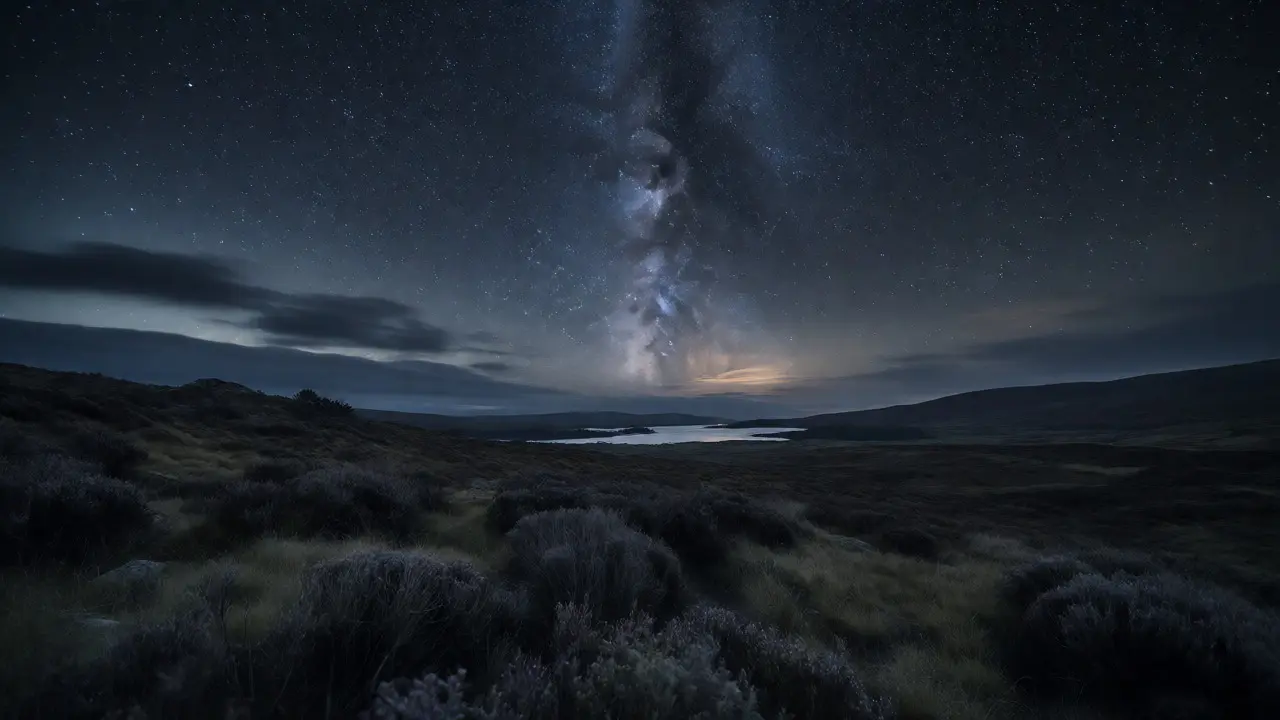
Have you ever stood under a sky so clear it felt like you could reach up and touch the Milky Way? In most cities, that’s impossible. Light pollution turns the night into a dull orange haze, hiding all but the brightest stars. But head north to the Scottish Highlands, and the rules change. Here, you find some of the darkest skies in Europe, places where the universe puts on a show every time the clouds part.
This isn’t just about looking up. It’s about experiencing nature at its rawest. Whether you’re chasing the elusive Northern Lights or mapping out constellations with a pair of binoculars, the Highlands offer a front-row seat. If you are planning a trip for late 2026, you need to know where to go, when to go, and what to bring. Let’s get you ready for the best stargazing experience of your life.
Why the Highlands Are Perfect for Stargazing
You might wonder why Scotland specifically. After all, the UK is densely populated. The answer lies in geography and policy. The Highlands have low population density, meaning fewer streetlights and car headlights competing with starlight. More importantly, several areas here hold official Dark Sky Park status. This certification comes from the International Dark-Sky Association (IDA), which measures light pollution levels rigorously.
When a site gets this label, it means local authorities have committed to protecting the night environment. They use shielded lighting and limit blue-light emissions. For you, this translates to higher contrast in the sky. Faint stars become visible. The Milky Way looks like a cloud of dust rather than a smudge. You aren’t just guessing; you are visiting locations scientifically proven to be among the best spots for observing the cosmos in the Northern Hemisphere.
Top Dark Sky Sites You Must Visit
Not all dark spots are created equal. Some are easier to access, while others require a hike. Here are the top contenders for your itinerary, ranked by accessibility and viewing quality.
| Site Name | Location | Best For | Accessibility |
|---|---|---|---|
| Galloway Forest Park | Southwest Scotland | Milky Way photography | High (Roadside access) |
| Loch Ness Area | Central Highlands | Northern Lights | Moderate (Car required) |
| Kielder Water & Forest Park | Border Region | Astronomy events | High (Visitor Centre) |
| Isle of Harris | Outer Hebrides | Total darkness | Low (Ferry/Flight) |
Galloway Forest Park was the first place in the UK to achieve Gold Tier Dark Sky Park status. It’s massive-over 750 square kilometers of protected darkness. You can drive right up to viewpoints near Loch Trool or Clachan Duill. The lack of infrastructure means zero light spillage. If you want to see the zodiacal light-that faint glow caused by interplanetary dust-you’ll find it here.
The Loch Ness area offers something different. While not a certified park in the same way, the lochs themselves act as natural reflectors. On calm nights, you see the stars twice: once above you, once below. This doubles the visual impact. Plus, the latitude makes it one of the better spots for catching auroras if solar activity spikes.
If you’re willing to travel further west, the Isle of Harris is unmatched. With no major towns and strict light controls, the Bortle Scale rating (a measure of night sky brightness) drops to Class 1 or 2. That’s pristine. You might see satellites streaking across the sky, but they look dimmer because there’s no background glare. It’s remote, so pack everything you need.
Catching the Northern Lights: What You Need to Know
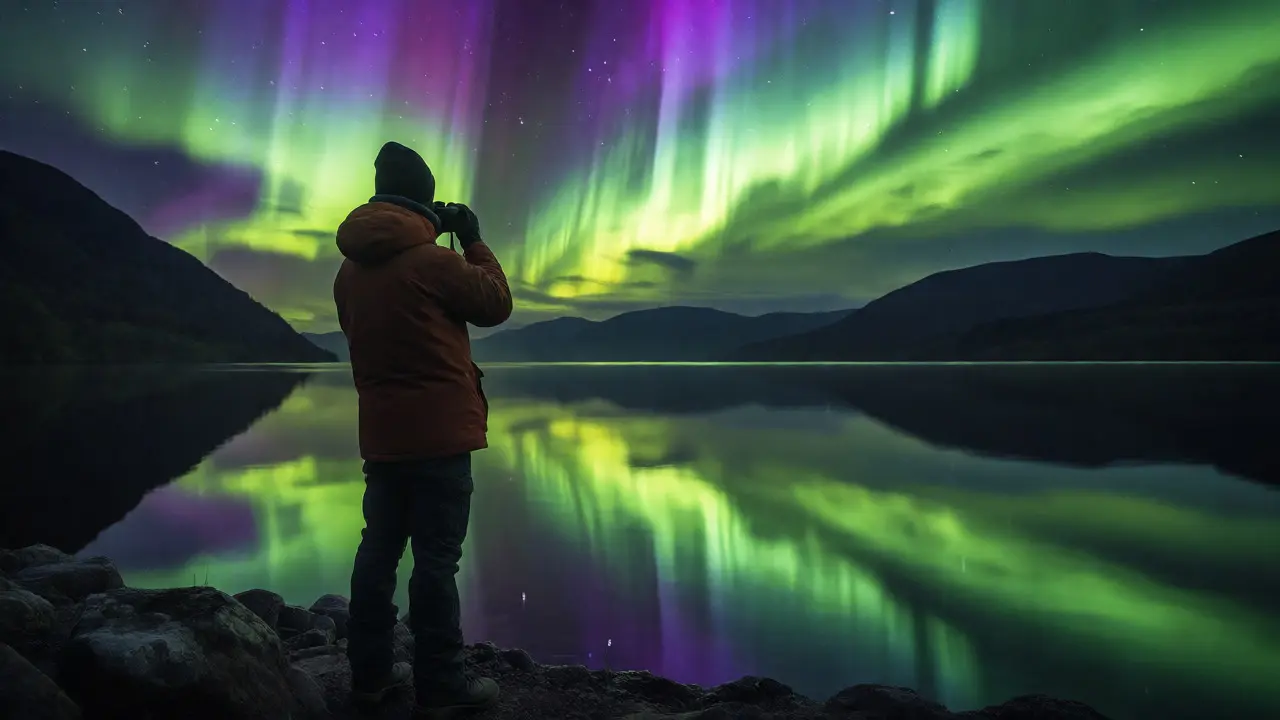
Everyone wants to see the Aurora Borealis. But let’s manage expectations. The Northern Lights don’t happen every night. They depend on solar wind interacting with Earth’s magnetic field. In Scotland, you are far enough north to catch them, but you need three things: darkness, clear skies, and high solar activity.
Solar cycles last about 11 years. We are currently in a phase where activity is rising, making 2026-2027 a promising window. However, weather is your biggest enemy. Cloud cover blocks the view more often than lack of aurora. To maximize your chances, monitor space weather forecasts. Websites like SpaceWeatherLive provide real-time data on the Kp-index, which measures geomagnetic disturbance. A Kp-index of 4 or higher usually means the aurora will be visible in the Scottish Highlands.
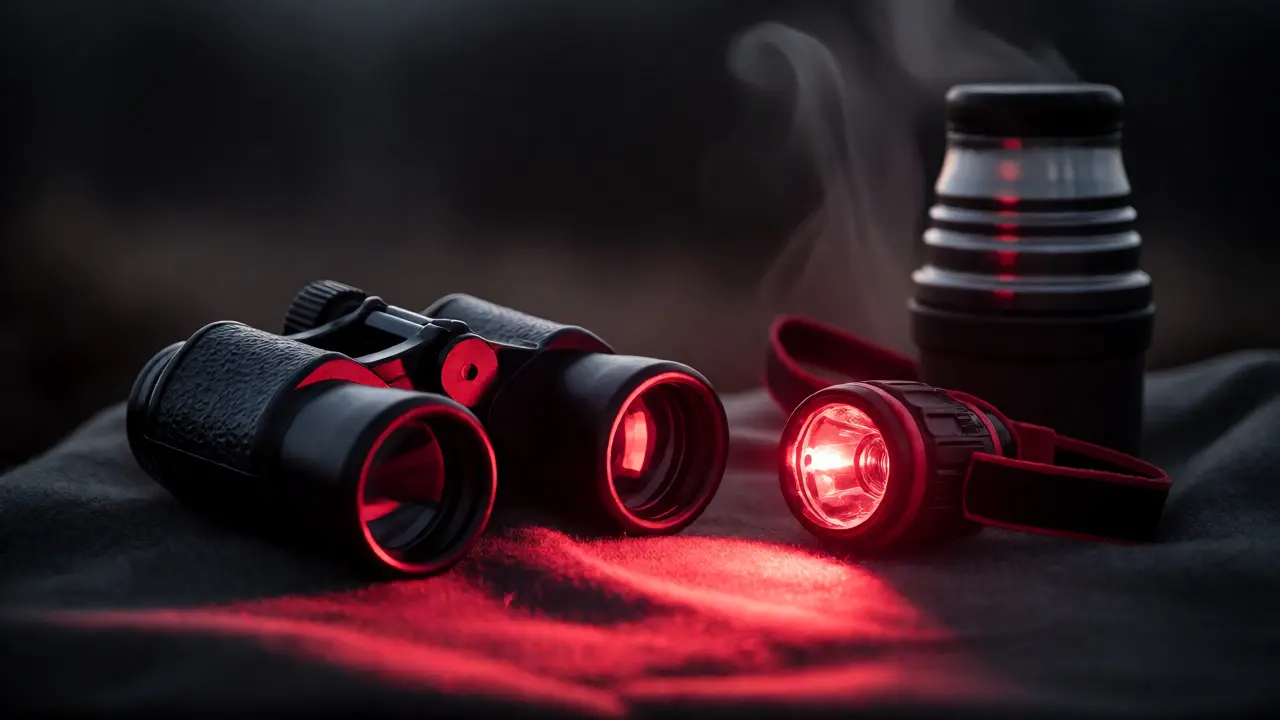
Where should you look? North. Always face north. But don’t ignore the horizon. Sometimes the aurora spreads southward during strong storms. Use a compass app if you’re unsure. And remember, your eyes take time to adjust. Give yourself at least 20 minutes without looking at your phone screen. If you must check your device, use red light mode to preserve your night vision.
Essential Gear for Your Night Out
You don’t need a telescope to enjoy the Highlands’ night skies. In fact, a wide-angle view is often better for spotting meteor showers or the Milky Way core. But you do need preparation. The Highlands are cold, damp, and windy, even in summer.
- Warm Clothing: Dress in layers. Wool base layers, fleece mid-layers, and a windproof shell are non-negotiable. Temperatures can drop below freezing in winter, and wind chill makes it feel much colder.
- Red Headlamp: White light ruins your night vision instantly. A red light allows you to navigate safely without blinding yourself or others.
- Binoculars: A simple pair of 10x50 binoculars reveals craters on the moon, Jupiter’s moons, and deep-sky objects like the Andromeda Galaxy. They are lighter and cheaper than telescopes.
- Tripod: If you plan to take photos, a sturdy tripod is essential. Long exposure times (15-30 seconds) require absolute stability.
- Hot Drink: Bring a thermos of tea or coffee. Standing still for an hour in the cold will sap your body heat quickly.
Don’t forget insect repellent. Midges are notorious in the Highlands from May to September. They bite hard and swarm thickly. If you’re visiting outside these months, you’ll escape them, but bundle up instead.
Photography Tips for Beginners
Want to capture the magic? Smartphone cameras have improved, but a dedicated camera gives you control. Set your ISO between 800 and 3200. Higher ISOs let in more light but add noise (graininess). Find a balance based on your camera’s capabilities.
Use manual focus. Autofocus struggles in the dark. Switch to manual and zoom in on a bright star on your screen until it’s sharp. Then lock it. Set your aperture to the widest setting available (lowest f-number, like f/2.8 or f/1.8). This lets the maximum amount of light hit the sensor.
For shutter speed, start with 15-20 seconds. Any longer, and the Earth’s rotation will cause star trails-lines instead of dots. Unless you want that effect, keep exposures short. Take multiple shots and stack them later using software like Starry Landscape Stacker or Photoshop. This reduces noise and enhances detail.
Compose your shot with foreground interest. A lone tree, a stone wall, or a loch reflection adds depth. Without a foreground, the photo looks flat. Use a timer or remote shutter release to avoid shaking the camera when you press the button.
Local Etiquette and Conservation
These dark sky sites are shared spaces. Respect the environment and other visitors. Keep noise down, especially if you’re camping nearby. Wildlife relies on quiet nights to hunt and rest.
Follow the Leave No Trace principles. Take all rubbish with you. Don’t drive off-road unless permitted. In sensitive areas, stay on designated paths to protect fragile vegetation. Your headlights are another issue. When driving through dark sky zones, dip your lights early and switch off interior cabin lights. This helps preserve the ambient darkness for everyone.
If you join a guided tour, listen to the guide. Many local operators run astronomy nights where they set up telescopes and explain the science. It’s a great way to learn and meet fellow enthusiasts. Support these local businesses-they help fund conservation efforts and keep these sites accessible.
Frequently Asked Questions
What is the best time of year to visit for stargazing?
Winter offers the longest nights, giving you more hours of darkness. However, summer provides warmer temperatures and less rain. For Northern Lights, autumn and spring are ideal because nights are dark enough but the weather is often clearer than in deep winter.
Do I need a telescope to see the Milky Way?
No. The Milky Way is visible to the naked eye in dark sky conditions. A telescope magnifies specific objects like planets and nebulae, but for the overall structure of our galaxy, your eyes are sufficient.
How likely am I to see the Northern Lights?
It depends on solar activity and cloud cover. During periods of high solar flux, visibility increases significantly. Checking a forecast app before heading out improves your odds. Patience is key; waiting out a few cloudy nights often pays off.
Are dark sky sites safe at night?
Yes, generally very safe. Stick to marked trails and parking areas. Be aware of uneven ground and livestock. Inform someone of your location and expected return time, especially if you are hiking alone.
Can I camp at these sites?
Many dark sky parks have designated campsites. Wild camping is allowed in Scotland under specific guidelines, but check local restrictions. Camping under the stars is the ultimate experience, provided you have suitable gear for cold, wet conditions.
Comments (11)
-
Charles Reah September 28, 2026
It is genuinely wonderful to see such a comprehensive guide on the Scottish Highlands. For those of us who may not have traveled there yet, this breakdown of accessibility versus viewing quality is incredibly helpful. I particularly appreciate the emphasis on proper gear; many beginners underestimate the wind chill even in summer months. If you are planning a trip, remember that preparation is just as important as the location itself. The mention of red headlamps is crucial because white light truly destroys night vision for everyone nearby. Also, supporting local guided tours is a fantastic way to ensure your visit contributes positively to conservation efforts. It feels good knowing that our tourism dollars help keep these dark skies protected for future generations. Please do check the weather forecasts religiously before heading out, as cloud cover is the most common disappointment. Enjoy the journey and let the stars speak to you.

-
LoriBeth Blair September 30, 2026
Kielder Water isn't in the Highlands. It's in Northumberland. You can't just throw random UK spots into a 'Highlands' list. Galloway is southwest, Harris is islands, but Kielder is clearly wrong geographically. Sloppy research.

-
SHANNON GRUBER October 1, 2026
Whatever. Just go look at lights. Don't overthink it with all this 'science' stuff about solar cycles. Most people won't see anything anyway because they forgot their thermos. Lazy tourists ruin everything by not packing right. I'm not reading another word of this article if it doesn't tell me exactly where to park my car.

-
Prayagraj Medicose October 2, 2026
Dude, don't trust the IDA certification! 😱 They are hiding data from us. The 'Dark Sky' status is a government trap to monitor your movements via smart streetlights that dim automatically. 🕵️♂️ Also, the Northern Lights aren't natural-they are HAARP experiments projecting frequencies to control population mood. 🌌📡 Keep your eyes open, man. The satellites streaking across? That's them watching you watch them. 👀

-
Howard Hurd October 3, 2026
USA has better dark sky parks than Scotland, period. 🇺🇸 We have Death Valley, Cherry Springs, and Big Bend which are way bigger and darker. Why are we hyping up some damp British hills? 🏴 The humidity ruins your camera lens instantly. 😤 Stick to American soil for real stargazing. 🇺🇸✊

-
Sean Eagen October 3, 2026
Light pollution is a moral failing. We waste energy while others starve for darkness. Go now. Respect the void. Don't be lazy.

-
Kieran Mitchell October 5, 2026
Oh, wow!!! 😲 This is literally the most beautiful thing I've ever read!!! ✨ The Milky Way... touching it... reaching for the cosmos... 💫 I am crying actual tears right now!! 😭😭😭 How dare you make me feel so much emotion on a Tuesday?!?! 🌌 The auroras are dancing just for ME, aren't they?? 🎆 I need to book a flight RIGHT NOW!!! ✈️💸 My soul is vibrating!!! 🙌🙌🙌

-
Manoj Kumar October 5, 2026
The correlation between solar activity indices and geomagnetic disturbances presented herein appears to oversimplify the stochastic nature of space weather phenomena. While the Kp-index serves as a useful heuristic, one must consider the interplanetary magnetic field orientation (Bz component) which dictates coupling efficiency. Furthermore, the assertion regarding 'scientifically proven' locations lacks rigorous statistical methodology in the text provided. One might argue that the International Dark-Sky Association's criteria are subject to political influence rather than purely photometric analysis. Therefore, the reliability of these 'Gold Tier' designations remains questionable without independent verification. 😐

-
Darlene Hopkins October 7, 2026
This brings back such warm memories. I visited Galloway last year with my family. The silence was healing. 🌟 It’s a place for peace.

-
Hemali Jaiswal October 8, 2026
What a breathtaking tapestry of words! 🌌 Your description of the Milky Way as a 'cloud of dust' rather than a smudge is poetic perfection. ✨ It captures the ethereal beauty of the cosmos so vividly. I felt my heart swell reading about the Isle of Harris, imagining the pristine darkness wrapping around the landscape like a velvet cloak. 🖤 Truly, this piece is a love letter to the night sky. Bravo! 👏

-
Brad Walker October 9, 2026
We are but specks in the infinite void, seeking meaning in photons that left their source millions of years ago. To stand under the Highland sky is to confront the terrifying beauty of our own insignificance. The universe does not care if you see the Aurora. It simply exists. And in that indifference, there is a strange comfort. We are alone, together, under the same indifferent stars. 🌌🥀
