
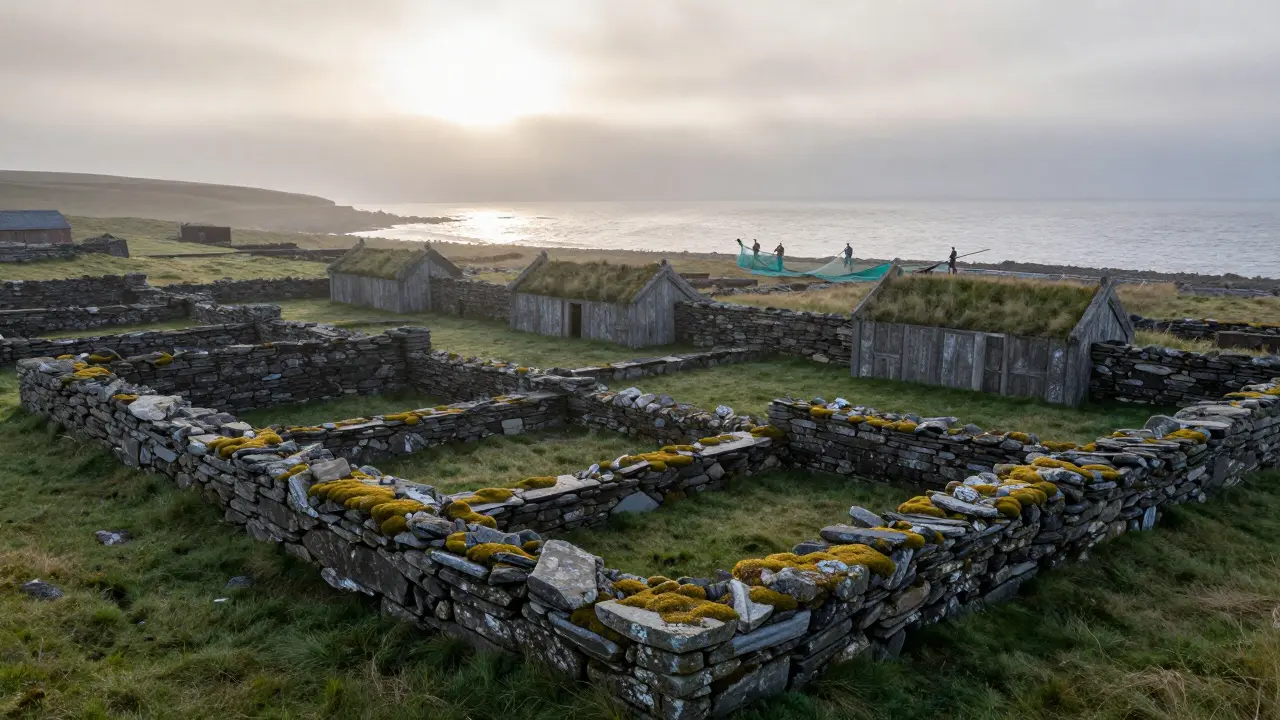
When you land in Kirkwall, Orkney, or Lerwick, Shetland, you don’t just see islands-you walk through a living Viking museum. The air smells of salt and peat, the place names sound like Old Norse poems, and the stone walls still carry the echoes of longships cutting through the North Sea. These aren’t just scenic spots. They’re the last strongholds of Norse rule in Britain, where Viking culture didn’t just visit-it stayed, shaped laws, language, and even the way people still talk today.
How the Vikings Took Hold
The Vikings didn’t raid Scotland by accident. They came for land, not just loot. By the late 700s, Norse seafarers from Norway were already sailing west, drawn by the rich fishing grounds and the lack of strong central power in northern Scotland. The Picts, who lived here before, were fragmented. The Norse saw opportunity. By 800 AD, they had settled Orkney and Shetland, turning them into stepping stones to the mainland and beyond.
Unlike in Ireland or England, where Vikings were often pushed back, in Orkney and Shetland they built something permanent. They didn’t just take over-they became the ruling class. The Norse earls of Orkney ruled for over 500 years, even after Scotland officially claimed the islands in 1472. These weren’t wild raiders anymore. They were governors, traders, and farmers who spoke a Norse dialect, followed Norse law, and buried their dead with the same rituals as their ancestors in Norway.
Language That Still Speaks Norse
Walk into a shop in Lerwick today and you might hear someone say “da” instead of “the,” or “hoose” for “house.” That’s not a Scottish accent. That’s Norn, the Norse dialect that was spoken here until the 18th century. Norn faded slowly-not because people forgot it, but because Scotland’s crown forced Scots English on the islands after 1472. Still, traces cling to the local dialects.
Place names are the clearest proof. “-ness” means headland-like Sumburgh Head, from “Sumburg ness.” “-wick” means bay or inlet-think Wick, Scrabster, or Duncansby Head. “Brae” means slope, “firth” means inlet, and “kirk” means church. These aren’t borrowed words. They’re the bones of the language that once dominated these islands.
Even modern Scots words like “bairn” (child) and “kirk” come from Old Norse. In Shetland, “gude” means good, and “dreich” means dreary-both have direct Norse roots. You won’t find this in Edinburgh. You’ll find it in the way islanders still speak, like their ancestors did a thousand years ago.
Archaeology That Tells the Real Story
At Jarlshof in Shetland, you can walk from a Bronze Age settlement to a Viking longhouse in under ten minutes. The site doesn’t just show layers of history-it shows a cultural takeover. The Norse didn’t destroy what was there. They built right on top of it, using the same stones, the same patterns, the same rhythm of life.
The Viking longhouses at Jarlshof are huge-some over 30 meters long. They had stone hearths, sleeping benches along the walls, and even drainage channels. This wasn’t temporary camping. This was home. At the nearby Brough of Birsay in Orkney, you can still see the foundations of a Norse chapel, a marketplace, and a fish-drying shed-all from the 9th century. The Norse didn’t just live here. They built towns.
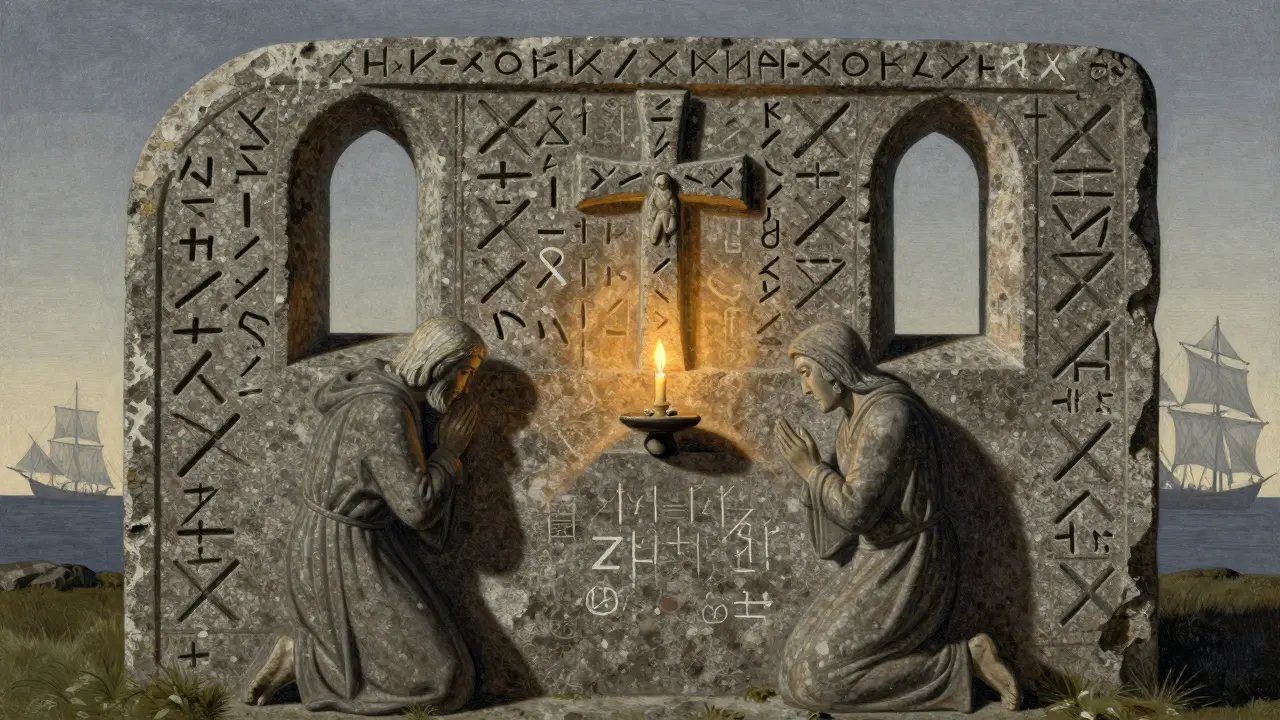
One of the most telling finds? The carved stone plaques from the 10th century, found near the St Magnus Cathedral in Kirkwall. They show Norse runes mixed with Christian symbols. The Vikings didn’t abandon their gods overnight. They blended them. The same people who once worshipped Odin now prayed to Christ. And they carved both on the same stone.
The Earls of Orkney: Norse Kings of Scotland
Between the 9th and 13th centuries, Orkney was ruled by Norse earls who answered only to the King of Norway. The most famous was Sigurd the Mighty, who died in 892 after being bitten in the leg by the skull of a defeated Irish king-yes, really. His descendants held power for generations, marrying into Scottish noble families, building churches, and even fighting alongside Scottish kings.
These earls didn’t act like outsiders. They governed like locals. They held thing assemblies-open-air courts where free men debated laws and settled disputes. The word “thing” itself is Norse. Today, the Isle of Man still has a Tynwald, and Shetland holds a ting every summer to honor the tradition.
When Scotland finally took control in 1472, it was because the last Norse earl, Christian I of Denmark-Norway, pawned the islands to pay for his daughter’s dowry. The people didn’t revolt. They didn’t riot. They just kept living the same way. The Norse identity didn’t vanish-it just got quieter.
Modern Norse Heritage: Festivals, Food, and Identity
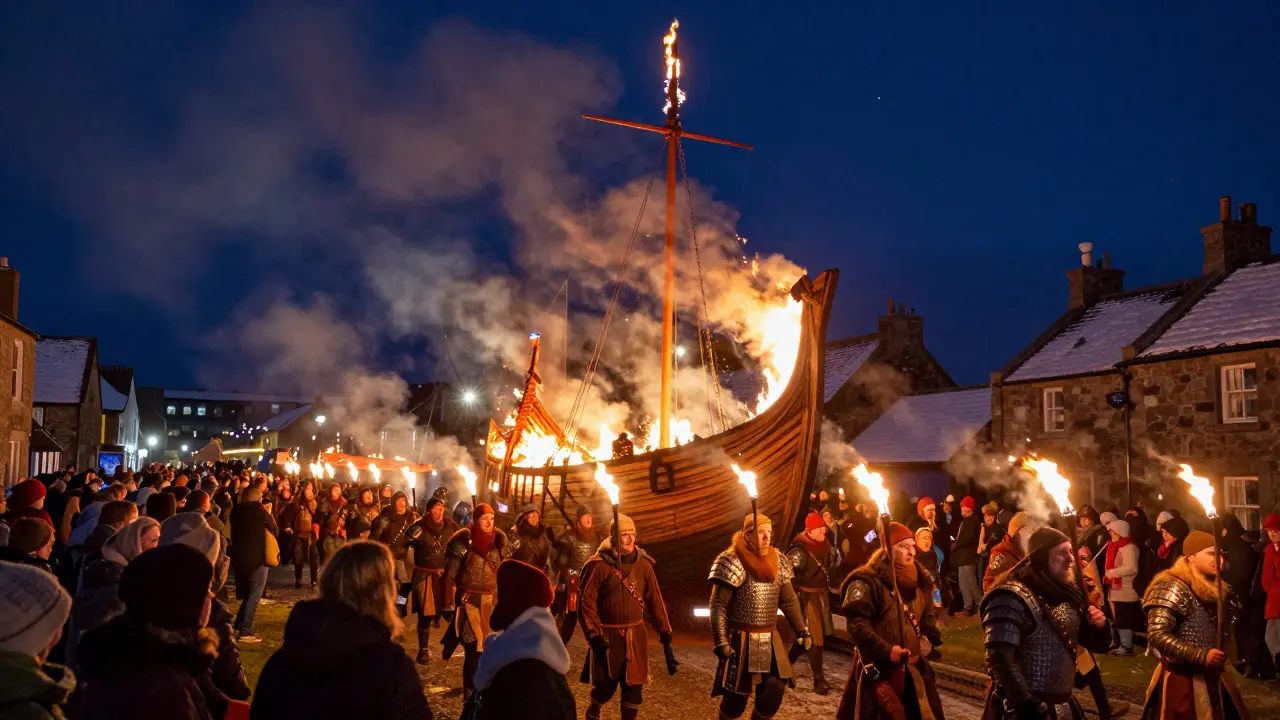
Today, the Norse past isn’t just in museums. It’s in the streets. Every February, Shetland throws Up Helly Aa-the largest Viking fire festival in the world. Hundreds of men in full Viking gear march with torches, burning a replica longship in a blaze that lights up the whole town. It’s not a reenactment. It’s a revival. Locals say it’s about community, not costume.
In Orkney, the Scapa Flow diving tours take you to sunken warships-but also to Norse wreck sites. Fishermen still use Norse techniques to catch herring, and the local cheese, Orkney’s Scrapie, is made using methods passed down from Viking dairy practices.
And then there’s the DNA. Studies show that up to 25% of men in Shetland and Orkney carry Y-chromosomes that trace back to Norway. That’s higher than in many parts of Norway itself. These aren’t just tourists. They’re descendants.
Why This Matters Now
People often think of Scotland’s history as just Highland clans and Lowland castles. But the real story is more complex. Orkney and Shetland were once part of a Norse world that stretched from Greenland to the Baltic. Their culture survived because it was practical, adaptable, and rooted in the land.
Today, as climate change reshapes the North Atlantic and Scotland debates its future, these islands remind us that identity isn’t fixed. It’s layered. The Norse didn’t disappear-they became part of Scotland. And Scotland, in turn, became something new because of them.
Visit these islands not just to see ruins, but to listen. Listen to the way people say “bairn.” Look at the way the stone houses curve with the wind. Feel the cold North Sea air. That’s not just history. That’s heritage still breathing.
Did the Vikings really rule Scotland?
Yes-but not all of it. The Vikings ruled Orkney and Shetland for nearly 700 years, from the 800s until 1472, when the islands were pawned to Scotland. They also held parts of Caithness and the Western Isles, but never controlled the central Lowlands or Highlands. Their power was strongest in the north and west, where geography and weak local rule made Norse control easy to establish and maintain.
Is Norn still spoken today?
No, Norn died out by the late 1700s, replaced by Scots English. But its influence lives on in the local dialects of Shetland and Orkney. Words like “bairn,” “kirk,” “dreich,” and “hoose” come directly from Norn. Even today, islanders use phrases and pronunciations that sound more like Old Norse than modern Scottish English.
What’s the difference between Norse and Scottish culture in these islands?
There wasn’t a clean split. The Norse settlers didn’t replace the local Pictish people-they mixed with them. Over centuries, Norse customs, law, language, and farming blended with existing traditions. What emerged wasn’t purely Norse or purely Scottish, but something unique: a Northern Isles identity that kept Norse roots while becoming part of Scotland. Today, people there identify as both Scottish and distinctly Norse-influenced.
Are there Viking ruins I can visit?
Absolutely. Jarlshof in Shetland has one of the best-preserved Norse settlements in Europe, with longhouses, workshops, and even a medieval farm. In Orkney, the Brough of Birsay has Viking-era buildings, a chapel, and a Norse graveyard. St Magnus Cathedral in Kirkwall was built by Norse earls in the 12th century and still stands today. These aren’t just tourist spots-they’re active heritage sites where archaeologists still dig and locals still gather for festivals.
Why do Orkney and Shetland feel different from the rest of Scotland?
Because their history is different. While the rest of Scotland was shaped by Gaelic clans and Lowland feudalism, Orkney and Shetland were shaped by Norse seafaring, trade, and self-governance. Their laws, language, and even their sense of community came from a different tradition. Even today, they have stronger ties to Scandinavia than to Glasgow or Edinburgh. That’s why Up Helly Aa feels more like a Viking festival than a Highland ceilidh.
Comments (16)
-
Pamela Watson February 3, 2026
OMG I did a DNA test and I’m 22% Viking!! 😍 I always knew I was different from my cousins in Texas!!

-
Jen Kay February 5, 2026
How charming. A romanticized narrative of colonial occupation dressed up as cultural appreciation. The Norse didn’t ‘become’ the locals-they suppressed them, then called it heritage. But sure, let’s burn a boat in February and call it reconciliation.

-
Michael Thomas February 5, 2026
Scotland? Nah. Those islands are Nordic. End of story.

-
Abert Canada February 6, 2026
I’m from Vancouver Island and I’ve been to Shetland. The way people talk about ‘the land’ there? Same energy as my Haida friends. It’s not just history-it’s a living relationship. The stones remember. The wind remembers. That’s not nostalgia. That’s ancestry in motion.

-
Xavier Lévesque February 8, 2026
So we’re supposed to believe that burning a fake ship makes you Norse? Cute. My grandpa still calls his wife ‘kvinna.’ He never even been to Norway. Guess that makes him a Viking now?

-
Thabo mangena February 8, 2026
It is truly remarkable how cultural continuity can persist despite political subjugation. The endurance of linguistic fragments and communal rituals in the Northern Isles serves as a profound testament to human resilience and the indelible imprint of ancestral identity.

-
Bill Castanier February 9, 2026
Norn isn’t dead. It’s in the way you say ‘hoose’ and ‘bairn.’ You just don’t know it. Stop calling it Scottish.

-
Ronnie Kaye February 10, 2026
Y’all are missing the point. The Vikings didn’t just settle-they adapted. They took what worked, kept what mattered, and built something better. That’s not conquest. That’s evolution. And we’re all still doing it today.

-
Priyank Panchal February 12, 2026
Why do you assume the Picts were passive? They resisted. They fought. They vanished because they were wiped out, not because they blended. Stop romanticizing genocide.

-
Ian Maggs February 13, 2026
...and yet, the silence of the stones-those weathered, wind-carved, millennia-old slabs that still hold the echo of a forgotten tongue-remind us that language is not merely spoken, but embodied; that identity is not declared, but inherited through the slow, patient accumulation of daily life... and still, we reduce it to festivals and DNA percentages...

-
Michael Gradwell February 13, 2026
Stop pretending these islands are special. They’re just poor, isolated places that got lucky with a cool history. Now they milk it for tourism. Classic.

-
Flannery Smail February 13, 2026
Wait, so the Vikings were chill farmers and not bloodthirsty raiders? Cool story. Where’s the evidence they didn’t just steal everything and run?

-
Emmanuel Sadi February 14, 2026
Look, the whole ‘Norse heritage’ thing is just white nationalism with a bonfire. You think your ancestors were noble? They were pirates who enslaved people and burned villages. Stop glorifying that.

-
Nicholas Carpenter February 14, 2026
People forget that the Norse didn’t come to ‘save’ anyone. They came because the land was good. And the people who were already there? They made it better. That’s the real story-collaboration, not conquest. We should celebrate that.

-
Chuck Doland February 16, 2026
The persistence of Old Norse lexical elements in the dialects of Orkney and Shetland constitutes a remarkable linguistic continuum, preserved not through institutional support, but through intergenerational oral transmission under conditions of sociolinguistic marginalization. Furthermore, the archaeological stratigraphy at Jarlshof demonstrates a non-disruptive cultural overlay, wherein indigenous Pictish material culture was not eradicated, but systematically integrated into Norse domestic architecture-a phenomenon indicative of acculturation rather than replacement. The enduring presence of Thing assemblies further underscores the institutional continuity of Norse governance structures, which, despite formal annexation by the Scottish Crown, retained functional relevance in local jurisprudence well into the early modern period. This is not romanticism; it is ethnohistorical fact.

-
Chuck Doland February 17, 2026
While your analysis of linguistic retention is compelling, it overlooks the role of economic coercion in the decline of Norn. The 1472 transfer was not a passive handover-it was a deliberate policy of linguistic erasure, enforced through education and ecclesiastical control. The fact that any Norse elements survived at all speaks not to harmony, but to quiet resistance.