
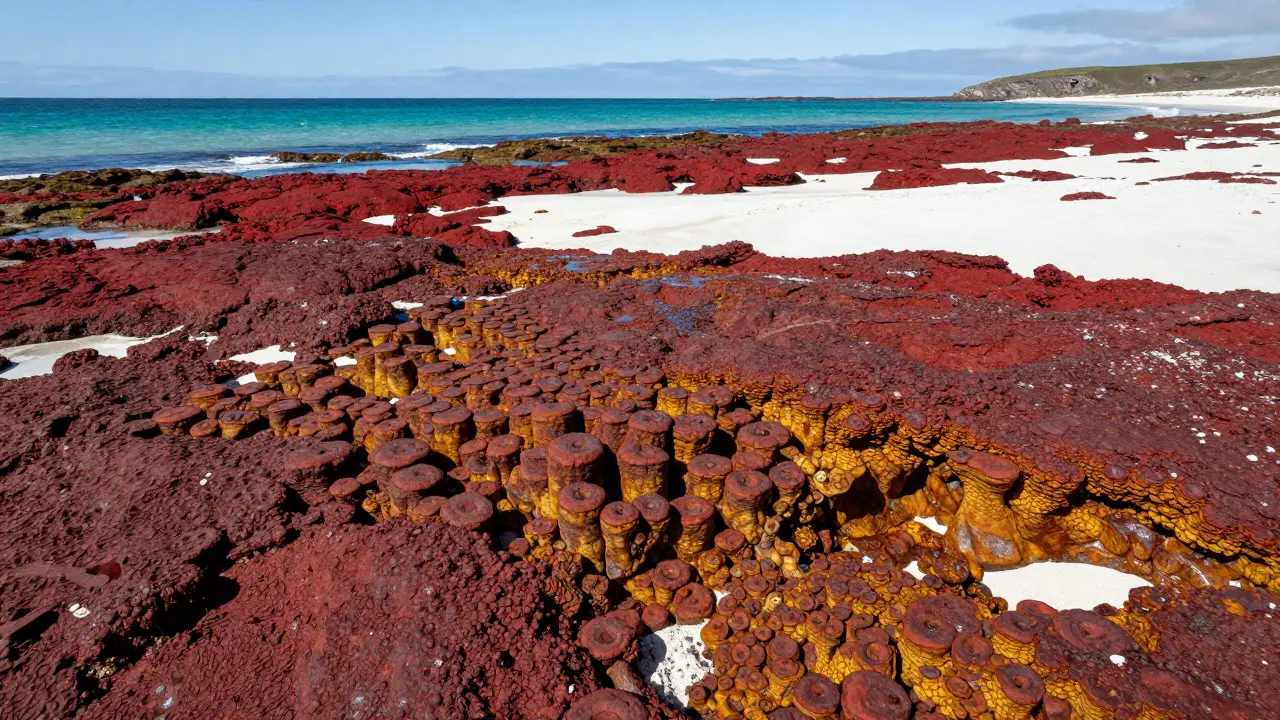
Imagine stepping onto a beach where the sand is replaced by a surreal, rusty-red crust that looks more like Mars than the Scottish Highlands. That is exactly what happens at Coral Beach on the Isle of Skye. But here is the twist: there is actually no coral here. What you are seeing is a massive, prehistoric graveyard of Coral Beach Isle of Skye, consisting of fossilized algae from millions of years ago. It is one of the weirdest and most visually striking spots in the Hebrides, offering a glimpse into a time when the earth looked completely different.
| Feature | Detail |
|---|---|
| Actual Composition | Fossilized Red Algae |
| Geological Era | Jurassic / Cretaceous Transition |
| Primary Color | Deep Red and Ochre |
| Access | Unpaved track from Glenbrittle |
What is actually happening at Coral Beach?
The name is a bit of a trick. While it looks like a tropical reef, you are actually walking on Stromatolites is layered sedimentary formations created by the trapping, binding, and cementation of sedimentary grains by microorganisms, specifically cyanobacteria and algae . These aren't animals; they are the remains of ancient algae that lived in shallow, warm seas long before humans existed. Over millions of years, these organisms built up layers of calcium carbonate, which eventually turned into stone.
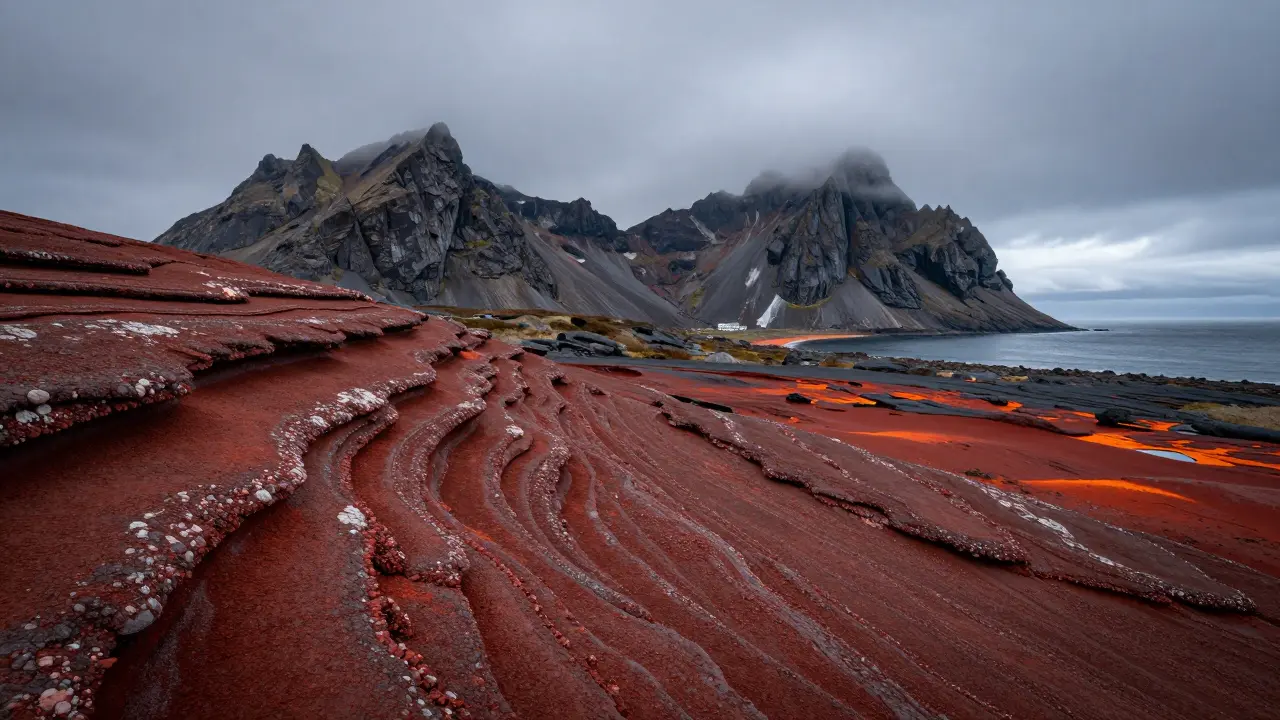
The striking red color comes from iron oxide. As the minerals in the rock reacted with oxygen and water over eons, the beach effectively "rusted." When the tide goes out, the contrast between the deep red rocks, the white sand of the nearby shores, and the turquoise water of the Atlantic Ocean is enough to make any photographer lose their mind. It doesn't feel like Scotland; it feels like a different planet.
The geology of the Isle of Skye
To understand why this beach exists, you have to look at the wider Isle of Skye landscape. The island is a geological playground. While most people visit the Cuillin Mountains -which are made of jagged volcanic gabbro-Coral Beach represents the quieter, sedimentary side of the island's history. The area around Glenbrittle is a transition zone where volcanic activity met ancient sea beds.
The geology here is characterized by the juxtaposition of igneous rocks and sedimentary layers. While the peaks of Skye were being forged in fire, the coast was collecting these microbial mats. This makes the beach a critical site for geologists studying the transition between the Jurassic Period and the Cretaceous. It is a physical record of sea-level changes and climate shifts that occurred millions of years ago.
How to get there and navigate the terrain
Getting to Coral Beach isn't as simple as parking and stepping onto the sand. Most visitors start at the Glenbrittle parking area. From there, you'll face a choice: walk the long way around or take the shorter, more rugged path. If you're not in the mood for a muddy scramble, stick to the established trails, but be prepared for a bit of a hike.
- Footwear: Wear waterproof boots. The path can turn into a bog quickly, even in mid-summer.
- Timing: Check the tide tables. If the tide is high, the red algae beds are submerged, and you'll just see a normal-looking beach. You want to arrive at low tide to see the vibrant red patterns.
- Navigation: The beach isn't marked with giant signs. Look for the shift in color from golden sand to a deep, crusty red.
One pro tip: don't just stop at the red rocks. Walk further along the shoreline toward the mountains. The way the Cuillins loom over the red shoreline creates a scale of landscape that is genuinely humbling.
Preserving the ancient shoreline
Because this beach is essentially a giant fossil, it is incredibly fragile. These Fossilized Algae structures are brittle. Walking on them is fine, but trying to chip pieces off or dig them up is a huge no-no. The Scottish environment is strict about geological preservation for a reason; once a piece of a 100-million-year-old structure is broken, it's gone for good.
Stick to the "leave no trace" philosophy. The beauty of Coral Beach lies in its untouched, alien appearance. If everyone took a "souvenir' rock, the beach would be a grey wasteland in a few years. Instead, take photos and leave the fossils where they've rested for millions of years.
Comparing Coral Beach to other Skye landmarks
If you are planning a trip, you might wonder if this is worth the detour compared to the big-name spots like the Old Man of Storr or the Fairy Pools. Here is how it stacks up.
| Location | Vibe | Effort Level | Best For |
|---|---|---|---|
| Coral Beach | Quiet, Alien, Eerie | Medium (Hike) | Geology & Photography |
| Fairy Pools | Lush, Crystal Clear | Low to Medium | Nature Lovers |
| Old Man of Storr | Epic, Dramatic | Medium (Steep) | Iconic Views |
| Neist Point | Windy, Cliffside | Low | Sunsets & Lighthouses |
Common misconceptions about the beach
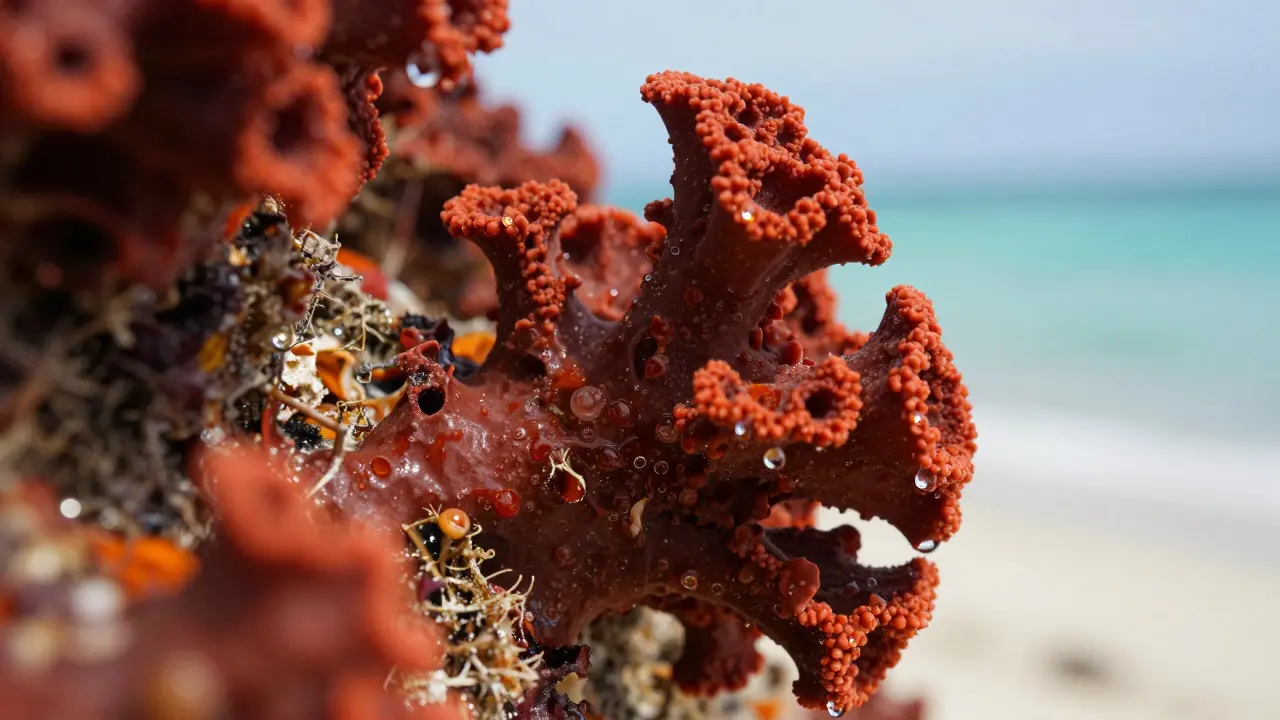
The biggest mistake people make is expecting to see actual coral reefs. You won't find any branching corals or colorful anemones here. The "coral" in the name is a colloquialism-a way to describe the texture and appearance of the rock, not its biological origin. It is a microbial fossil, not a skeletal one.
Another common error is thinking the beach is always red. Depending on the light and the moisture level, the colors can shift from a bright orange to a dark, chocolatey brown. To get those "Mars-like" photos, you usually need a clear day with a low tide, where the salt water has recently receded, leaving the minerals glistening.
Is Coral Beach free to visit?
Yes, there is no admission fee to visit the beach. However, if you park in the designated Glenbrittle lots, there may be a small parking fee depending on the season and the operator.
When is the best time of year to visit?
Late spring (May) and early autumn (September) are ideal. You avoid the heaviest summer crowds and the worst of the midges, while still having decent daylight hours to explore the coast.
Can you swim at Coral Beach?
You can, but the water is freezing for most of the year. If you do go in, be careful where you step; the fossilized algae can be slippery and uneven.
How long does it take to reach the beach from the car?
Depending on your pace and the path you choose, it usually takes about 20 to 40 minutes of walking from the Glenbrittle parking area to reach the red shoreline.
What should I bring for the hike?
Water, a map or offline GPS (signal is spotty), a windproof jacket, and sturdy hiking boots are essential. A camera with a wide-angle lens is highly recommended to capture the landscape.
Next steps for your Skye adventure
Once you've had your fill of the red sands, head toward the Cuillin range. If you are an experienced climber, the Black Cuillins offer some of the toughest terrain in the UK. If you prefer something gentler, the Trotternish Peninsula is where you'll find the most dramatic cliff views and grassy plateaus.
If you find the geology of Coral Beach fascinating, consider visiting the local museums in Portree. They provide a deeper dive into how the volcanic activity of the Tertiary period shaped the island's current silhouette. Just remember to keep an eye on the weather-Skye can move from bright sunshine to a torrential downpour in about five minutes.
Comments (12)
-
Jeroen Post April 30, 2026
just a cover story for the real reason those coords are restricted... the red isn't rust it's chemical residue from old gov tests and we're just supposed to believe it's algae from the jurassic period lol

-
Kirk Doherty May 1, 2026
looks pretty chill

-
Dave Sumner Smith May 2, 2026
Typical government propaganda. You think it's a coincidence that the 'parking fees' fund the black budget projects nearby? Wake up. The geological record is a lie designed to hide the truth about the subterranean bases beneath the Cuillins. I've seen the redacted maps and this 'coral' nonsense is a distraction to keep tourists from wandering too far into the restricted zones where the real anomalies are.

-
Aimee Quenneville May 3, 2026
wow... such deep thoughts... truly a masterclass in paranoia!!!! lol just enjoy the red rocks guys!!!!

-
Paul Timms May 4, 2026
The scenery is truly remarkable.

-
Jasmine Oey May 6, 2026
Omg I literally went there last year and it was simply divine!! Though it's just so sad that most people don't even realize the spiritual energy of the place is way more important than the actual rocks. Like, some people were totally ignoring the vibe for their photos and it was just so tacky. But anyway, it's absolutely gorgeous if you have the refined taste to appreciate it!

-
Cynthia Lamont May 7, 2026
I cannot believe the lack of basic editing in this post. 'Stromatolites is layered sedimentary formations' is a complete disaster of a sentence. Is this what passes for writing now? It's honestly embarrassing to read this garbage. You can't even get a simple subject-verb agreement right but you're trying to teach us about geology? Please, just stop.

-
TIARA SUKMA UTAMA May 9, 2026
How much did you spend on the trip?

-
James Winter May 10, 2026
Canada has better coastlines than Scotland anyway.

-
Cait Sporleder May 10, 2026
The sheer juxtaposition of the incandescent, ochre-hued crust against the undulating sapphire expanses of the Atlantic creates a visual symphony that is nothing short of transcendental. One finds oneself utterly ensnared by the prehistoric whispers of the cyanobacteria, wondering if the very molecules of the earth are attempting to communicate a primordial secret through these undulating, petrified waves of mineralized history. It is an ethereal tapestry woven from the threads of deep time and geological serendipity, casting a spell of profound insignificance upon the observer who dares to stand amidst such ancient, calcified remnants of a world long since vanished into the mists of the Cretaceous transition.

-
Marissa Martin May 11, 2026
It's a shame that people still feel the need to drive all the way there and disturb the peace of the land just for a photo.

-
Dmitriy Fedoseff May 12, 2026
The hubris of the modern tourist is staggering. You treat this sacred geological record as a mere backdrop for your vanity, ignoring the profound silence of a hundred million years. We are but ghosts passing through a landscape that remembers the birth of the world, yet you speak of 'pro tips' and 'parking fees' as if this were a theme park. It is an insult to the very concept of nature to reduce such a monument of time to a checklist of sightseeing landmarks.
