
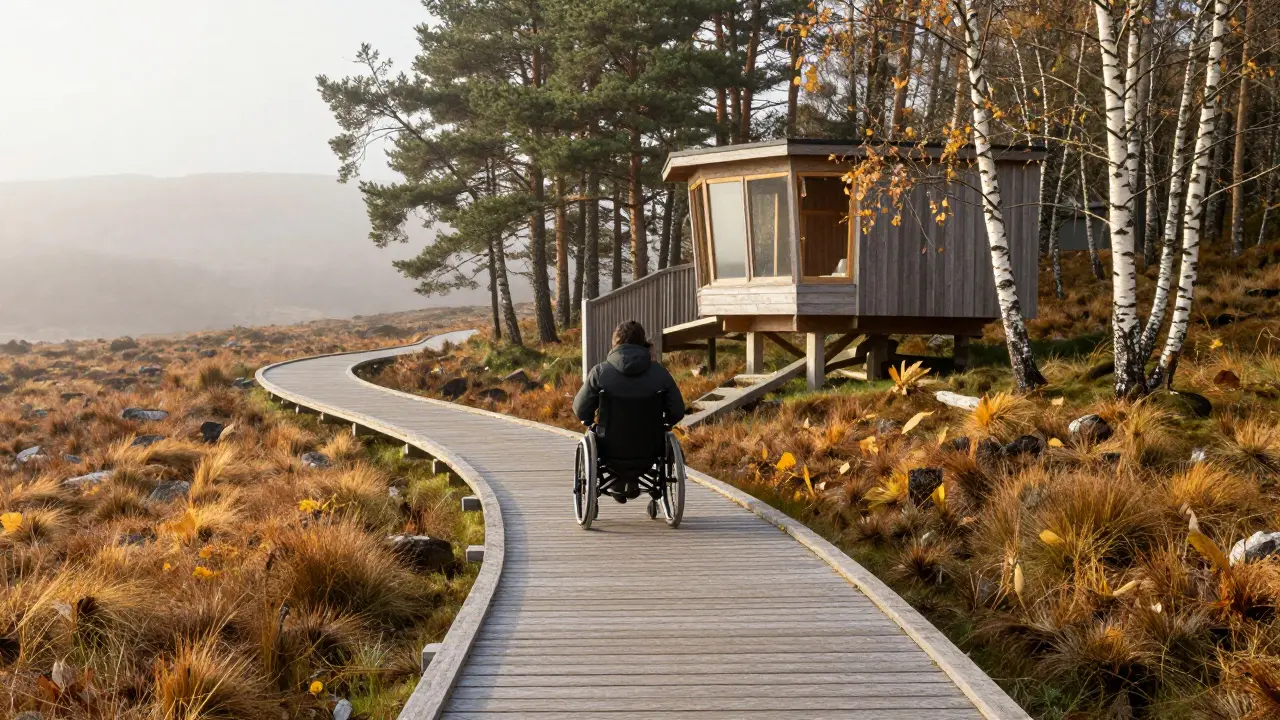
Watching a red deer step out onto a misty glen or an osprey dive for fish isn't just a hobby in Scotland-it's part of the landscape. But let's be honest: traditional wildlife watching often assumes you can walk miles over boggy ground without thinking twice. That assumption excludes too many people. As of 2026, the game has changed. From firm pathways around the Firth of Forth to sensory-friendly hides in the Highlands, the infrastructure supporting disabled visitors has evolved significantly.
This isn't about finding the nearest ramp at a zoo. We're talking about genuine immersion into the wild. You want to sit quietly and watch the buzzards circle above your head, or track down otters along the estuary banks, without worrying if the surface underfoot will collapse. In recent years, organizations like RSPBRoyal Society for the Protection of Birds have made massive investments to ensure that nature belongs to everyone, regardless of mobility. If you are planning a trip to see Scotland's famous beasts and birds, here is what actually works on the ground right now.
The Reality of "Accessible" Terrain
When we talk about accessibility in nature, it isn't binary. A path might be wide enough for a wheelchair, but covered in deep pine needles that turn into a slip hazard when wet. True accessibility in the Scottish outdoors relies on three distinct factors: surface composition, gradient management, and rest points. Many older reserves built before 2020 struggle with legacy gravel that ruts heavily in winter.
Newer developments, particularly those funded by the Accessible Outdoors grants over the last few years, prioritize 'compacted stone dust' or 'resin-bound gravel.' These materials drain faster than loose sand and offer significantly better traction for manual wheelchairs and walking frames. Before heading out, check the condition reports provided by land managers. The difference between a smooth boardwalk and a muddy track can be the difference between a morning spent watching birds and one spent stuck waiting for assistance.
Gradient is another silent killer of accessibility. Even a gentle slope becomes a steep climb when the wind is pushing against you. Modern accessible trails in places like the Cairngorms National Park now adhere to strict incline limits, rarely exceeding 1:20 for wheelchair users. Knowing these metrics helps you filter locations that claim to be accessible but aren't practically viable.
Leading Organizations and Their Standards
Three primary entities dominate the landscape of accessible wildlife management in Scotland. Understanding who owns the land helps you know what facilities to expect.
| Organization | Focus Area | Accessibility Level | Key Feature |
|---|---|---|---|
| RSPB Scotland | Bird Conservation | High (Priority) | Dedicated All-Terrain Wheelchair Loans |
| NatureScot | Landscape & Heritage | Moderate to High | Nature Reserve Boardwalks |
| Highland Wildlife Park | Ex-situ Breeding | Very High | Paved Visitor Routes & Shelters |
NatureScot manages the country's most iconic protected areas. Their reserves, such as the Flow Country in Sutherland, have introduced extended boardwalk systems. While the remote nature of these sites keeps crowds low, they offer a high level of solitude for those using mobility scooters. However, the distances are vast. Unlike city parks, these sites require significant travel between parking and viewing points. Always verify parking proximity.
The RSPB takes a more hands-on approach with their network of reserves across the UK. They have pioneered the concept of sensory hides. These are structures designed not just for visual viewing but for hearing and smelling the environment without exposing yourself to the elements. Many of their hides feature adjustable seating and flat thresholds to accommodate various types of mobility equipment.
Then there is the Highland Wildlife Park in Kinglassie. While technically a park rather than wild reserve, their layout is engineered for maximum visibility. Because the animals roam semi-freely within enclosures that mimic natural habitats, the viewing experience rivals the wild but with fully paved, barrier-free routes.
Top Locations for Barrier-Free Wildlife Encounters
Selecting the right spot depends on what species you want to see. Here are the standout locations that currently deliver on their promise of accessibility.
RSPB Loch Garten
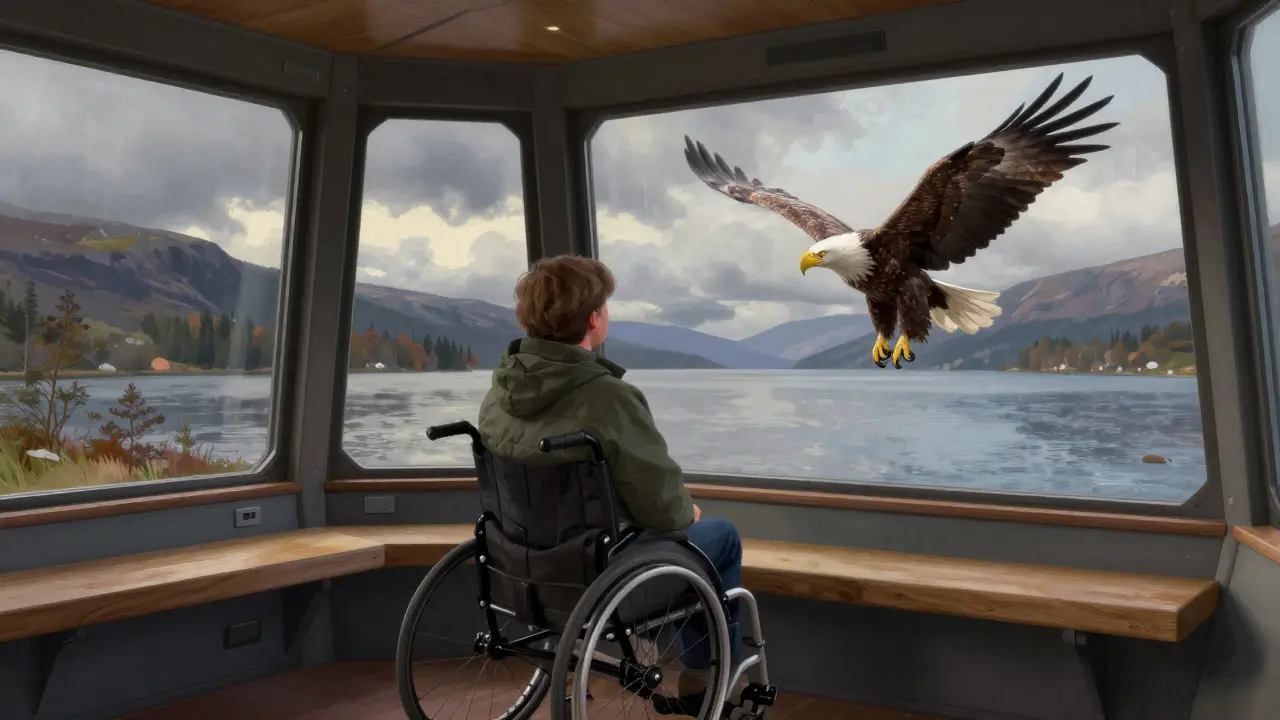
If your goal is the elusive white-tailed eagle, this is the place. Located near Aviemore, the hide offers a sheltered vantage point directly over the loch. The path leading to the hide was upgraded recently to remove uneven steps. It is a straight, graded ramp with handrails on both sides. Inside, you'll find space for wheelchairs and heated seats during colder months.
Sandside Beach (Loch Lomond & Trossachs)
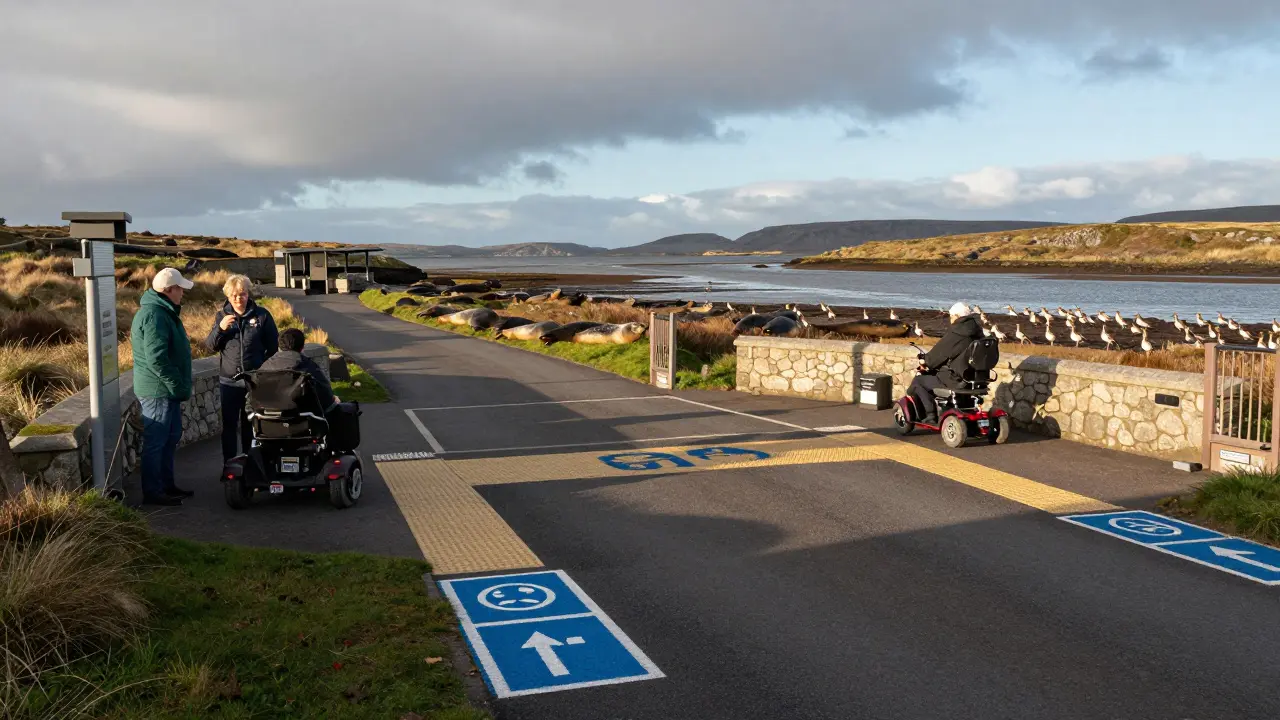
For coastal wildlife like seals and curlews, Sandside provides a unique experience. The tidal flats can be treacherous, but the designated viewing platforms raise you above the mud line. This year, they installed tactile paving guides for visually impaired visitors, linking parking to the beach access points.
Hunterfield Estate
Focusing on mammalian life, this estate hosts red deer and roe deer populations that are habituated to human presence. The drives here are private and gravel-stabilized. Unlike public roads, these allow for slow movement without stopping traffic, giving you ample time to observe the herds without rushing.
Understanding Hide Design and Viewing Angles
A hide is a blind-a structure used to observe wildlife without being seen. Old designs often prioritized concealment over entry, resulting in narrow doors and dark interiors. The new generation of hides utilizes sliding glass doors and open-fronted windows with blinds.
The viewing angle is crucial. Poorly positioned hides force you to crane your neck to see a bird on a distant perch. Modern accessible hides align the bench height with the average eye-level of a seated adult. This ensures you aren't staring through a hole at the ground but at eye-level with the tree canopy.
Lighting inside these structures is also improving. Night hides allow for observation of bats, owls, and badgers. New models use UV-filtered red lighting, which allows you to see inside the hide without attracting insects or alarming nocturnal wildlife. This subtle technology enhances the experience for night-blindness conditions as well.
Facilities Beyond the Trail
You can't spend hours watching nature if basic needs aren't met. Toilet availability is often the deciding factor for parents with strollers or wheelchair users. Most major reserves now feature changing tables, though size varies. Some facilities are 'changing places,' equipped with hoists and adult-sized beds.
Parking is another hurdle. 'Blue Badge' spaces are common at large sites, but smaller reserves might lack them entirely. Always check the site map beforehand. A standard car might fit, but van conversions need different clearances. Some sites now offer pre-booked drop-off points where staff assist with transport to the viewing platform.
Cafés play a role too. After a long day of observation, the ability to sit comfortably is vital. Look for locations offering grab rails at counter heights and menu displays at lower levels. The 'Welcome' scheme in Scotland certifies venues that meet specific disability standards, making it easier to spot safe dining spots.
Planning for Weather and Seasonal Shifts
We all know Scotland's weather can change in minutes. For accessible viewing, this matters immensely. Rain turns compacted earth into slurry. Winter brings ice. Spring brings high grass that blocks sightlines from lower seating positions.
In early spring (March to May), the wildlife is most active due to breeding seasons. However, the mud is at its deepest before the summer dry spell hits. If you rely on a manual wheelchair, late June through August usually offers firmer ground. Conversely, autumn offers stunning colors and migration opportunities, but shorter daylight hours mean you might need extra time to return safely.
Tide tables are non-negotiable for coastal sites. Accessible paths along estuaries can disappear under the water within hours. NatureScot apps now integrate tide data with location alerts, warning you if a path will flood during your visit window.
Transport and Rental Options
Bringing your own equipment is ideal, but not always feasible. Several visitor centers offer electric mobility scooter hire. The battery range is sufficient for a full day of exploration. At major hubs like the Royal Zoological Gardens in Edinburgh, specialized all-terrain pushers are available on request for rougher trails.
Public transport links vary widely. The ScotRail network reaches some gateways, but last-mile connectivity remains spotty. Bus services often stop short of trailheads. For independent travelers, ride-sharing apps are becoming more prevalent in rural tourist hubs, bridging the gap between station gates and reserve entries.
Engaging with Local Rangers
The humans on the ground are your best resource. Every reserve employs rangers trained in inclusive support. Don't hesitate to speak up. If you encounter a closed door or a blocked path, report it immediately via the site's feedback channel. They track incidents closely.
Many reserves run guided walks tailored for groups with mixed abilities. These often start from a central hub to avoid the difficulty of navigating unmarked paths. Joining a ranger-led session gives you insider knowledge of where the animals are moving today versus last week.
Are there dog-friendly paths suitable for service dogs?
Yes, but restrictions apply within the core conservation zones. Service dogs are generally permitted everywhere except nesting areas during breeding season (April-June). Emotional support animals may face stricter rules depending on the site policy. Check the reserve website for current seasonal bans before arriving with a pet.
Can I bring my own all-terrain wheelchair into the wilderness?
Absolutely. Personal equipment is encouraged on rugged paths like those in Flow Country or the Scottish Borders. Just note that these terrains are very demanding on tires. Staff cannot guarantee recovery if you get stuck in deep peat, so bringing a companion is highly recommended.
Do wildlife hides have heating?
Some do, specifically larger visitor hides managed by RSPB or Highland Wildlife Park. Smaller wooden field hides are typically unheated. In winter, thermal blankets are sometimes available on request at reception desks for use during prolonged observation sessions.
Is parking guaranteed for Blue Badge holders?
Not always at peak times. During summer holidays, designated bays fill up quickly. Booking a ticket online in advance secures a reserved spot closer to the entrance at popular sites. Remote sites often have ample free space but may involve a walk to the trailhead.
How do I find information on accessibility updates?
Use the official AccessAble guide app or the 'VisitScotland' website. Both provide user-updated reviews regarding pavement cracks or temporary blockages. Contacting the center directly 48 hours prior is the most reliable method to confirm real-time conditions.
Comments (14)
-
Jen Becker March 31, 2026
This guide looks nice but I doubt it covers the real issues. Most people just talk about ramps without considering the terrain itself. The boggy ground will still swallow your wheels regardless of a ramp. It feels like half measures are being sold as solutions.

-
Ryan Toporowski April 2, 2026
This is such great news for everyone wanting to see the birds! 🐦 The RSPB really stepped up their game with those new hides. I hope more parks follow suit soon! 👏 Accessible trails mean so many more memories for families ❤️ Keep this info coming up! 🙌

-
Samuel Bennett April 4, 2026
The article mentions the royal society but omits the tax implications of these grants entirely.
Also why does the text claim 'game has changed' when clearly nothing fundamental has shifted?
It is irresponsible to suggest infrastructure is fully fixed when gravel ruts persist.
We must scrutinize these public statements more critically.
There is likely a hidden agenda behind the 'inclusive' branding.

-
Rob D April 6, 2026
You Americans have no idea what true ruggedness means compared to Scottish estates. Our Highlands are built to endure centuries of storms unlike your soft landscapes. The grit required to survive the Flow Country is unmatched anywhere globally.
Respect the land or do not visit at all. We protect our wildlife better than any zoo ever could. Don't treat this like a theme park because it is sacred.
The paths are there for survival not for your convenience alone. Show respect for the history here.

-
Tamil selvan April 6, 2026
I am deeply grateful to read such important information for all disabled individuals!!!
It gives me immense joy to see progress being made in Scotland!
The detailed explanations about surface composition are very helpful for planning.
I shall definitely check the RSPB website for upcoming holidays.
Thank you so much for sharing this valuable resource! 😊

-
Samar Omar April 6, 2026
The notion that nature belongs to everyone sounds noble but feels performative.
We see boardwalks constructed with funding that could have gone elsewhere.
It creates a false sense of security when the path ends abruptly.
The terminology used to describe these changes is often overly sanitized.
Accessibility is frequently treated as a marketing box rather than a necessity.
The author mentions compacted stone dust which seems technical but vague.
How do we verify that the surface quality remains consistent throughout the season?
The reliance on grants suggests a lack of inherent infrastructure planning.
Nature reserves historically prioritize ecology over human comfort for good reason.
When humans enter too comfortably, they disrupt the very peace they seek.
We should consider if true immersion requires some level of struggle.
Modern convenience often strips away the raw essence of the wilderness experience.
The sensory hides mentioned may isolate visitors from the actual elements.
It is a delicate balance between safety and authentic engagement with wild spaces.
Furthermore, the data regarding visitor capacity remains unproven in extreme weather conditions.
I remain skeptical until I see sustained performance metrics released publicly.

-
John Fox April 6, 2026
hopefully the paths stay clear after the next storm hits

-
Anuj Kumar April 8, 2026
Why do they push apps for tide tables? They track location data everywhere. It is safer to bring a paper map instead.
Government websites always ask for login details before showing maps.
Be careful with sharing your visit times on those platforms.
Privacy matters more than convenience in the woods.
Trust the land not the screen.

-
Christina Morgan April 8, 2026
I recently visited Loch Garten last summer and found the improvements truly remarkable.
The new ramp system allowed my father to access the viewing area without pain.
He was able to see the eagles soaring above the water just like we planned.
Staff were incredibly helpful with the mobility scooter rentals we needed.
They even had designated parking spots right near the entrance gate.
My mother loved the heated seating options inside the main hide shelter.
It made staying outdoors during colder winds actually bearable for us.
We spent nearly four hours watching the wildlife without needing breaks.
The paths were well-maintained despite some heavy rain earlier in the week.
It is wonderful to see organizations taking disability needs seriously at last.
I strongly recommend anyone planning a trip checks the condition reports first.
Communication from the rangers has been clear and timely regarding updates.
You should definitely try to book your spot online weeks in advance.
Parking fills up very quickly during the peak tourist months there.
The café nearby also had grab rails installed for easier counter access too.
Overall the experience felt inclusive and welcoming for our entire group.
Please share your stories so we keep pushing for more sites like this one.

-
Jim Sonntag April 9, 2026
Looks nice until it rains for six straight weeks then good luck with the mud. :)

-
Deepak Sungra April 11, 2026
The obsession with finding hidden agendas is exhausting to read through honestly.
Why must every improvement be suspect of ulterior motives?
Simply acknowledging the effort takes precedence over suspicion here.
People are genuinely trying to open doors for others.
Stop looking for battles that do not exist in this post.
It ruins the atmosphere of genuine community support needed here.
Let people help people without constant scrutiny.
Peaceful observation is far more productive than nitpicking.

-
chioma okwara April 11, 2026
Your writting is pretensious but your gramer is actually bad.
You say sanitised but spell it wrong in the middle.
It is ironic how you lecture on language while failing basic spelling.
Check your dictionary before posting elite opinions like that.
True class comes from getting the basics right first.

-
Tasha Hernandez April 11, 2026
You think this is amazing but have you seen the prices for those scooters?
Accessibility costs money and not everyone can afford it sadly.
It feels patronizing to call it accessible when it is gated by wealth.
Real equality requires free access not paid upgrades.
Stop pretending inclusivity exists when fees still bar entry.
It hurts to read hopeful posts that ignore economic barriers.

-
Kathy Yip April 12, 2026
Does anyone knows if the cafe has gluten free optins?
I planing to go there next monnth with my mom.
She neads sugar free food mostly.
Thanks for the reccomendations on the park.
Hope i find more info on dinning.
