
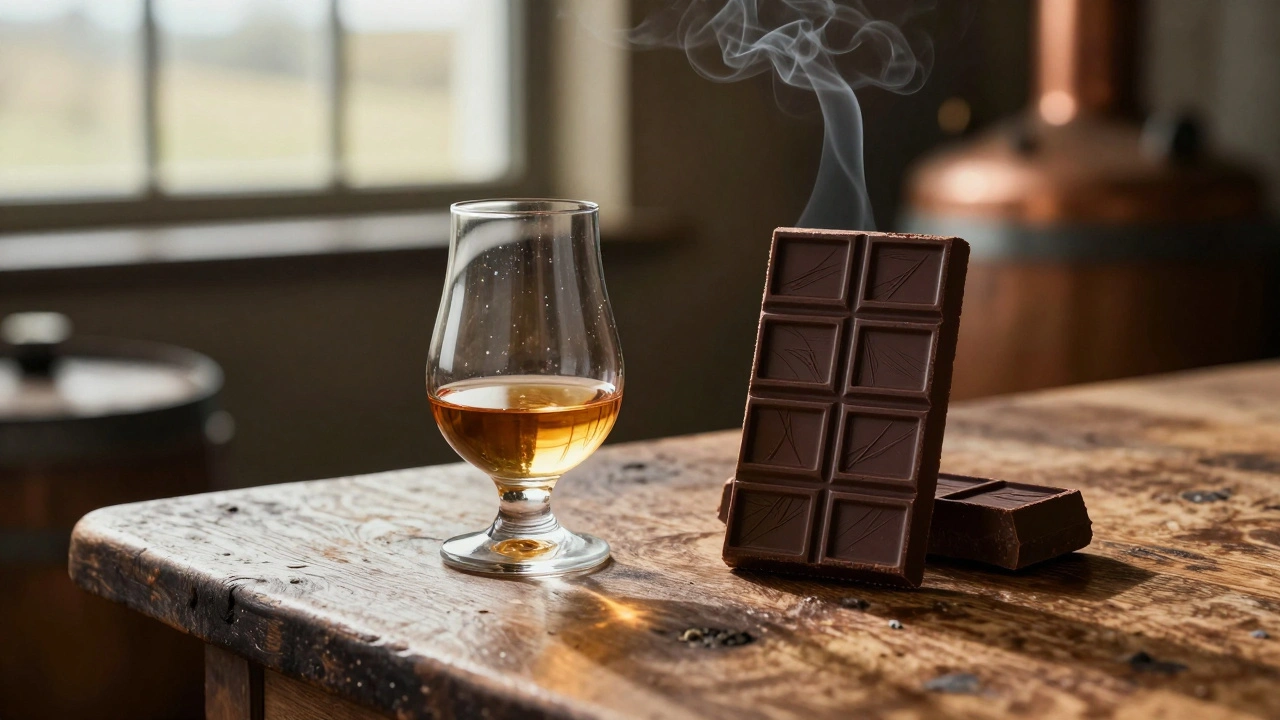
There’s something quiet magic in the way a smooth piece of dark chocolate melts on your tongue just as a sip of single malt whisky warms your throat. It’s not just a snack-it’s a moment. In Scotland, where whisky is woven into the land and chocolate is becoming its quiet cousin in craftsmanship, pairing the two isn’t trendy. It’s tradition with a twist.
Why Whisky and Chocolate Work Together
Whisky and chocolate share the same language: depth, complexity, and a hint of surprise. Both are made from natural ingredients that change with time, soil, and fire. A peaty Islay whisky doesn’t just taste smoky-it carries the scent of salt-sprayed peat bogs. A single-origin Venezuelan dark chocolate doesn’t just taste bitter-it holds notes of red fruit, earth, and even a whisper of coffee.
When you pair them, you’re not mixing flavors. You’re having a conversation. The tannins in dark chocolate soften the sharpness of high-proof whisky. The caramel and vanilla in a bourbon-cask whisky lift the sweetness in milk chocolate without overwhelming it. It’s chemistry, yes-but it’s also instinct.
Meet the Artisan Makers Behind the Pairings
Scotland’s whisky distilleries have been perfecting their craft for centuries. But the chocolate scene? That’s newer-and far more personal.
In Glasgow, Chocolat de la Terre makes bars using cacao beans from Ecuador and Ghana, then ages them in used whisky casks. Their 72% dark bar, soaked in Glenfiddich ex-bourbon barrels for six weeks, tastes like burnt orange rind and toasted almonds with a finish that lingers like a slow burn of 18-year-old malt.
On the Isle of Skye, Hebridean Cocoa works with local honey and sea salt, then presses their bars into shapes that mimic the island’s cliffs. Their Peat Smoke bar, infused with a touch of Laphroaig cask smoke, isn’t just chocolate-it’s a taste of the Hebrides.
And in Dundee, where I live, St. Andrews Chocolate Co. started by a former whisky blender, now makes small-batch truffles filled with whisky ganache. One of their bestsellers? A 45% milk chocolate truffle with a core of Aberlour 12-year-old, dusted with crushed espresso. It’s rich, balanced, and doesn’t need sugar to shine.
How to Taste Whisky and Chocolate Like a Pro
You don’t need a degree in sensory science. But you do need to slow down.
- Start with the chocolate. Break a small piece. Let it sit on your tongue for five seconds before chewing. Notice the first flavor-fruit? Smoke? Spice?
- Take a small sip of whisky. Don’t gulp. Let it coat your mouth. Breathe out through your nose. What do you taste now?
- Put the chocolate back on your tongue. Sip the whisky again. Watch how the flavors shift. The chocolate might make the whisky taste sweeter. The whisky might pull out hidden notes in the chocolate you didn’t notice before.
- Write it down. Even just one word: "leather," "cinnamon," "burnt honey." Memory fades. Notes don’t.
Temperature matters. Serve the chocolate at room temperature-not cold. Chill it, and you mute the flavors. Warm the whisky slightly in your palm, not with water. You want the aromas to rise, not escape.
Best Whisky and Chocolate Pairings to Try Right Now
Here are five pairings that actually work-not because they’re popular, but because they’ve been tested in tasting rooms across Scotland.
| Whisky | Chocolate | Why It Works |
|---|---|---|
| Springbank 12 (Campbeltown) | 70% dark chocolate with sea salt | The briny, oily texture of Springbank matches the salt’s crunch. The chocolate cuts the smoke. |
| Glenlivet 18 (Speyside) | Dark milk chocolate with dried cranberries | The whisky’s apple and honey notes bloom with the fruit in the chocolate. |
| Lagavulin 16 (Islay) | 85% dark chocolate with smoked sea salt | Two smoky forces meet. The chocolate tames the peat without dulling it. |
| BenRiach 21 (Speyside, sherry cask) | Dark chocolate with orange zest | The sherry’s dried fruit sings with the citrus. It’s like Christmas in a bite. |
| Ardbeg Uigeadail (Islay) | White chocolate with black pepper | Yes, white chocolate. The sweetness holds up to Ardbeg’s intensity. The pepper wakes up the spice in the whisky. |
What Not to Do
Don’t pair a delicate Lowland whisky with a 90% cacao bar. It’ll vanish. Don’t use cheap chocolate with a 25-year-old single malt. It’ll taste like wax and sugar. And don’t rush. This isn’t a game. It’s a ritual.
Also, skip the chocolate-covered whisky balls you find in tourist shops. They’re sweet, sticky, and made with flavorings, not real ingredients. Real pairings don’t hide-they reveal.
Where to Find These Pairings in Scotland
If you’re planning a trip, here’s where to go:
- Edinburgh: Visit The Scotch Whisky Experience for their guided tasting sessions. They offer a chocolate pairing flight every Saturday.
- Isle of Islay: Stop by the Laphroaig Visitor Centre. They serve a chocolate tasting alongside their peaty malts.
- Dundee: St. Andrews Chocolate Co. offers walk-in tastings on weekends. Try their Whisky & Waffle box-three truffles, one oatcake, one dram.
- Oban: The Oban Distillery pairs their 14-year-old with a local chocolate maker’s sea-salt caramel bar. It’s only available on-site.
Most distilleries now offer these pairings as part of their tasting tours. Ask for them. They’re not always on the menu-but they’re always worth asking for.
Make It Your Own
You don’t need to travel to Scotland to taste this. Buy a bottle of whisky you love. Pick up a bar from a local artisan chocolatier. Don’t go for the big brands. Look for small batches. Look for names you don’t recognize. That’s where the soul is.
Light a candle. Sit quietly. Taste slowly. Let the flavors unfold. This isn’t about impressing anyone. It’s about remembering what it feels like to slow down.
In Scotland, we don’t just drink whisky. We listen to it. And when you pair it with chocolate made by someone who cares as much as you do? You’re not just tasting. You’re connecting.
Can you pair whisky with milk chocolate?
Yes, but only with the right whisky. Light, sweet malts like Glenlivet 12 or Glenfiddich 12 work beautifully with milk chocolate. The whisky’s vanilla and honey notes match the chocolate’s creaminess. Avoid peaty or smoky whiskies-they’ll clash with the sweetness. Look for chocolate with at least 40% cocoa. Anything lower tastes like candy, not craft.
What’s the best chocolate for beginners trying whisky pairings?
Start with a 60-70% dark chocolate that’s smooth and not too bitter. Bars from Belgium or Switzerland, like Valrhona or Lindt Excellence, are safe bets. Avoid anything with nuts, caramel, or inclusions. You want to taste the chocolate itself, not the extras. Pair it with a gentle Speyside whisky like Glenmorangie 10. It’s approachable, fruity, and forgiving.
Does the age of the whisky matter for pairing?
Not as much as you think. A 10-year-old whisky can outshine a 25-year-old if the flavors match. What matters is the cask type-sherry, bourbon, port-and the distillery’s style. A young sherry-cask whisky like GlenDronach 12 often pairs better with dark chocolate than an old, delicate Lowland malt. Age adds complexity, but flavor harmony matters more.
Can you pair whisky with white chocolate?
Absolutely-but only with bold whiskies. White chocolate is sweet and fatty, so it needs something powerful to stand up to it. Try Ardbeg Uigeadail or Laphroaig 10. The smoke and peat cut through the sugar. Add a pinch of sea salt or black pepper to the chocolate, and you’ll unlock a whole new layer. It sounds odd, but once you try it, you won’t go back.
Where can I buy artisan Scottish chocolate online?
Several Scottish chocolate makers ship internationally. Check out Chocolat de la Terre (Glasgow), Hebridean Cocoa (Skye), and St. Andrews Chocolate Co. (Dundee). All three sell directly from their websites. Look for bars labeled "cask-aged" or "distillery collaboration." They’re pricier, but you’re tasting history, not just sugar.
Comments (9)
-
Zach Beggs December 6, 2025
I tried the Glenlivet 18 with that cranberry dark milk chocolate last weekend and wow. It was like Christmas morning in my mouth. Didn’t expect it to work so well, but the honey in the whisky just hugged the fruit right into place. Now I’m hooked.

-
Kenny Stockman December 6, 2025
Man, this post hit different. I used to think whisky and chocolate were just fancy snacks, but now I get it-it’s like listening to a song in slow motion. Took me three tries to actually taste the orange in that sherry cask bar. Worth it.

-
Antonio Hunter December 7, 2025
There’s something deeply poetic about how these two crafts-whisky distillation and chocolate tempering-both rely on patience, terroir, and an almost spiritual attention to detail. The way the cask influences flavor isn’t just chemical; it’s cultural memory. When you age chocolate in a Glenfiddich barrel, you’re not infusing flavor-you’re inviting history to sit at the table. That’s why mass-produced chocolate fails here. It lacks the soul of the vessel. The artisan makers aren’t just combining ingredients-they’re curating moments. And if you rush it, you miss the entire conversation.

-
Paritosh Bhagat December 8, 2025
Okay but seriously-why is everyone ignoring the fact that white chocolate with Ardbeg is basically a sugar bomb with a pretentious label? I mean, white chocolate is just sugar, milk fat, and vanilla extract. Calling it 'craft' when it's basically candy with a fancy name? Come on. And don’t even get me started on 'cask-aged' chocolate-that’s just marketing jargon. Real whisky is aged in wood. Chocolate is just sitting there. Big difference.

-
Ben De Keersmaecker December 9, 2025
Minor correction: the table lists 'Lagavulin 16' paired with '85% dark chocolate with smoked sea salt'-but Lagavulin’s own visitor center uses a 70% bar from a local Skye maker for their official pairing. The 85% is too intense; it overpowers the maritime brine. Also, 'smoked sea salt' isn’t a standard ingredient-it’s either smoked salt or sea salt with a hint of peat smoke. Precision matters when you’re talking about flavor architecture.

-
Aaron Elliott December 9, 2025
One must question the epistemological validity of flavor pairing as a discipline. Is taste merely subjective experience, or can it be objectively quantified through sensory taxonomy? The notion that 'chemistry' governs these pairings is a reductionist fallacy. The human palate is not a lab instrument. To claim that 'the chocolate tames the peat' is to anthropomorphize flavor. A more rigorous framework is required before such pairings can be elevated beyond culinary folklore.

-
Chris Heffron December 9, 2025
OMG I just tried the Ardbeg + white chocolate thing and I’m crying 😭😭😭 it’s like a campfire and a birthday cake had a baby. My dog even came over to see what was happening. 10/10 would recommend.

-
Adrienne Temple December 11, 2025
For beginners, start with something like a 60% dark bar and a Glenmorangie 10. It’s gentle, sweet, and doesn’t scare you. I did this with my mom last weekend and she said, 'I didn’t know chocolate could taste like fruit!' 😊 We both loved it. No fancy terms needed. Just sit, breathe, and taste. That’s all.

-
Sandy Dog December 12, 2025
Okay so I just spent 3 hours doing this with my partner and we cried. Like, actual tears. The first time I tasted the Aberlour truffle with that espresso dust? I swear I saw my grandma’s kitchen in 1987. The smell, the warmth, the way the chocolate melted slow… I felt like I was being hugged by my whole family. And then we paired it with the Lagavulin and I swear the room got darker and the candle flickered like it was breathing. I’m not okay. I need more. Someone send me the Hebridean Cocoa bar. I’ll pay triple. I need this in my life forever. 🥺🍫🥃
