
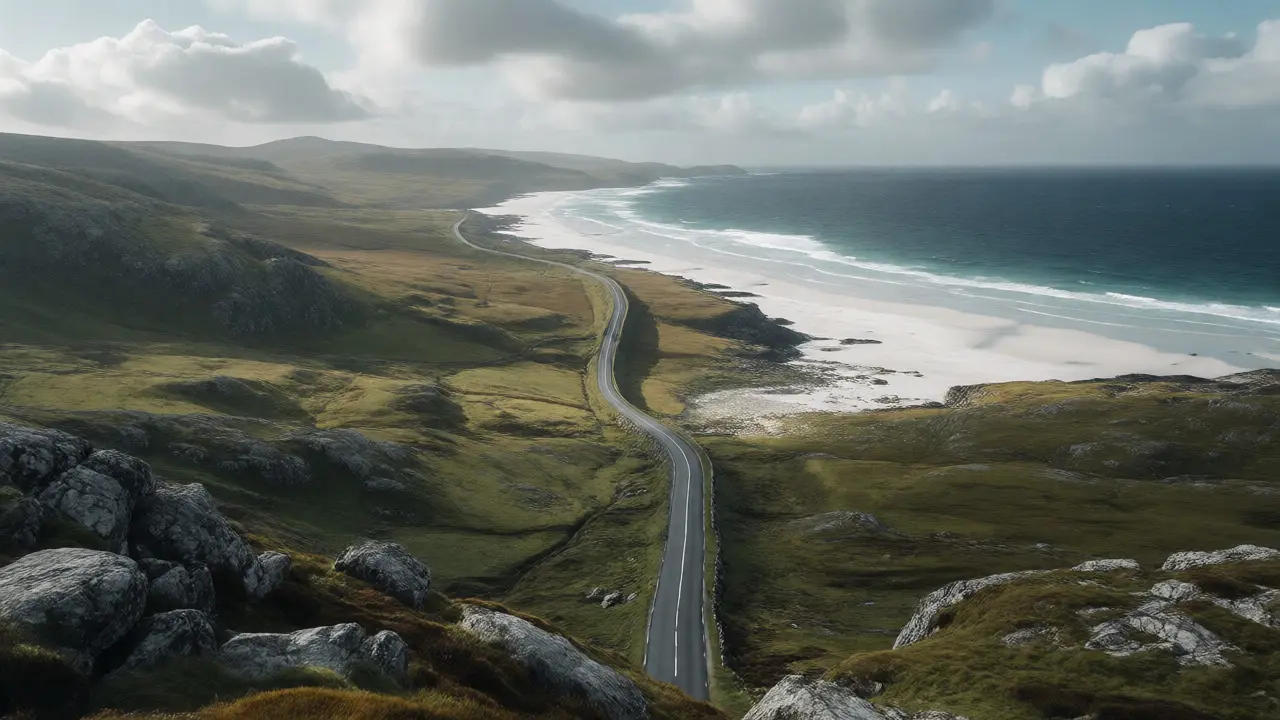
Imagine driving down a single-track road that seems to end abruptly in the Atlantic Ocean. No roundabout, no car park with ticket machines, just a vast expanse of white sand stretching for miles under a sky so wide it makes you feel small. This is Traigh Mhor, a massive sandy beach located on the Isle of Lewis in the Outer Hebrides, Scotland, known for its dramatic emptiness and accessible location at the end of the A857 road. It isn’t just another pretty postcard; it’s a raw, wind-swept landscape where the weather dictates your experience more than any itinerary ever could.
If you’re planning a trip to the Outer Hebrides, you’ve likely heard about the famous Callanish Stones or the rugged cliffs of Butt of Lewis. But Traigh Mhor offers something different: space. In a world where tourist spots are often crowded, this beach provides a rare sense of solitude. Whether you are a photographer chasing the perfect light, a walker looking for miles of uninterrupted coastline, or a driver wanting to test your nerves on soft sand, understanding how to navigate and respect this place is key. Here is what you actually need to know before you go.
Where Exactly Is Traigh Mhor?
Traigh Mhor sits on the west coast of the Isle of Lewis, part of the Outer Hebrides archipelago off the northwest coast of mainland Scotland. To get there, you take the A857 road north from Stornoway, the main town on Lewis. As you drive past the village of Ness, the road narrows and winds through moorland until it hits the coast. You’ll see signs pointing toward the beach, but honestly, you can’t miss it once you smell the salt air and see the dunes rising up.
The name "Traigh Mhor" translates roughly to "Big Strand" or "Large Beach," which is an understatement. The beach stretches for several kilometers, bordered by machair (fertile low-lying grassy plains) on one side and the open ocean on the other. Because the road ends right at the shore, access is direct. There is no long walk from a distant car park unless you choose to leave your vehicle further back to protect the fragile dune vegetation.
What Makes This Beach Unique?
Most people visit Traigh Mhor for the sheer scale of the landscape. Unlike urban beaches with promenades and cafes, this is wild nature. The sand here is fine and pale, often shifting with the tides and winds. At low tide, you can walk for nearly an hour without seeing another person. That kind of silence is heavy, but in a good way-it forces you to slow down.
The environment is dynamic. The machair behind the beach is a protected habitat for rare birds like the corncrake. If you visit in late spring or early summer, you might spot these elusive birds skulking in the long grass. The contrast between the stark, grey-green machair and the bright white sand creates a visual palette that photographers love. But remember, beauty here comes with harsh conditions. The North Atlantic doesn’t care if you forgot your waterproof jacket.
| Feature | Detail |
|---|---|
| Location | West Coast, Isle of Lewis, Outer Hebrides |
| Access Road | A857 (Ends at the beach) |
| Nearest Town | Stornoway (approx. 15-20 mins drive) |
| Best For | Photography, walking, birdwatching, solitude |
| Facilities | Minimal (No toilets, no cafes nearby) |
Driving Tips: Can You Drive On The Sand?
This is the question everyone asks. Yes, you can drive onto parts of Traigh Mhor, but do not treat it like a race track. The sand is deep and soft, especially near the dunes. If you try to accelerate too hard, your wheels will dig in, and you’ll be stuck waiting for a tractor or a very patient local to tow you out.
- Check the tide: Always check high tide times before you go. Driving on wet sand near the waterline is easier than dry sand, but getting cut off by the tide is dangerous.
- Stay on established tracks: Don’t wander off into the dunes. The vegetation holds the sand together. Driving over it destroys the ecosystem and leaves ruts that last for years.
- Respect locals: Fishermen and crofters use this area. If you see a vehicle coming, pull over. They know the terrain better than you do.
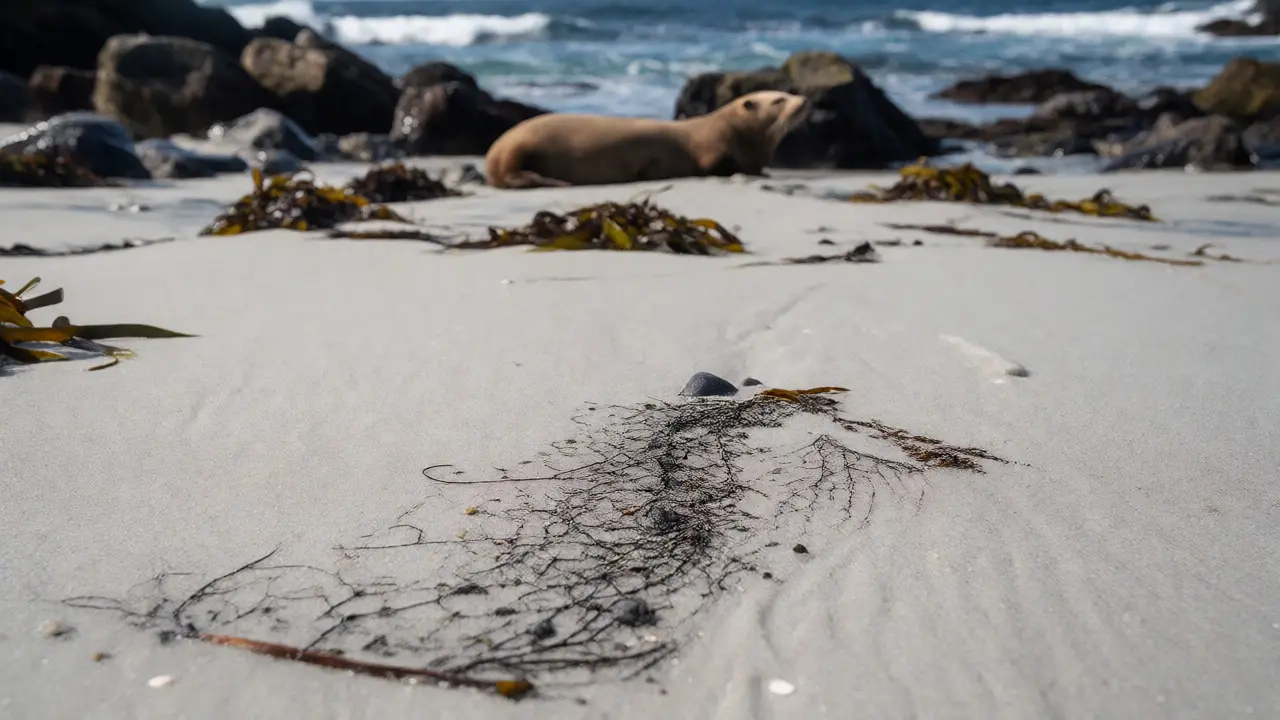
If you aren’t confident in your driving skills on loose surfaces, park on the hard-standing area near the road end and walk. Honestly, walking gives you a better chance to notice the details-the shells, the seaweed patterns, the seals bobbing in the distance.
When Is The Best Time To Visit?
September and October offer some of the most dramatic skies. The light is lower, casting long shadows across the dunes, and the crowds from the summer holiday season have vanished. However, the weather is unpredictable. One minute you’re baking in the sun, the next you’re being blasted by horizontal rain. Layer up.
Spring (April to June) is great for wildlife. The machair blooms with wildflowers, and the birdlife is active. Summer brings warmer temperatures but also more tourists and midges (tiny biting insects). If you hate midges, avoid still evenings in July and August. Winter visits are cold and windy but incredibly atmospheric. Just make sure your car has good tires and you’re prepared for short daylight hours.

Photography And Wildlife Spotting
For photographers, Traigh Mhor is a playground. The combination of white sand, dark rocks, and blue-grey sea offers endless compositions. Sunrise here is spectacular because the east-facing horizon catches the first light beautifully, even though the beach faces west. Wait for the clouds to break; the "God rays" hitting the water are worth the wait.
Keep your eyes peeled for otters. They frequent the rocky outcrops at either end of the beach. Seals are common too, often hauled out on the sandbanks at low tide. Give them space. If they dive away, you’re too close. Binoculars are essential-you’ll see much more than with your naked eye.
Practical Advice For Your Visit
There are no facilities at Traigh Mhor. No toilets, no bins, no coffee shop. This means you must bring everything you need and take everything you don’t want. Litter picks are appreciated, but please don’t leave your banana peel behind thinking it will compost quickly in the cold sea.
Wear proper footwear. Walking barefoot sounds romantic, but the sand can be sharp with broken shells, and the water temperature is rarely comfortable for swimming outside of a brief dip in peak summer. Even then, the currents can be strong.
Finally, respect the quiet. This is a place for reflection. If you’re traveling with friends, keep music volumes reasonable. The natural soundscape-wind, waves, birds-is the main attraction. Leaving it undisturbed ensures others can enjoy the same peace you came for.
Is Traigh Mhor safe for swimming?
Swimming is possible but requires caution. The Atlantic waters are cold year-round, and currents can be strong. There are no lifeguards on duty. Only swim if you are experienced and confident in open water, and never turn your back on the sea.
Can I park my campervan at Traigh Mhor?
Wild camping is generally tolerated in Scotland under the Outdoor Access Code, provided you follow the "leave no trace" principles. Parking directly on the sand can be risky due to tides and soft ground. Look for designated lay-bys along the A857 or park responsibly on firmer ground away from sensitive dune areas.
How far is Traigh Mhor from Stornoway?
It is approximately a 15 to 20-minute drive from Stornoway town center via the A857 road. The route is straightforward but involves navigating single-track roads, so allow extra time if you encounter oncoming traffic.
Are dogs allowed on Traigh Mhor?
Yes, dogs are welcome and this is a fantastic beach for them to run freely. However, always keep them under control, especially during bird nesting seasons (spring/early summer) when livestock and wildlife may be present. Clean up after your dog immediately.
What should I bring for a day trip?
Bring layers (windproof and waterproof jackets), sturdy footwear, plenty of water, snacks, and a camera. Since there are no shops or toilets, pack out all your trash. A map or downloaded offline GPS is useful as signal can be patchy in remote parts of Lewis.
Comments (12)
-
Joanna Mucha September 15, 2026
It is genuinely exhausting to read these modern travel guides that treat solitude as a commodity rather than a spiritual necessity. You speak of "space" as if it were something one can purchase with a tank of gas and a sense of entitlement. True emptiness, the kind that Traigh Mhor offers, is not for the tourist who seeks validation through their Instagram lens. It is for those brave enough to confront the void without checking their phone for signal. The machair is not just grass; it is the skin of the earth breathing under the weight of your ignorance about how fragile ecosystems truly are. We have paved over our souls in the cities, and now we drive out to these remote edges hoping the wind will scrub us clean, but most of us are too loud to hear it. This place demands a reverence that the average visitor simply does not possess. They come, they take their photo, and they leave behind their litter and their noise, never understanding that the silence was the point all along. It is a tragedy of modern tourism that we must explain to people why they cannot simply park their SUV on a protected dune because they want a better angle. Respect is not a suggestion; it is the only currency that matters in such raw landscapes.

-
Dave Gibbeson September 15, 2026
Listen up folks because I am going to save you some serious headaches here.
If you are heading to Lewis do NOT underestimate the single-track roads. I cannot stress this enough. You need to pull into passing places immediately when you see an oncoming vehicle. Do not try to squeeze past a bus or a tractor if you are not absolutely certain you have the right of way. Locals will not hesitate to let you know if you are blocking their path.
Also check your tires before you go. The A857 has some rough patches near the coast. If you are driving a low-clearance car be extremely careful on the soft sand sections. I have seen so many tourists get bogged down because they thought their all-wheel-drive made them invincible. It doesn't. Traction control helps but physics always wins. Bring a shovel and a tow strap just in case. Better safe than sorry.
And please pack out every single piece of trash. Even apple cores. They don't decompose fast in that cold climate. Let's keep this place pristine for the next person.

-
Art HND September 16, 2026
Overrated. Just another beach with bad weather and worse facilities. Most people go there for the 'vibe' and end up miserable because they forgot a jacket. Waste of fuel.

-
Deb Kortyna, MBA September 17, 2026
I must respectfully disagree with the sentiment that it is merely "overrated." Having visited several times, I find the description of the landscape to be accurate, albeit understated. The sheer scale of Traigh Mhor provides a psychological reset that urban environments simply cannot replicate. Furthermore, the accessibility via the A857 makes it one of the few truly wild beaches in the UK that remains reachable by standard vehicles, provided one exercises caution regarding tide times. It is a destination worthy of significant time investment.

-
Bonnie Watt September 17, 2026
You say it's worthy of time investment? Please. I went there last October and spent half the day arguing with my partner about whose fault it was that we got stuck in the mud. It’s pretentious nonsense to romanticize getting wet and cold. If you want solitude go to your own backyard. The "dramatic emptiness" is just a nice way of saying "there is nothing there."

-
Meagan Mueller September 18, 2026
they probably put sensors in the sand to track your movements
i bet the local council sells your data to oil companies
the road ends abruptly because they don't want you finding what's really buried under the dunes
keep your eyes open
the seagulls are watching

-
Sabrina Newland September 18, 2026
omg i love this place so much 🌊🏔️✨
the light at sunset is literally magic ✨
i felt like i was floating away 😇
just remember to bring snacks bc no shops!! 🥪
and watch out for midges in summer 🦟😫
but its totally worth it 💖

-
Amara Akbar September 19, 2026
It is wonderful to see such appreciation for natural spaces. I would encourage anyone planning a visit to prioritize mindfulness during their walk. The act of leaving no trace is a form of respect that enhances the experience significantly. Also, taking time to observe the wildlife, particularly the corncrake, can deepen one's connection to the land. Enjoy your journey and stay safe.

-
Mark Harvey September 20, 2026
love this energy
keep pushing forward
the view is worth every mile
stay hydrated
you got this

-
Brandon Olvera September 21, 2026
American tourists always think they can handle the Atlantic currents. They can't. Stay on the dry sand unless you are a trained swimmer. Don't be the idiot on the news.

-
Elizabeth Brooks September 23, 2026
Hey guys quick tip from someone who lives nearby-ish!
The tide comes in REALLY fast on the west side. Check the tide tables on your phone before you even start walking down to the water. I saw a van get cut off last week. It wasn't pretty.
Also the sheep wander onto the road sometimes so slow down on the single track parts. And yes the midges are brutal in July/August but the winter visits are actually super peaceful if you dress warm.
Hope you all have a great trip!

-
Kim Edwards September 23, 2026
I CANNOT BELIEVE NO ONE IS TALKING ABOUT THE DANGER OF THE WIND!!!
One minute you are standing there feeling like a god
THE NEXT MINUTE YOU ARE BEING BLOWN ACROSS THE SAND LIKE A LEAF
IT IS TERRIFYING AND GLORIOUS ALL AT ONCE
MY HAIR WAS IN MY FACE FOR THREE HOURS STRAIGHT
BUT THE SKY?? THE SKY WAS A MASTERPIECE OF VIOLENCE AND BEAUTY
YOU HAVE TO GO JUST TO FEEL ALIVE AGAIN
