
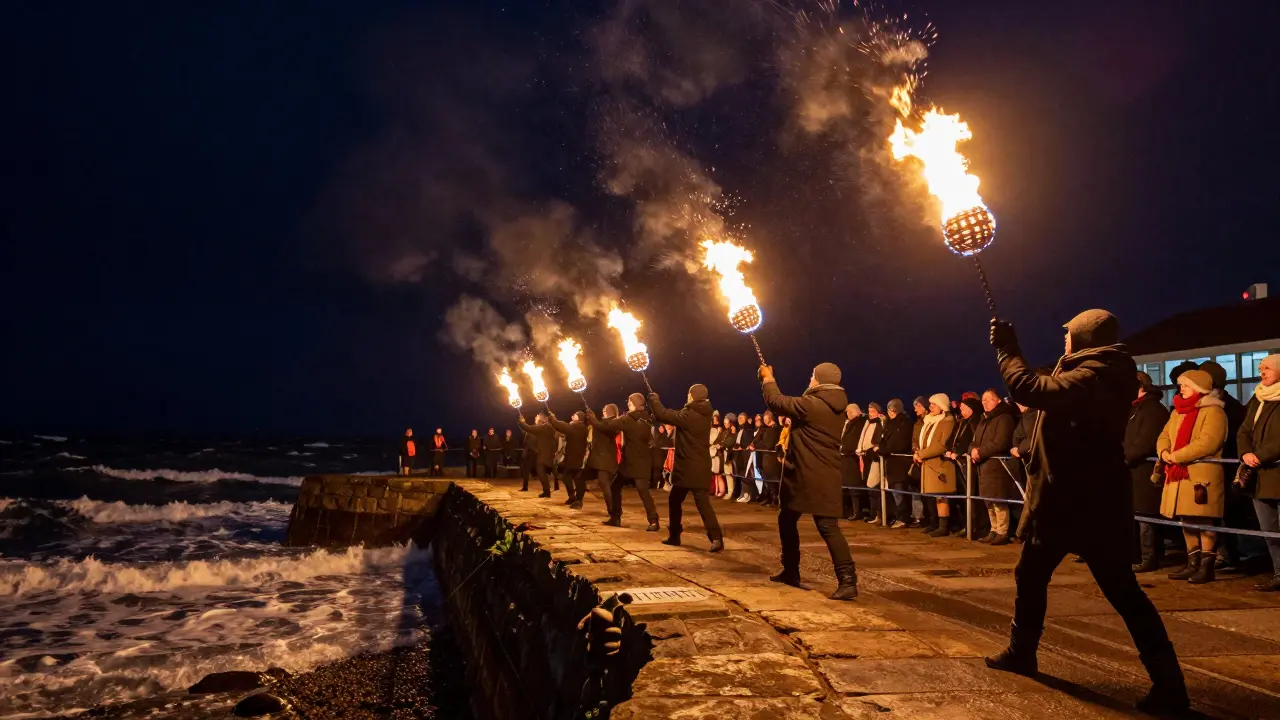
Imagine standing on a freezing harbour wall in December. The air bites at your cheeks, but the crowd around you is buzzing with anticipation. Suddenly, a man swings a flaming wicker ball into the night sky, sending a shower of sparks cascading toward the sea. It looks like magic, but it’s something much older: grit, community, and centuries of tradition. This is the Stonehaven Fireball ceremony, the crown jewel of Scotland’s Hogmanay celebrations.
If you’ve ever wondered why people swing burning balls over their heads in Stonehaven, a small town in Aberdeenshire, you’re not alone. It’s one of those rituals that seems dangerous, yet everyone does it with pride. Whether you are planning to attend this year or just curious about how this spectacle survives in the modern world, understanding the roots and risks is key. Let’s break down what makes this event so special and how to stay safe if you decide to join the thousands who gather each New Year’s Eve.
The Origins of the Fireball Ritual
To understand the fireballs, you have to look back further than most modern holidays. While we often think of Hogmanay as just a big party, its roots go deep into pre-Christian times. Many historians believe the swinging of the fireballs dates back to the Iron Age. The idea was simple: use fire to purify the air and ward off evil spirits before the new year began.
There’s also a strong maritime connection here. Stonehaven has always been a fishing port. For generations, fishermen would light fires to signal their return from the sea or to burn away bad luck after a stormy voyage. Over time, these practical acts merged with pagan purification rites. By the 18th century, the ritual had taken its current form-men swinging wicker baskets filled with peat moss and soaked in paraffin.
It wasn’t always a public show. For decades, the tradition faded during World War II due to fuel shortages. It only returned in the late 1940s when local fishermen revived it. Today, it’s not just fishermen; it’s volunteers from all walks of life, united by a desire to keep their heritage alive.
How the Ceremony Works Step-by-Step
The event doesn’t happen randomly. It follows a strict choreography that has evolved over years of practice. If you watch closely, you’ll see a pattern that repeats three times throughout the evening.
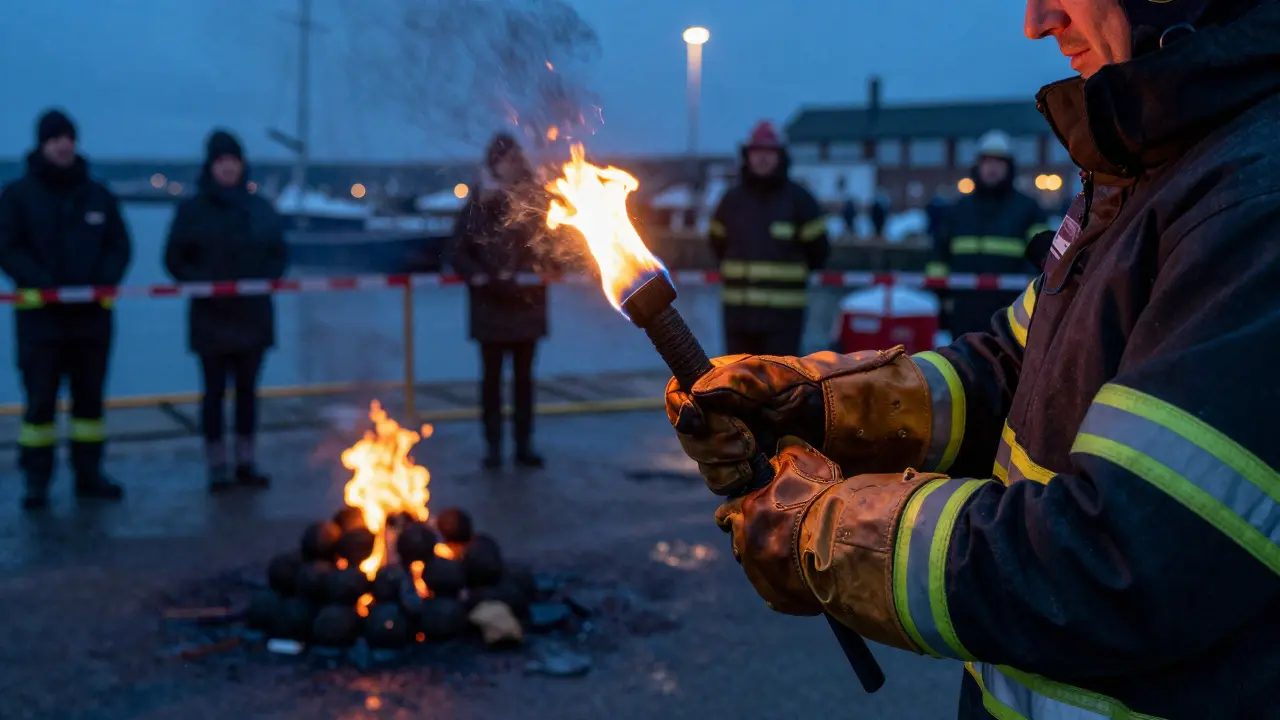
- Gathering: Participants, known as "fireball swingers," meet at the harbor early in the evening. They wear protective gear, including leather gloves and heavy coats.
- Ignition: Each swinger lights their ball. The peat moss burns hot and bright, creating a mesmerizing trail of sparks.
- The Procession: The group marches through the town streets, starting from the harbor and heading toward the pier. The crowd parts to let them pass.
- The Swing: At specific points along the route, the swingers stop and begin their rhythmic swinging. They move in unison, creating waves of fire against the dark sky.
- The Finale: The procession ends at the pier, where the final swings take place overlooking the North Sea. The sound of cheering and the sight of sparks falling into the water mark the climax of the night.
This isn’t a chaotic free-for-all. Every movement is rehearsed. The swingers practice for weeks beforehand to ensure synchronization and safety. You’ll notice they never swing too close to spectators. There’s a clear boundary between the performers and the audience, enforced by stewards and police barriers.
Safety First: What Attendees Need to Know
Let’s be honest: watching someone swing a ball of fire is thrilling, but it’s also inherently risky. Organizers take no chances. If you plan to attend, you need to know the rules to protect yourself and others.
| Guideline | Why It Matters | What To Do |
|---|---|---|
| Stay Behind Barriers | Sparks can fly up to 15 feet high and travel horizontally. | Respect the cordon lines set up by stewards. Never cross them. |
| Dress Warmly | Temperatures drop below freezing, and wind chill makes it worse. | Wear thermal layers, waterproof boots, and a hat. Comfort keeps you alert. |
| No Open Flames | Crowds plus open flames equal disaster waiting to happen. | Do not bring candles, lighters, or fireworks. Leave them at home. |
| Keep Children Close | Excitement can lead to wandering near the performance zone. | Hold hands or use wristbands for kids. Explain the danger beforehand. |
| Avoid Alcohol Excess | Hogmanay involves drinking, but judgment matters near fire. | Pace yourself. Designate a sober driver or use public transport. |
One thing many tourists don’t realize is that the area around the harbor gets incredibly crowded. Arriving early helps you secure a good spot without pushing. Also, note that mobile phone signals often fail due to network overload. Tell your friends where you’ll meet beforehand, or you might lose contact entirely.
Why Stonehaven Stands Out Among Hogmanay Celebrations
Scotland is famous for its New Year celebrations. Edinburgh draws massive crowds with concerts and street parties. But Stonehaven offers something different: intimacy and authenticity. In Edinburgh, you’re part of a huge festival machine. In Stonehaven, you’re witnessing a living history lesson performed by locals.
The scale is smaller, which means better visibility. You can actually see the faces of the swingers. You hear their chants. You feel the heat on your face. This personal connection is why people return year after year. It’s not just a show; it’s a communal experience.
Moreover, the town itself transforms. Local pubs fill up with visitors sharing stories and drinks. Street vendors sell warm food and souvenirs. The atmosphere is festive but respectful. Unlike some larger cities where noise complaints arise, Stonehaven embraces the event as part of its identity. Residents support it because it brings tourism revenue and preserves cultural pride.
Practical Tips for Visiting Stonehaven During Hogmanay
Planning a trip to Stonehaven requires more than just buying a ticket. Accommodation books up months in advance. Trains from Dundee or Aberdeen run extra services, but seats fill quickly. Here’s what you should do:
- Book Early: Reserve hotels or B&Bs in Stonehaven or nearby towns like Fraserburgh by October. Prices spike in December.
- Use Public Transport: Parking in Stonehaven is limited. Take the train from Dundee (about 45 minutes) or Aberdeen (around 30 minutes). Buses also operate on enhanced schedules.
- Arrive Before Dark: Get there by 6 PM to find parking or walking routes. The ceremony starts around 10 PM, but the buildup begins earlier.
- Bring Cash: Some small vendors may not accept cards due to poor connectivity. Have £20-£50 in notes for snacks and toilets.
- Check Weather Forecasts: Wind direction affects spark dispersion. Strong winds can cancel parts of the event. Monitor local news updates.
If you miss the main event, don’t worry. Stonehaven hosts other Hogmanay activities, including ceilidh dancing and live music in local halls. These are less crowded and offer a chance to interact with residents directly.
Preserving Tradition in a Modern World
Not everyone agrees with the fireball tradition. Critics argue it’s dangerous and environmentally unfriendly. Peat moss harvesting impacts local ecosystems, and paraffin contributes to air pollution. Yet, supporters counter that the amount used is minimal compared to industrial emissions. Plus, the event promotes sustainability by using natural materials rather than synthetic fireworks.
Efforts are underway to make the ritual greener. Some groups experiment with biodegradable fuels. Others focus on educating participants about responsible sourcing. The goal isn’t to change the essence of the tradition but to adapt it responsibly.
This balance between preservation and progress defines modern Stonehaven. The town honors its past while looking toward the future. And as long as there are volunteers willing to swing those fiery orbs, the spirit of Hogmanay will continue to shine brightly over the North Sea.
Is the Stonehaven Fireball ceremony dangerous?
While it involves fire, the ceremony is highly controlled. Swingers undergo training, wear protective gear, and follow strict safety protocols. Spectators must stay behind barriers. Accidents are rare thanks to rigorous planning and supervision.
When exactly does the Stonehaven Fireball event take place?
The main procession occurs on New Year’s Eve, typically starting around 10 PM. However, related events like concerts and gatherings begin earlier in the day. Check the official Stonehaven website for exact timings each year.
Can I participate in swinging the fireballs?
Generally, no. Participation is reserved for trained locals who volunteer months in advance. Tourists are encouraged to spectate safely. Joining without permission poses serious risks and disrupts the organized flow of the event.
Where is the best place to watch the fireballs?
The harbor wall and the pier offer prime views. Arrive early to secure a spot. Avoid standing too close to the swinging path. Elevated positions provide clearer sightlines and reduce exposure to falling sparks.
What happens if the weather is bad?
Strong winds or heavy rain may delay or cancel parts of the ceremony. Organizers prioritize safety over spectacle. Follow local announcements and social media updates for real-time changes. Indoor alternatives like ceilidhs usually proceed regardless.
Comments (8)
-
Tonya Trottman June 1, 2026
It is truly fascinating how people romanticize what is essentially a fire hazard with poor risk management protocols. The article claims it is "highly controlled," yet the very nature of swinging open flames in a crowded urban environment suggests a fundamental misunderstanding of public safety standards that we take for granted in civilized societies. One must wonder if the historical justification outweighs the potential for catastrophic injury, or if we are simply too enamored with tradition to apply basic logic.

-
Santhosh Santhosh June 2, 2026
I find myself deeply moved by the sense of community and shared heritage that this ritual embodies, as it speaks to a universal human desire to connect with our ancestors through symbolic acts of purification and renewal that transcend mere entertainment value. The description of the fishermen reviving the tradition after the war highlights a resilience of spirit that is both poignant and inspiring, reminding us that cultural practices are not static relics but living expressions of identity that adapt and endure despite adversity. It makes me reflect on the importance of preserving such unique local customs in an increasingly homogenized world where distinct regional identities are often eroded by globalization, and I hope that future generations will continue to cherish and participate in these meaningful gatherings with the same reverence and care that the current volunteers demonstrate.

-
Rocky Wyatt June 4, 2026
You people really need to stop pretending this isn't just dangerous nonsense. It's reckless endangerment wrapped in a pretty bow. If you can't handle a little cold weather without setting things on fire, maybe you shouldn't be doing it at all.

-
OONAGH Ffrench June 5, 2026
as someone who has attended several times i would say the atmosphere is quite special and the locals are very welcoming so long as you respect the boundaries which are clearly marked for good reason

-
poonam upadhyay June 7, 2026
Oh my gosh!! Have you seen the videos?? It is absolutely breathtaking!!! The way the sparks fly into the sea is like something out of a dream!!! You HAVE to go!!! Just make sure you wear your best coat!!! And don't forget your camera!!! It's the most magical thing ever!!!

-
Natasha Madison June 7, 2026
This whole event is probably a front for some underground cult activity. Why else would they insist on secrecy regarding the exact fuel mixture? It’s suspicious.

-
Shivam Mogha June 7, 2026
The safety guidelines are clear. Follow them.

-
Veera Mavalwala June 8, 2026
There is a certain poetic violence in the spectacle, a visceral reminder of humanity's ancient pact with fire that feels almost sacrilegious to reduce to mere tourist attraction. The rhythmic swinging creates a hypnotic trance state for both participants and observers alike, blurring the lines between danger and devotion in a way that modern sanitized celebrations simply cannot replicate. It is a raw, unfiltered expression of communal catharsis that demands our attention and respect, even if we do not fully understand its primal origins. To dismiss it as merely dangerous is to miss the profound psychological release it provides for a community bound by history and geography. We should embrace these wild traditions rather than trying to tame them with excessive regulation, for it is in their untamed nature that their true power lies.
