
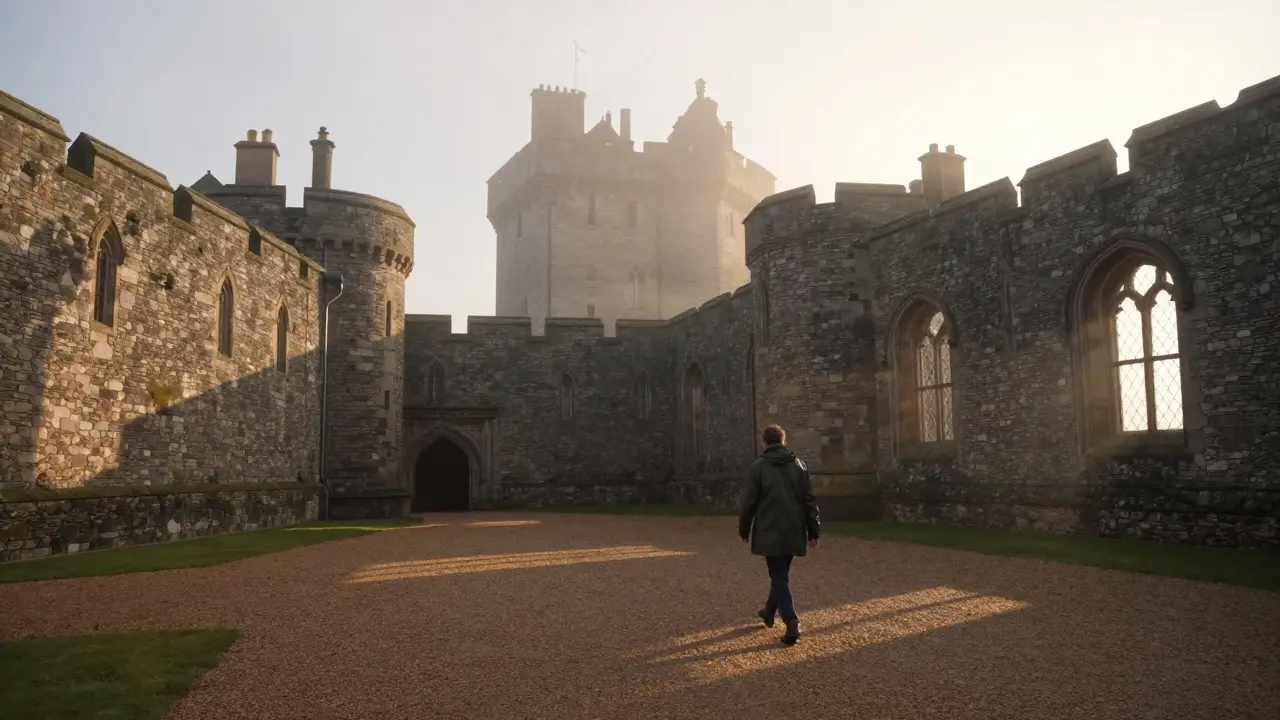
Ever walked through a misty Scottish glen and felt like you’d stepped into the 18th century? If you’ve watched Outlander, you know exactly what I mean. The show didn’t just film in Scotland-it brought the country’s ancient stones, moss-covered ruins, and rolling highlands to life in a way that turned viewers into pilgrims. And now, with GPS, rental cars, and clear signage at most sites, you can follow the same path Claire Randall took-without a time-traveling stone circle.
This isn’t a fantasy tour. It’s a real, doable road trip. You don’t need to be a superfan. You just need comfortable shoes, a full tank of petrol, and a sense of curiosity. Here’s how to cover the key Outlander filming locations in six days, with exact travel times, parking tips, and what to expect at each stop.
Day 1: Edinburgh to Doune Castle (1 hour 15 minutes)
You start in Edinburgh, where Outlander’s opening scenes were shot-though most of the city scenes were filmed on sets. Your first real location is Doune Castle, just west of Stirling. This 14th-century fortress stood in for Castle Leoch, the seat of Clan MacKenzie. Walk through the same archways where Jamie Fraser first met Claire. The courtyard where the men of the clan gathered? That’s still there. The great hall where the Earl of Murray held court? Same stone floor, same echoing silence.
Arrive by 10 a.m. to avoid crowds. Parking is free and plentiful. The castle is managed by Historic Environment Scotland, so entry costs £13.50 for adults. You can skip the audio guide-just walk slowly. Notice the narrow staircases, the thick walls, the way the light hits the windows in the afternoon. That’s how they lit the scenes.
Day 2: Doune to Glencoe and Glen Coe (2 hours 30 minutes)
Head west into the Highlands. Glencoe is where the massacre of the MacDonalds happened in 1692-and where Outlander filmed the brutal aftermath of the Battle of Culloden. The mist rolling over the peaks here isn’t CGI. It’s real. The same mist that swallowed the fleeing Highlanders in 1746 still rolls in at dawn.
Stop at the Glencoe Visitor Centre. From there, drive the narrow road to the Three Sisters. Pull over at the viewpoint near the old stone bridge. That’s where Claire ran through the rain after learning about the massacre. The trees are taller now, but the shape of the valley hasn’t changed. Take your time. Sit on a rock. Listen. This place doesn’t shout. It whispers.
Stay overnight in Glencoe Village. The Glencoe Inn serves a decent haggis supper. Book ahead. Rooms fill fast.
Day 3: Glencoe to Falkland (2 hours 45 minutes)
Falkland is the town that became 1940s Inverness in Outlander. The cobbled High Street, the old market cross, the red phone box-all real. You’ll recognize the square where Claire and Frank walked in Episode 1. The same café where she bought her tea? Still there. It’s called The Lomond. Sit outside. Order a cup. Watch the locals go about their day. You’re not just visiting a set. You’re standing where the past and present overlap.
Don’t miss the Falkland Palace. The gardens here doubled as the royal gardens of Versailles in Season 3. The stone terraces, the clipped hedges, the fountain-all unchanged since the 1500s. The crew had to add almost nothing. That’s the power of real places.
Day 4: Falkland to Midhope Castle (45 minutes) and Linlithgow Palace (30 minutes)
Midhope Castle, near South Queensferry, is Lallybroch-the home of Jamie Fraser. It’s not a grand estate. It’s a modest tower house, barely visible from the road. But that’s why it works. It looks lived-in. Real. You can’t go inside (it’s privately owned), but you can walk right up to the front gate. Take a photo. Imagine Jamie standing there, rifle in hand, waiting for Claire to return.
Next, drive to Linlithgow Palace. This is where Claire gave birth to Brianna. The ruins are haunting. The roof is gone. Rain falls straight through the great hall. The same stones where she screamed in pain are now covered in moss. The crew built nothing here. They just turned on the lights and let the ruin speak.
Linlithgow is free to enter. Park near the town center. Walk 10 minutes uphill. The path is steep but short. Bring a jacket. It’s always colder inside the ruins than outside.
Day 5: Linlithgow to Craigh na Dun (1 hour 30 minutes) and Standing Stones of Callanish (3 hours 45 minutes)
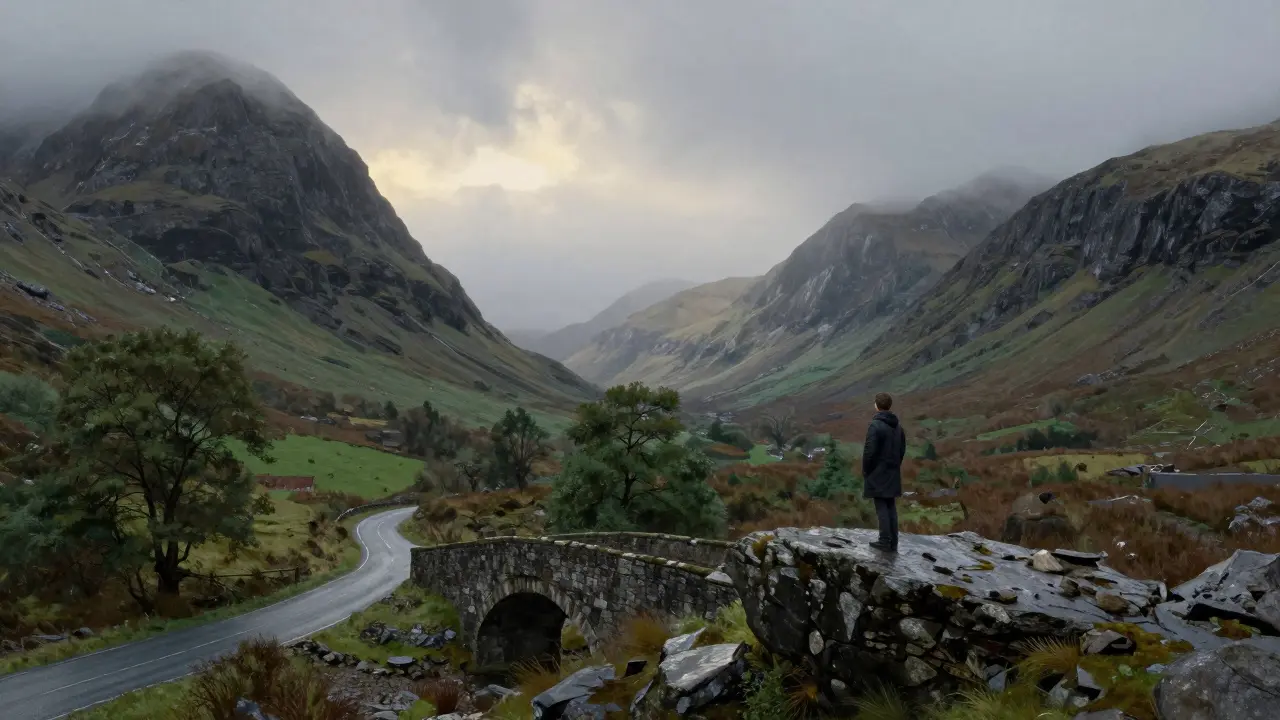
Craigh na Dun doesn’t exist. The stone circle where Claire travels through time was built on a farm near Kinloch Rannoch. The actual stones were removed after filming. But the location? Still there. The hillside, the trees, the way the light falls at sunset-it’s the same. Drive to the farm track near Kilt Rock. Park where you can. Walk up the hill. Look west. That’s where the camera stood. You won’t find a sign. You won’t find a crowd. Just silence and wind.
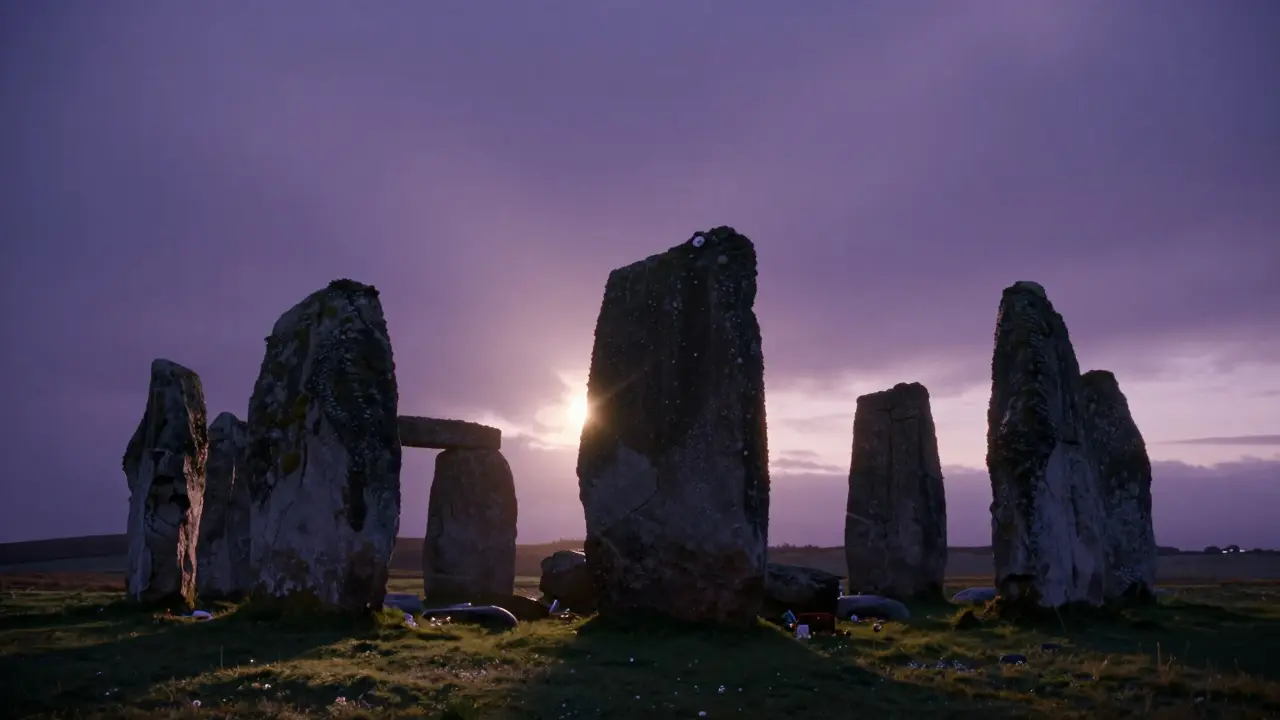
If you have time, head to the Standing Stones of Callanish on the Isle of Lewis. It’s a long drive, but it’s worth it. This 5,000-year-old circle inspired the show’s time-travel mechanics. The stones are older than the pyramids. Locals still leave offerings. Walk among them at dusk. You’ll feel it. Not magic. Not fear. Something older.
Day 6: Return to Edinburgh via Blackness Castle (1 hour 45 minutes)
Blackness Castle, on the Firth of Forth, stood in for Fort William. It’s a brutal, sea-facing fortress with thick walls and narrow corridors. The same ramparts where Black Jack Randall paced are still there. The same iron gates that slammed shut on Jamie? Still creak. The crew added chains and torches. But the stone? All original.
Stop here before heading back to Edinburgh. Walk the battlements. Look out over the water. You’ll see the same view that Jamie saw when he was imprisoned. No one else will be there. It’s quiet. You can almost hear the echo of footsteps.
End your trip where you began-in Edinburgh. Walk down the Royal Mile. Stop at the same pub where Claire and Frank had their last drink. Order a dram. Toast to Claire. To Jamie. To the stones.
What You’ll Need
- A rental car with good tires. Roads are narrow, winding, and often one-lane.
- GPS with offline maps. Signal drops in the Highlands.
- Waterproof jacket. It rains more than you think.
- Comfortable walking shoes. You’ll be on stone, mud, and gravel.
- Historic Environment Scotland membership. It saves money if you visit 3+ sites.
- A notebook. Write down what you feel, not just what you see.
What to Skip
Don’t waste time at the Outlander Visitor Centre in Linlithgow. It’s a gift shop with a few props. The real magic is outside.
Don’t expect to see the cast. They’re long gone. The locations are what matter.
Don’t rush. Each site needs at least 45 minutes. Most need two hours. You’re not ticking boxes. You’re listening.
When to Go
April to October is best. Days are longer. Roads are clearer. But September is ideal. The crowds are gone. The light is golden. The air smells like peat and rain.
Avoid December. Some sites close early. Roads freeze. The mist doesn’t feel magical then-it feels lonely.
Why This Matters
This isn’t just a tour of filming locations. It’s a walk through Scotland’s soul. The stones remember. The castles hold stories. The hills still carry the weight of history. Outlander didn’t create these places. It just showed us how to see them.
Can I visit all Outlander locations in one day?
No. Even the most dedicated fans can’t do it. The locations are spread across 200 miles. Driving between them takes time, and each site deserves at least an hour. Trying to rush ruins the experience. Stick to the six-day plan.
Do I need a guide for the Outlander tour?
Not at all. The sites are well-signed. Parking is easy. Most have free maps and info boards. A guide adds cost and crowds. You’ll see more if you walk alone, at your own pace.
Is Craigh na Dun real?
The stone circle from the show was built for filming and taken down. But the location-near Kinloch Rannoch-is real. You can stand on the same hillside and feel the same wind. That’s what matters.
Are the castles open year-round?
Most are, but hours shorten in winter. Doune Castle and Linlithgow Palace close at 4 p.m. in November. Check Historic Environment Scotland’s website before you go. Some sites require advance booking.
Can I bring my dog?
Yes, on a leash, in most places. But not inside buildings like Doune Castle or Blackness Castle. Always check the rules at each site. Some fields and trails welcome dogs; others don’t.
What’s the best camera lens for Outlander locations?
A 24-70mm zoom works best. Wide enough for castle interiors, tight enough for stone details. Avoid ultra-wide lenses-they distort the scale. The magic is in the quiet details: moss on stone, rain on a window, the curve of a stairwell.
Next Steps
If you loved this route, try the Outlander Trail in the Borders-where the French scenes were shot. Or head to the Isle of Skye for the filming of the standing stones in Season 5. Both are quieter, wilder, and just as powerful.
But start here. Walk the same ground. Feel the wind. Listen. The stones are still here. And so is the story.
Comments (13)
-
James Boggs January 13, 2026
Excellent breakdown. I did this trip last fall and every detail you mentioned was spot-on. The silence at Linlithgow Palace at dusk is something you carry with you forever.

-
Gabby Love January 15, 2026
Just wanted to add that the parking at Glencoe Visitor Centre fills up by 9:30 a.m. on weekends. Arrive earlier than you think.

-
Jen Kay January 15, 2026
It’s funny how people treat this like a theme park. You don’t need to ‘do’ Outlander. You just need to be still long enough to hear what the land remembers.

-
Frank Piccolo January 17, 2026
This is the most overrated tourist trap since the Leaning Tower of Pisa. Half these locations are just rocks in a field. The show made them look magical. Reality? Mud and sheep.

-
Michael Thomas January 18, 2026
Why not just watch the show? Saves gas. Saves time. Saves your shoes.

-
Abert Canada January 19, 2026
I’m from Quebec and I did this route last year. The mist at Glencoe? Real. The quiet at Callanish? Deeper than any cathedral. You don’t visit these places-you let them visit you.

-
Scott Perlman January 19, 2026
Just go. Bring a jacket. Listen. That’s it.

-
Karl Fisher January 20, 2026
When I stood at Craigh na Dun’s old site, I swear I felt a breeze that wasn’t there. Not wind. Not air. Something else. Like the stones were breathing. I cried. I’m not ashamed.

-
selma souza January 21, 2026
The phrase 'the stones remember' is a romanticized anthropomorphism. Stones do not possess memory. They are inert geological formations. The emotional projection onto inanimate objects is both inaccurate and intellectually lazy.

-
Barbara & Greg January 21, 2026
While I appreciate the effort to map the locations, the author’s sentimental anthropomorphism of ancient stones borders on spiritual delusion. The true value of these sites lies in their documented historical context-not in the projection of fictional narratives onto them. Outlander is entertainment. Scotland’s history deserves better than fan fiction dressed as pilgrimage.
Furthermore, the suggestion that one can 'feel' the past through atmospheric conditions is a dangerous conflation of subjective emotion with objective archaeology. The wind does not carry grief. The moss does not mourn. The ruins are not vessels for Claire Randall’s trauma. They are remnants of centuries of human conflict, resilience, and governance.
It is deeply concerning that this itinerary encourages tourists to confuse fantasy with heritage. The Battle of Culloden was not a dramatic set piece. It was a massacre. The MacDonalds of Glencoe were not characters in a romance novel. They were real people, betrayed by political treachery.
Instead of romanticizing the past through the lens of a television drama, we should be honoring its complexity. Visit these sites. Learn their true history. Read the primary sources. Consult the historians. Do not reduce centuries of suffering to a photo op with a misty hillside.
And for heaven’s sake, stop calling it a 'pilgrimage.' Pilgrimages are acts of faith. This is tourism with a soundtrack.

-
Buddy Faith January 23, 2026
They removed the stones because they knew people would come and try to time travel. The government’s hiding something. The real stones are in Area 51. They’re using the show to test how gullible we are.

-
Xavier Lévesque January 25, 2026
My dad took me to Callanish when I was 12. We didn’t say a word. Just sat there till the stars came out. No one else around. No phone signal. Just the stones and the sea. That’s the real Outlander.

-
Thabo mangena January 25, 2026
As a South African, I traveled to Scotland last year to see these sites. The weight of history here is profound-not because of a TV show, but because the land itself holds the echoes of survival. I stood at Blackness Castle and thought of Robben Island. The stones remember, yes-but they remember all who suffered, not just those written into fiction. Thank you for reminding us to listen, not just to see.
