
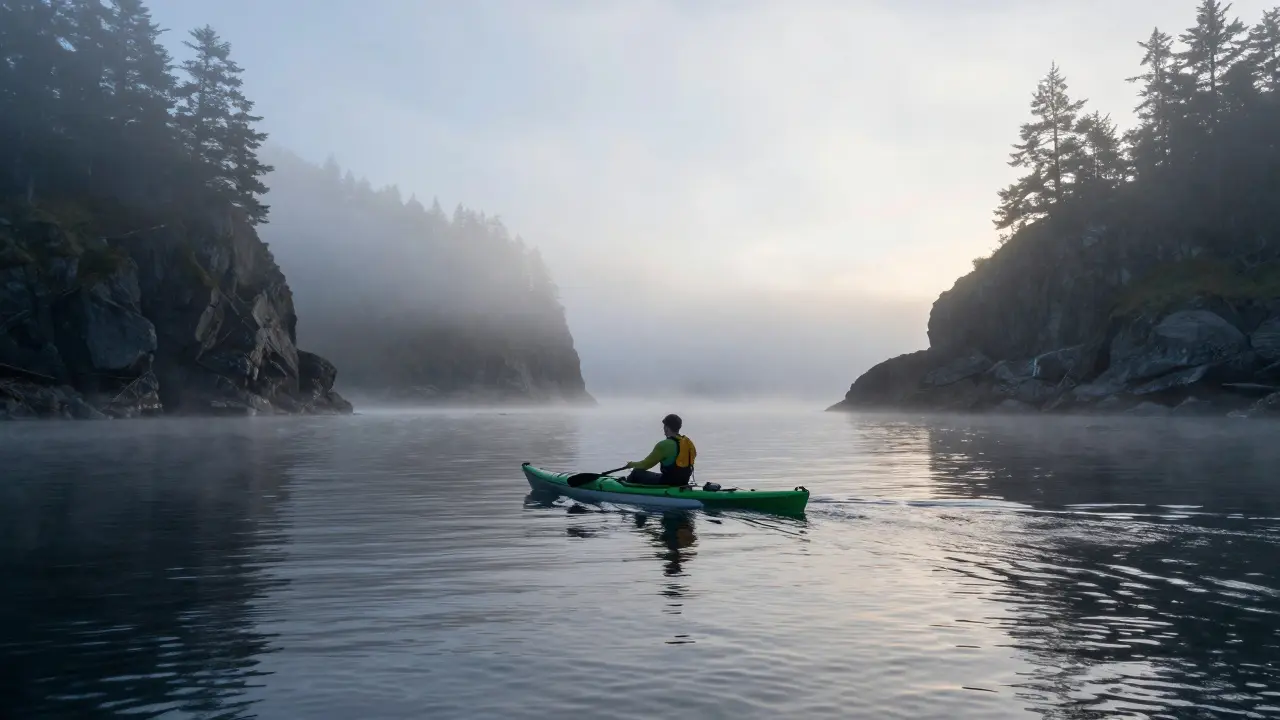
There is a specific kind of silence that only exists when you are gliding through the cold water of the Pacific Ocean. The world shrinks down to the rhythm of your paddle, the slap of waves against the hull, and the distant cry of a gull. But let’s be honest: that serenity comes with a price tag of respect. West Coast sea kayaking is not like paddling on a calm lake in your backyard. The Pacific Ocean here is powerful, unpredictable, and often unforgiving. Whether you are looking at the rocky shores of Oregon, the misty fjords of Washington, or the kelp forests of California, understanding the environment is the difference between an adventure and an emergency.
The Rhythm of the Ocean: Understanding Pacific Tides
If you ignore the tide, the ocean will remind you very quickly. On the West Coast, tidal ranges can be massive. In places like the Strait of Juan de Fuca or the coast of Maine (though further east, the principle holds for high-energy coasts), but specifically here from California to Alaska, you might see differences of six to ten feet between low and high tide. This isn't just about how deep the water is; it's about current speed and access.
You need to check the National Oceanic and Atmospheric Administration (NOAA) tide charts before you even pack your bag. Why? Because a launch site that looks perfect at low tide might be completely inaccessible-or dangerously exposed-at high tide. Conversely, a narrow channel that is easy to paddle at slack tide can become a raging torrent during peak flow. Slack tide is your friend. It is the brief period, usually around 30 to 60 minutes, when the water stops moving in one direction and starts moving in the other. Planning your exit strategy around slack tide ensures you aren't fighting a strong current back to shore.
- High Tide: Use this time to explore areas with shallow reefs or rocky outcrops that would be dangerous at low tide.
- Low Tide: Great for accessing beaches, but watch out for exposed rocks and reduced depth in channels.
- Flood Tide: Water moving inland. Can push you off course if you aren't tracking carefully.
- Ebb Tide: Water moving out to sea. Often stronger than flood tides in many West Coast locations.
Weather Patterns: More Than Just Sunshine
On the West Coast, "nice weather" is a relative term. You can have bright sunshine and still face life-threatening conditions. The biggest culprit? Wind. Offshore winds blow from the land toward the sea. They seem helpful because they push you away from the beach, but they are actually the most dangerous type of wind for a kayaker. If your kayak capsizes or you get tired, offshore winds will blow you further out to open water, making rescue nearly impossible. Always prefer onshore winds, which blow from the sea toward the land, as they help keep you near safety.
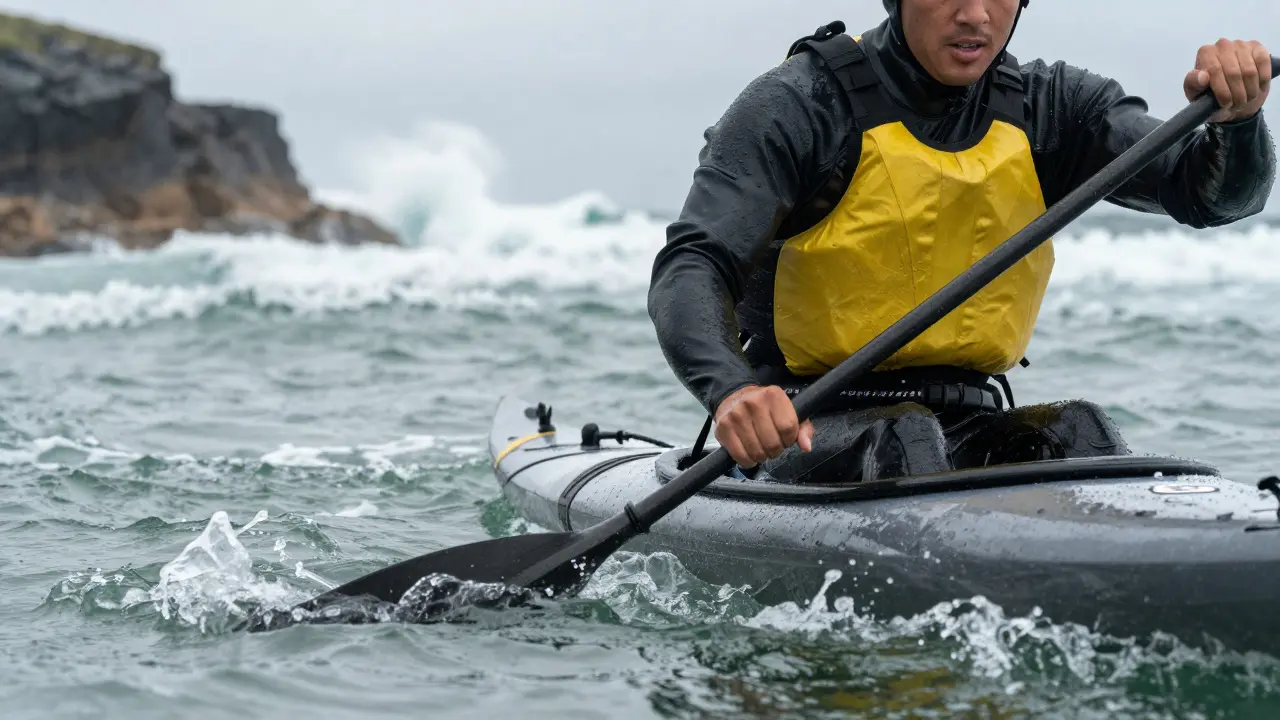
Then there is the fog. Fog doesn't just reduce visibility; it changes the temperature dynamics. Wet clothes combined with cold, damp air leads to hypothermia much faster than you expect. Even in summer, water temperatures along the West Coast rarely exceed 55°F (13°C). That means immersion suits or drysuits are not optional gear-they are survival equipment. A wetsuit keeps you warm by trapping a thin layer of water against your skin, but a drysuit keeps you completely dry, relying on insulating layers underneath. For serious touring, a drysuit is the standard.
| Gear Item | Purpose | Recommendation |
|---|---|---|
| Drysuit | Thermal protection | Mandatory for water temps below 60°F |
| PFD (Life Jacket) | Flotation & Safety | USCG approved, fit-tested |
| Spray Skirt | Keep water out | Neoprene waistband for seal |
| VHF Radio | Communication | Waterproof, Channel 16 monitor |
| Bilge Pump/Sponge | Remove water | Essential for self-rescue |
Choosing the Right Tour: Guided vs. Solo
Many people assume that buying a kayak makes them ready to hit the open ocean. It doesn't. The learning curve for sea kayaking is steep. This is where guided tours come in. A good tour operator does more than just point you in a direction. They provide safety briefings, handle logistics, and offer expertise on local marine life and history. When choosing a tour, look for operators who emphasize safety protocols over Instagram-worthy photos.
Ask questions before you book. Do they require a safety briefing? What is their guide-to-client ratio? A safe ratio is usually no more than 8 clients per guide. Are they certified by organizations like the American Canoe Association (ACA)? These details matter. A cheap tour might cut corners on safety gear or skip essential skills training, leaving you vulnerable if things go wrong.
Guided tours are also excellent for beginners to learn basic skills like bracing (preventing a capsize), wet exits (getting out of a capsized kayak underwater), and re-entry techniques. You can't learn these safely alone. Once you have mastered these basics, you might consider joining a group trip or eventually paddling solo-but always within your skill level and never without telling someone your float plan.
Top Destinations for Every Skill Level
The West Coast offers diverse environments, each with its own character. Here are three standout locations that cater to different experience levels.
Olympic Peninsula, Washington
This area is known for its dramatic rainforests meeting the rugged coastline. Places like Hole-in-the-Wall and Shi Shi Beach offer stunning views. However, the currents here can be strong, and the weather is notoriously changeable. This destination is best for intermediate to advanced paddlers who are comfortable reading tides and handling choppy water.
Channel Islands, California
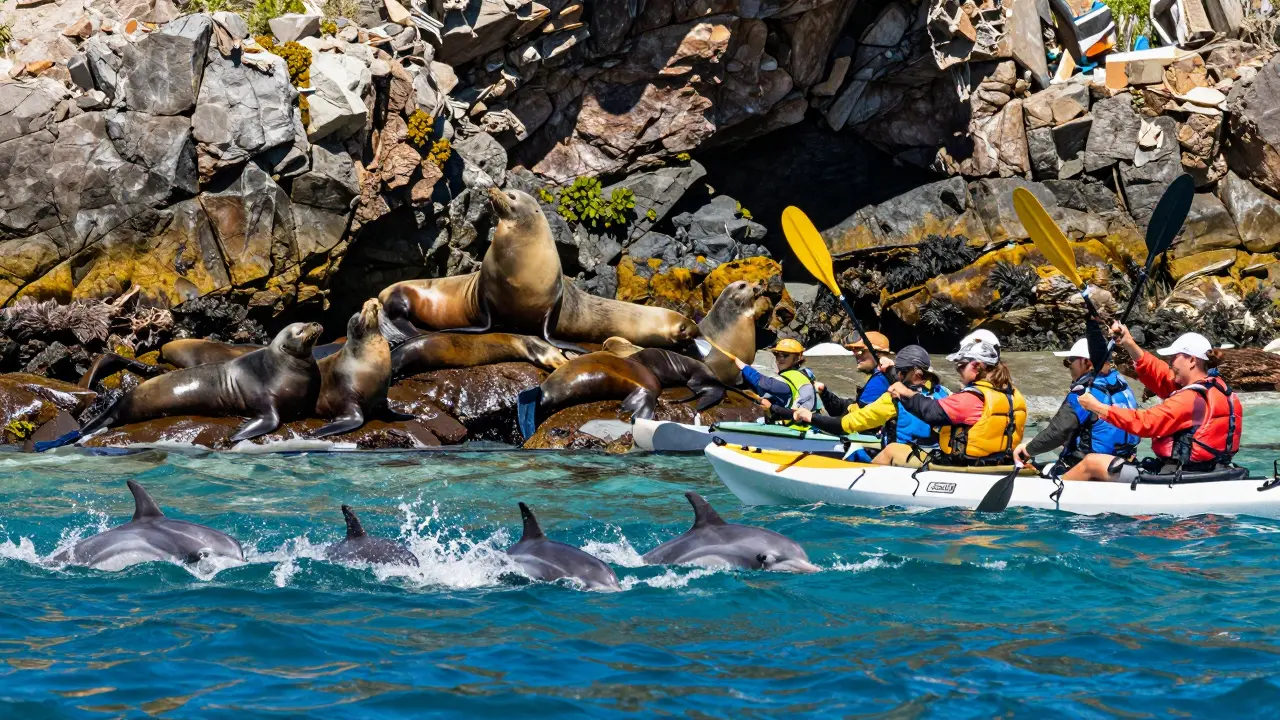
Off the coast of Southern California, the Channel Islands National Park provides a unique blend of marine wildlife and historical sites. You might see sea lions, elephant seals, and even whales depending on the season. The waters are generally calmer than the northern coast, making it accessible for beginners, especially on guided tours that focus on wildlife viewing rather than long-distance touring.
Coos Bay, Oregon
Known as the "Sailfish Capital of the World," Coos Bay offers protected bays and estuaries that are perfect for learning. The inner harbor is sheltered from the open ocean swells, providing a safe environment to practice skills. From here, you can venture into the nearby estuaries to spot bald eagles and ospreys. It’s a great starting point for those new to saltwater paddling.
Safety First: The Golden Rules
No matter how experienced you are, the ocean demands humility. Always follow these core safety principles:
- File a Float Plan: Tell a trusted friend or family member exactly where you are going, when you expect to return, and what you will do if you don't show up.
- Check Conditions Twice: Check the forecast in the morning and again right before you launch. Conditions can change rapidly.
- Stay Within Your Limits: Just because others are doing it doesn't mean you should. Paddle within your physical and technical capabilities.
- Wear Your PFD: Always. No exceptions. Even if you are a strong swimmer, cold water shock can incapacitate you in seconds.
- Respect Marine Life: Keep a safe distance from seals, sea lions, and whales. They are wild animals and can be unpredictable.
Environmental Stewardship
As visitors to these fragile ecosystems, we have a responsibility to leave no trace. Plastic pollution is a major issue in the Pacific. Bring reusable water bottles, avoid single-use plastics, and pick up any trash you see-even if it isn't yours. Be mindful of your wake; large waves can erode sensitive shorelines and disturb nesting birds. Stay on designated trails when hiking to launch sites, and avoid anchoring on seagrass beds or coral reefs if you stop for a break.
By respecting the environment, we ensure that these beautiful coastlines remain pristine for future generations of paddlers. The joy of sea kayaking is deeply connected to the health of the ocean. Protecting it is part of the adventure.
Is sea kayaking dangerous on the West Coast?
Yes, it can be, primarily due to cold water temperatures, strong currents, and unpredictable weather. However, risks are significantly reduced with proper preparation, including wearing appropriate thermal protection (drysuits), checking tide and weather forecasts, and gaining instruction from certified guides. Never underestimate the power of the Pacific Ocean.
What is the best time of year to go sea kayaking on the West Coast?
Summer (June to September) generally offers the calmest seas and warmest air temperatures, making it ideal for beginners. However, this is also the busiest season. Spring and fall can offer fewer crowds and unique wildlife migrations, but weather conditions may be more challenging. Winter is typically reserved for experienced paddlers due to rougher seas and colder temperatures.
Do I need a license to sea kayak?
No, you do not need a license to operate a kayak in the United States. However, you must follow local regulations regarding park permits, wildlife distances, and boating laws. Some national parks or protected areas may require a permit for overnight trips or commercial guiding services.
Can beginners join guided sea kayak tours?
Absolutely. Most reputable tour operators offer beginner-friendly tours that include basic instruction on paddling technique, safety, and etiquette. These tours are designed to be accessible to people with little to no prior experience, provided they are physically able to sit in a kayak and wear a life jacket.
What should I wear under a drysuit?
Avoid cotton, as it retains moisture and loses insulating properties when wet. Instead, wear synthetic base layers or wool underwear. Many paddlers use fleece mid-layers for extra warmth. The goal is to create insulation that traps body heat while allowing moisture to wick away from your skin.