
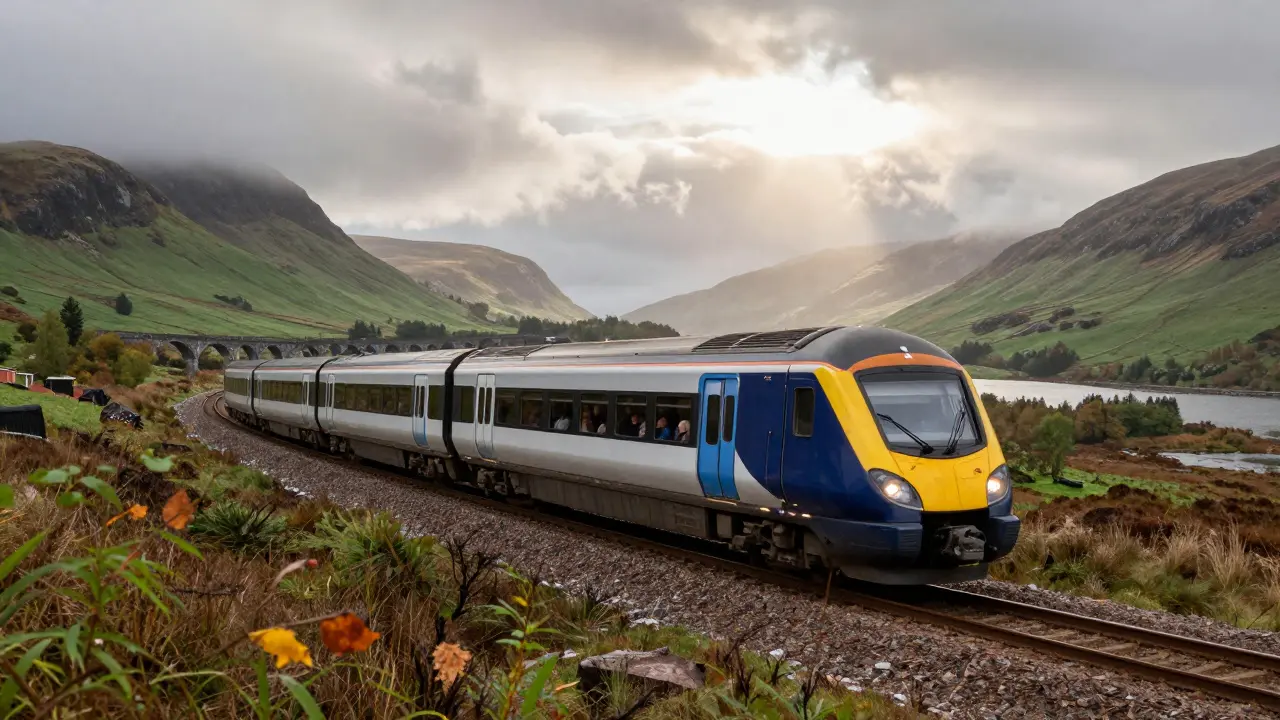
Getting around Scotland doesn’t require a car. In fact, if you’re visiting cities like Edinburgh, Glasgow, or even smaller towns like Oban or Inverness, public transport often gets you there faster, cheaper, and with better views. Trains slice through the Highlands, buses connect villages no car could reach, and ferries glide across lochs and islands that feel like another world. But figuring out how it all fits together? That’s where most travelers get stuck.
Trains: The Backbone of Scotland’s Transport Network
ScotRail runs the majority of train services across Scotland. From the busy Glasgow to Edinburgh route - which runs every 15 minutes during peak hours - to the famous West Highland Line that winds past Loch Lomond and up to Mallaig, trains are reliable, scenic, and surprisingly affordable if you book ahead.
Most long-distance routes use modern Class 385 or Class 158 trains, with free Wi-Fi, power sockets, and accessible seating. If you’re heading to the Highlands, the Jacobite Steam Train (operated by West Coast Railways) is a tourist favorite - it’s the train that became the Hogwarts Express in the Harry Potter films. But don’t expect it to be your daily commute; it’s a seasonal experience.
Prices vary. A standard single from Edinburgh to Glasgow costs around £12 if booked online in advance. Same-day tickets? They can jump to £30 or more. Always check ScotRail’s website before you go. There’s also a ScotRail Alliance app that shows live departures, delays, and platform changes - no paper timetables needed.
Buses: The Real Lifeline for Rural Scotland
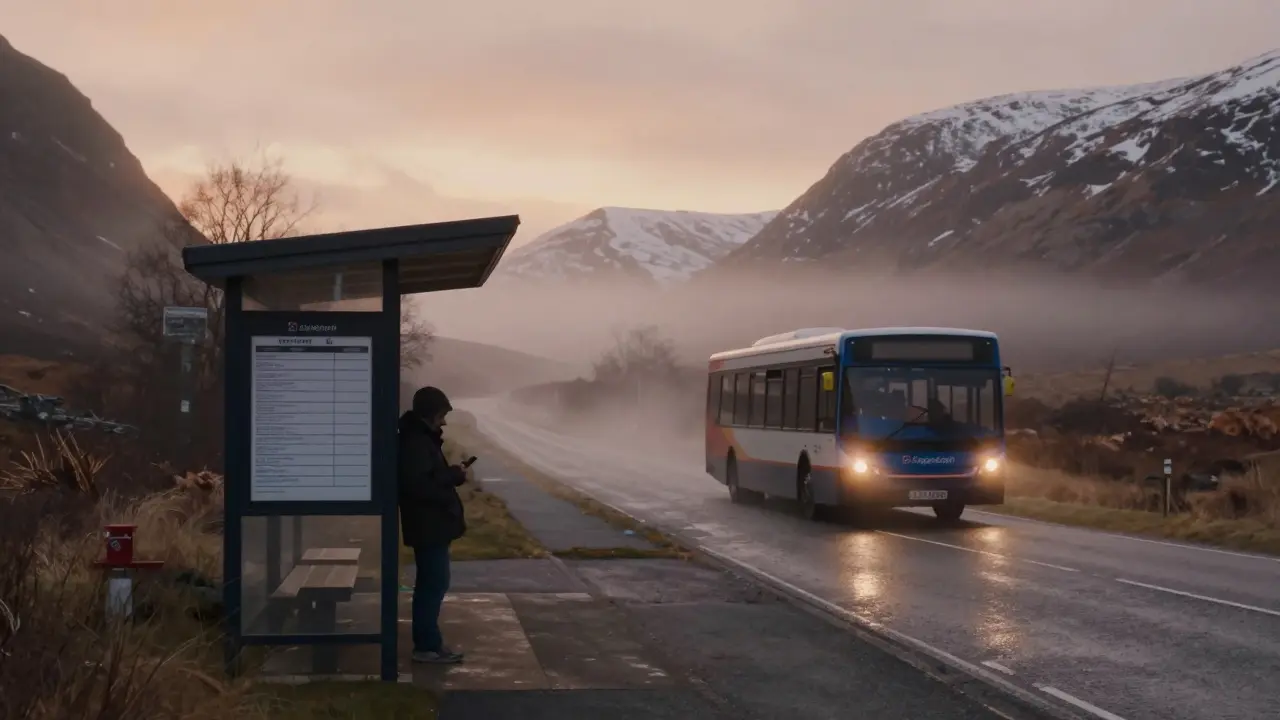
While trains stick to major corridors, buses go everywhere. In the Highlands, islands, and remote glens, buses are often the only way in or out. Companies like Stagecoach, Megabus, and local operators like Citylink run services that connect towns you won’t find on most tourist maps.
For example, the X27 bus from Inverness to Ullapool takes you through the North Coast 500 route without you having to drive. The 914 from Fort William to Mallaig runs parallel to the train line but stops at smaller villages like Kinlochleven and Arisaig. These buses are slower - sometimes 3 hours for 50 miles - but they’re essential.
Fares are simple: £10-£20 for most intercity routes. Many accept contactless payment, but always carry cash. Rural buses often run only once or twice a day. Miss the 8:15 AM bus from Gairloch to Poolewe? You’re waiting until 5:30 PM. Check timetables on Traveline Scotland - it’s the most reliable source for bus schedules across the country.
Ferries: Crossing Water Like a Local
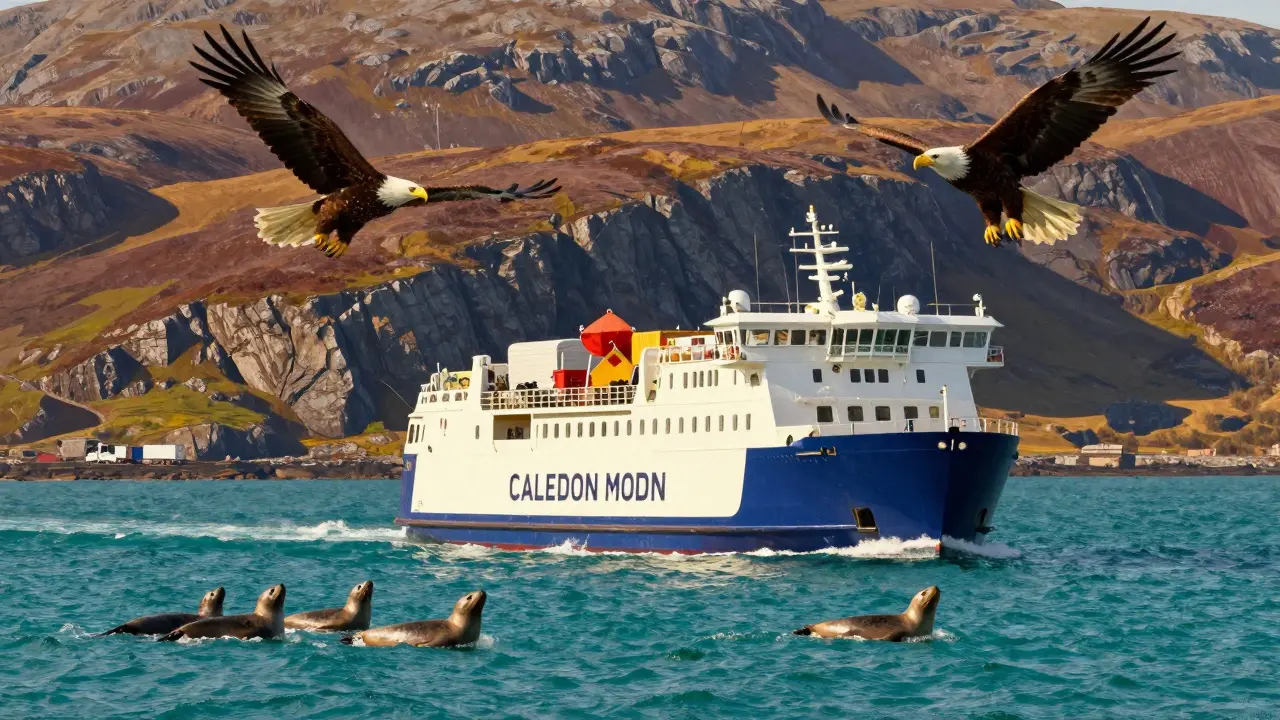
Scotland has over 790 islands. Most of them are only reachable by ferry. Caledonian MacBrayne (CalMac) runs the biggest network - from Oban to the Isles of Mull, Iona, and Colonsay, and from Kennacraig to Islay and Jura. These aren’t cruise ships. They’re working vessels: cargo trucks, cars, and locals commuting to work all board together.
Ferries can be unpredictable. Weather in the Hebrides changes fast. A 45-minute crossing might turn into a 2-hour delay. But the views? Unbeatable. You’ll see seals bobbing in the water, eagles circling overhead, and cliffs that look like they’ve been carved by giants.
Booking is required for cars and campers. Foot passengers don’t need to book - just show up 20 minutes before departure. Prices start at £4.50 for a foot passenger on a short route. A car on the Oban-to-Mull route costs about £35 one way. Always check CalMac’s website for live updates - cancellations happen often in winter.
There are also smaller operators like NorthLink Ferries (connecting Aberdeen to Orkney and Shetland) and Western Isles Ferries (serving the Outer Hebrides). Each has its own booking system, so don’t assume they’re all the same.
Journey Planning: One App to Rule Them All
The biggest mistake travelers make? Trying to plan each leg of their trip separately. Trains, buses, and ferries don’t always sync up. You could miss a ferry because your train was late. Or wait two hours for a bus because you didn’t realize it only runs on Tuesdays and Thursdays.
There’s one tool that solves all of this: Traveline Scotland. It’s a free website and app that pulls live data from every public transport operator in the country. Type in your start and end points - say, “Dundee to Skye” - and it gives you every possible route. It shows train times, bus connections, ferry departures, walking distances, and even how long you’ll wait between transfers.
It even tells you if a route involves a wheelchair-accessible bus or a ferry with a ramp. For families, it flags routes with baby changing facilities. For budget travelers, it highlights the cheapest option. And if something’s delayed or canceled? It sends you a real-time alert.
Pro tip: Download the app before you leave home. Cell service drops in the Highlands and islands. You won’t have data when you need it most.
Smart Travel Hacks for Scotland’s Public Transport
Here’s what locals know that tourists don’t:
- Use a ScotRail PlusBus ticket. Buy a train ticket with a PlusBus add-on, and you get unlimited local bus travel in that city for the day. It’s only £3-£5 extra.
- Travel off-peak. Trains and buses are cheaper and less crowded before 9 AM and after 4 PM on weekdays. Weekends? No discounts, but it’s quieter.
- Get a National Express Coachcard. If you’re taking long-distance buses, this £12 card saves you 1/3 off every fare for a year. Worth it if you’re traveling for more than a week.
- Don’t rely on GPS alone. Google Maps often doesn’t include rural bus routes or ferry schedules. Always cross-check with Traveline Scotland.
- Carry a paper backup. Some small bus stops in the Highlands don’t have digital displays. Look for printed timetables in the shelter - they’re often posted by the local council.
What Doesn’t Work - and Why
Not everything you’ve heard about Scottish transport is true.
Myth: “You can just hop on any bus and pay the driver.”
Reality: Many rural buses are cash-only, but some only accept contactless. Drivers won’t give change if you hand them a £50 note. Always have small bills.
Myth: “Ferries run every hour.”
Reality: On the Isle of Arran, there’s only one ferry per day in winter from Brodick to Ardrossan. If you miss it, you’re stuck overnight.
Myth: “The train to Inverness is always full.”
Reality: It’s packed on Friday evenings and Sunday nights. On a Tuesday afternoon? You’ll have the whole carriage to yourself.
Myth: “You need to book everything weeks ahead.”
Reality: For trains and buses, booking 1-2 days ahead is enough. Ferries with cars? Yes, book early. Foot passengers? Just show up.
Final Thoughts: You Don’t Need a Car
Scotland’s public transport isn’t perfect. It’s slow sometimes. It’s unpredictable. But it’s honest. It’s the way locals live. And if you’re willing to plan ahead, it’s the best way to see the country - not just the postcard spots, but the hidden corners where the real Scotland lives.
Take the train to Fort William. Walk to the Glenfinnan Viaduct. Catch the bus to the Isle of Skye. Take the ferry to Mull. Sleep in a B&B with no car access. You’ll see more in a week than most visitors do in a month.
Can I use a UK national railcard on Scottish trains?
Yes, most UK railcards - like the 16-25, Senior, or Two Together card - work on ScotRail. You’ll get 1/3 off standard fares. But they don’t apply to special tourist tickets like the Jacobite Steam Train or some ferry connections. Always check the ScotRail website before booking.
Are buses and trains in Scotland wheelchair accessible?
Most modern trains and long-distance buses are fully accessible, with ramps, priority seating, and accessible toilets. Many rural buses and older ferries are not. Always check the operator’s accessibility page or call ahead. Traveline Scotland’s app also filters for accessible routes.
Do I need to book ferry tickets in advance?
If you’re bringing a car, campervan, or motorbike - yes, book ahead. Especially in summer or on popular routes like Oban to Mull. Foot passengers don’t need to book. Just arrive 20 minutes before departure. But during holidays or bad weather, even foot passengers should check the CalMac website for possible cancellations.
What’s the cheapest way to travel across Scotland?
The cheapest option is a combination of regional buses and walking. A £10 bus ride from Inverness to Ullapool, then a £4.50 ferry to the Isle of Lewis, and a local bus to your destination can cost less than £20 for a full day of travel. Avoid taxis and rental cars - they’re expensive and often unnecessary.
Is public transport reliable in winter?
Winter brings delays. Snow closes roads, high winds cancel ferries, and icy tracks slow trains. But services still run - just less frequently. Always check Traveline Scotland before you leave. If you’re planning a winter trip, build in extra time. And pack warm clothes - waiting at a bus stop in the Highlands can be brutal.
Comments (11)
-
Megan Blakeman January 9, 2026This is so helpful!! I was terrified of navigating Scotland without a car, but now I feel like I can actually do it 😭 Thank you for the Traveline tip-I’m downloading it right now. Also, the PlusBus thing? Genius. I’m already planning my route from Edinburgh to Oban. 🥹

-
Albert Navat January 10, 2026You’re underselling the inefficiency of the system. The marginal utility of ScotRail’s Wi-Fi is negligible compared to the latency in real-time scheduling sync. You need to optimize your itinerary using a multi-modal transit graph with weighted edge constraints-Traveline’s API doesn’t account for stochastic delays in Hebridean ferries. Also, why are you assuming all users have smartphones? Legacy infrastructure still exists.

-
King Medoo January 11, 2026I’ve traveled all over Europe. Scotland’s public transport is a joke. 🤦♂️ Trains run on ‘Scottish time’-which is 47 minutes late, but they’ll still call it ‘on schedule.’ And don’t get me started on ferries. One time, I waited 7 hours for a boat that got canceled because the wind was ‘too gusty.’ The locals just shrug. It’s not charm-it’s negligence. And you call this ‘honest’? No. It’s just broken. 🌧️📉

-
Rae Blackburn January 13, 2026They don’t want you to know this but the government is hiding the real reason buses are so slow-they’re using them to track your movements. I’ve seen the same bus driver in three different towns with the same license plate. Coincidence? I think not. And the app? It’s spying on your location. I deleted it. I walk now. Even in the rain. Even in the Highlands. I’m free.

-
LeVar Trotter January 14, 2026Great breakdown. I’d add that if you’re using a railcard, make sure you’re not accidentally buying a ‘Saver’ ticket that doesn’t allow refunds-those trip up a lot of first-timers. Also, for wheelchair users: the 914 bus from Fort William has a manual ramp that drivers are trained to deploy, but you have to flag them down at the stop. Don’t assume it’ll be automatic. And if you’re traveling with kids, the ferry from Oban to Mull has a tiny play corner near the front deck-parents love it. Small things matter.

-
michael T January 14, 2026I cried on the train from Inverness to Mallaig. Not because I was sad. Because the view was so damn beautiful I couldn’t breathe. The sky turned purple over the loch, the hills looked like ancient dragons sleeping, and the conductor gave me a free tea because I looked lost. That’s Scotland. Not the timetables. Not the apps. That feeling. You can’t book that. You just have to be there.

-
Christina Kooiman January 16, 2026You wrote ‘you’ll see more in a week than most visitors do in a month.’ That’s grammatically incorrect. It should be ‘you will see.’ Also, ‘it’s the way locals live’-that’s a dangling modifier. And you used ‘lochs’ correctly, which is rare, so I’ll give you that. But the rest? Needs editing. Also, why is ‘CalMac’ capitalized like a proper noun? It’s not a brand. It’s an abbreviation. Fix it.

-
Addison Smart January 16, 2026I’m from Chicago and I’ve traveled through 17 countries. Scotland’s public transport is the most authentically human system I’ve ever encountered. It’s slow, it’s quirky, it’s unreliable-but it’s alive. No corporate algorithm is dictating when a bus leaves. It’s the driver checking if Mrs. MacLeod got her groceries, if the kids from the croft made it to school, if the old man needs help with his bag. That’s not inefficiency. That’s community. And if you can’t see that, you’re not traveling-you’re just ticking boxes.

-
David Smith January 18, 2026I hate how everyone acts like this is some magical travel guide. I took the 914 bus. It broke down. The driver said ‘it’s just Scottish weather.’ I waited 4 hours. No food. No shelter. No apology. This isn’t charm. It’s incompetence. And the ‘pro tip’ to download the app? What if your phone dies? Then what? You’re stranded. This whole thing feels like a tourist fantasy.

-
Lissa Veldhuis January 18, 2026You think you’re being helpful but you’re just feeding the myth that Scotland is some enchanted land of buses and ferries. The truth? It’s a crumbling infrastructure held together by nostalgia and tea. The ‘cheapest way’? Walking. But only if you’re young, fit, and have no dignity. I’m 62. I have a bad knee. And I’m supposed to ‘just show up’ to a ferry? No thanks. This post is dangerously misleading for older travelers. You’re not helping. You’re enabling.

-
Michael Jones January 20, 2026Just go. Don’t overthink it. The train will come. The bus will show up. The ferry might wait. You’ll get there. And when you do, you’ll realize none of the planning mattered. What mattered was the guy who shared his sandwich with you on the 8:15 from Gairloch. That’s the real schedule.
