
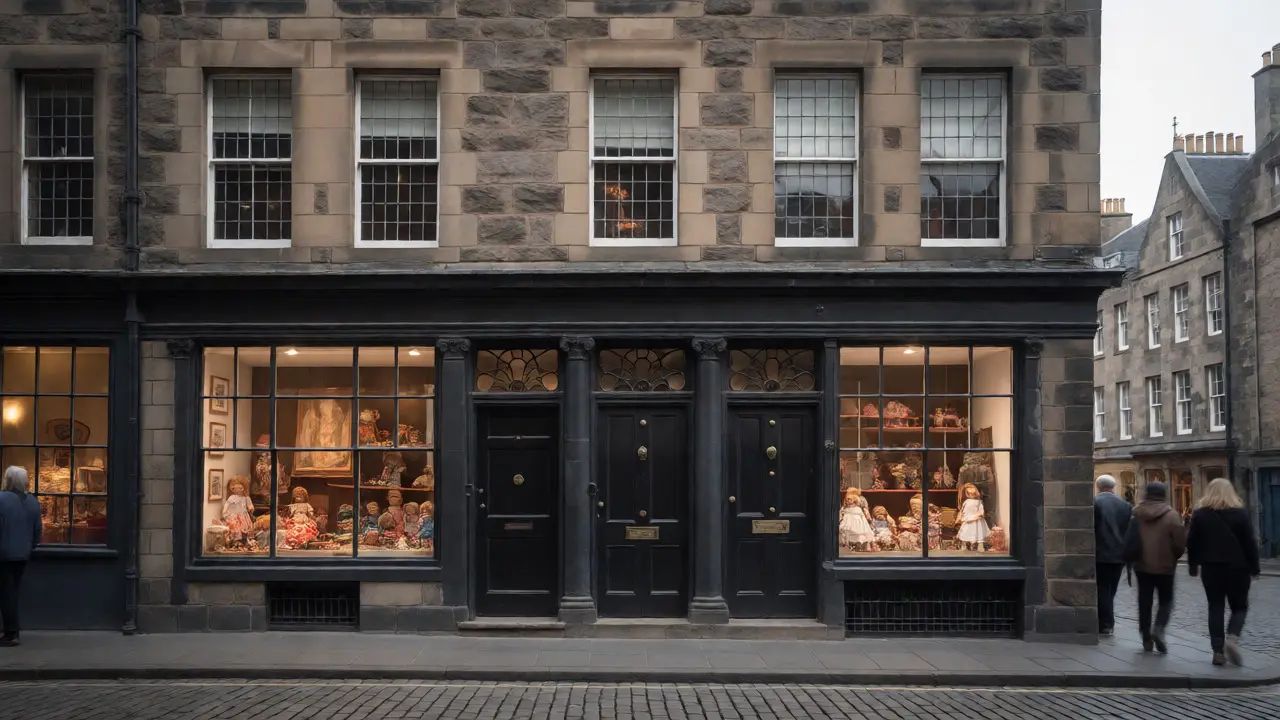
Have you ever walked past a shop window on the Royal Mile, seen a pile of vintage dolls in the window, and thought, "I need to go in there"? You’re not alone. The Museum of Childhood Edinburgh is that kind of magnet. It’s small, it’s tucked away at 42 High Street, and it packs more emotional punch per square foot than most of the grand institutions nearby.
Here’s the thing about this place: it’s not just for kids. Sure, children love it because they can touch things (well, some things) and see toys that look like their own. But adults? Adults come here for the hit of nostalgia. It’s a time machine disguised as a museum. If you’re planning a trip to Edinburgh with family, or even if you’re a solo traveler looking for something quirky, this spot deserves ten minutes on your itinerary. Let’s break down why, what’s actually inside, and how to make the most of your visit without getting overwhelmed by the crowds on the Royal Mile.
What Exactly Is This Museum?
The Museum of Childhood is part of the National Museums Scotland network. That means it’s free to enter, which is a huge plus when you’re budgeting for a city break. It opened its doors in 1933, making it one of the oldest museums of its kind in the world. The brainchild of Patrick Allen, it was created to preserve objects related to childhood from the late 18th century up to the mid-20th century.
You might ask, "Why should I care about old toys?" Because these aren’t just plastic junk. They are cultural artifacts. A tin soldier from 1910 tells you about war propaganda. A dollhouse from 1950 shows you what middle-class Scottish families valued. The museum doesn’t just display items; it displays memories. And since it’s housed in two historic townhouses connected by a courtyard, the architecture itself adds to the charm. It feels intimate, not institutional.
Key Exhibits That Steal the Show
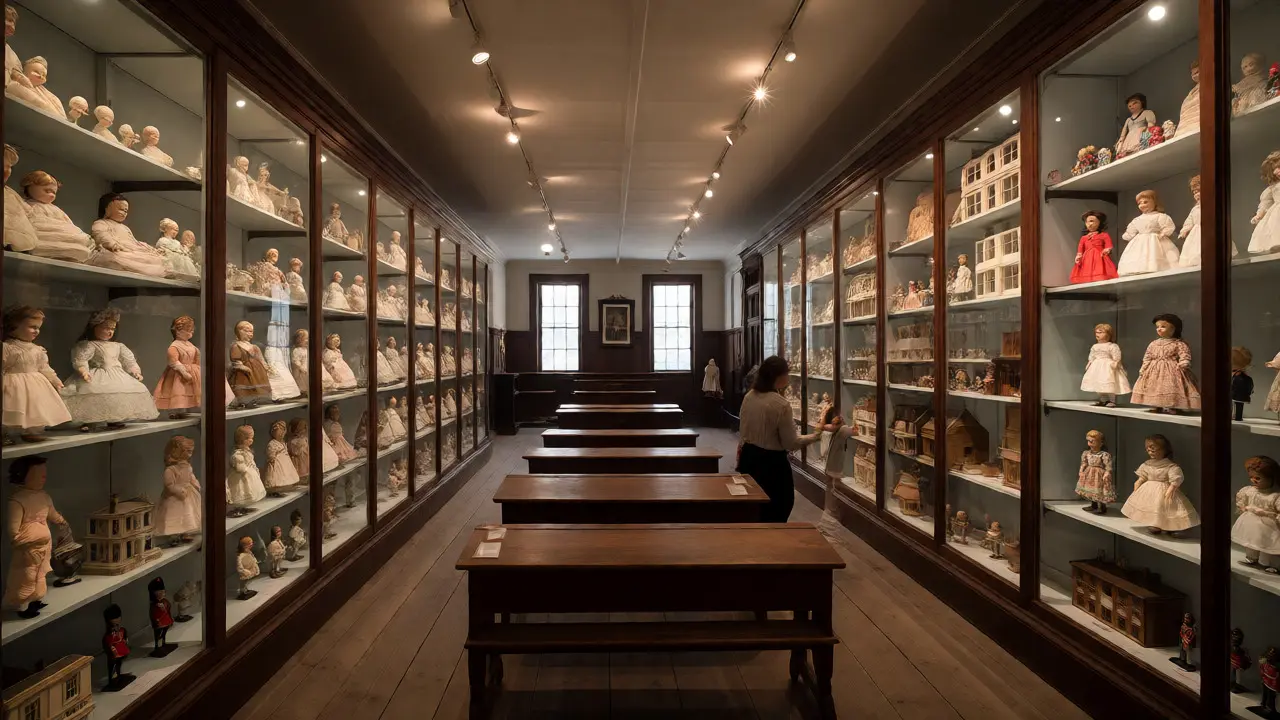
Walking through the main gallery, you’ll be greeted by walls lined with glass cases. Don’t let the glass fool you into thinking everything is off-limits. There’s a strong interactive element here, especially for younger visitors. But the real stars are the collections themselves.
- Dolls and Dolls’ Houses: This is probably the largest collection in the UK. You’ll see everything from porcelain-faced Victorian babies to simple rag dolls made during wartime rationing. The scale models of houses are intricate enough to keep an adult staring for twenty minutes.
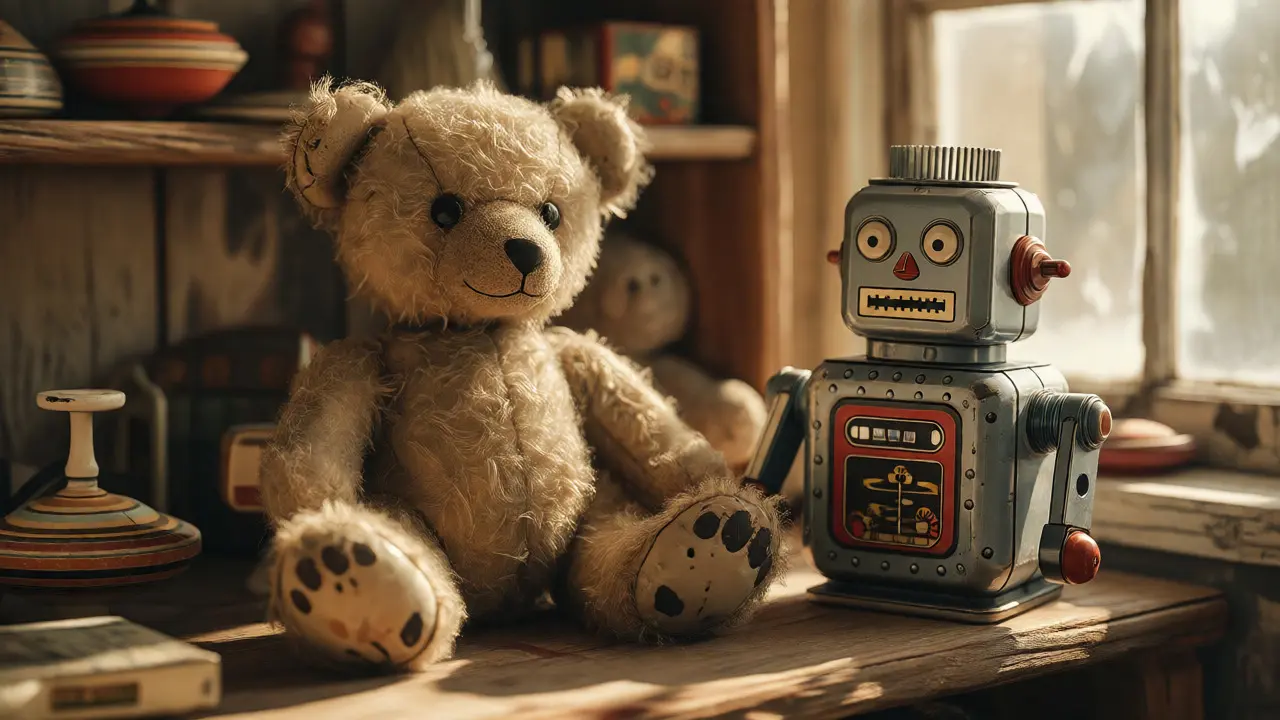
- Board Games and Toys: Ever wonder where Monopoly came from? Or what kids played before screens existed? Here, you’ll find original versions of classic games, spinning tops, marbles, and mechanical toys that still work today.
- Schoolroom Recreations: One section recreates a traditional Scottish schoolroom. It’s stark, wooden, and smells faintly of chalk dust. For anyone who went to school in the UK before the 1980s, this brings back flashbacks of strict teachers and hard benches.
There’s also a dedicated area for J.M. Barrie, the creator of Peter Pan. Since Barrie lived in Scotland, his connection to the region is celebrated here. You’ll see first editions of his books and illustrations that inspired the character. It’s a nice nod to local literary heritage amidst the toys.
Is It Worth Your Time? A Honest Review
Let’s be real: the museum is small. You can see the entire ground floor exhibition in 30 to 45 minutes. If you expect a full-day outing like the National Museum of Scotland, you’ll be disappointed. But if you treat it as a quick, high-quality stop, it’s fantastic.
| Feature | Museum of Childhood | National Museum of Scotland | Camera Obscura |
|---|---|---|---|
| Entry Fee | Free | Free | Paid (~£15) |
| Time Required | 30-60 mins | 3-5 hours | 1-2 hours |
| Best For | Families, Nostalgia seekers | General History, Science | Views, Interactive Fun |
| Crowd Level | Low to Medium | High | Medium |
The advantage over bigger museums is accessibility. Kids get bored in large halls. Here, the rooms are small, so attention spans don’t wander. Parents can move easily between exhibits without losing sight of their children. Plus, being right on the Royal Mile means you’re already walking distance from other major sights like St Giles’ Cathedral.
Practical Tips for Your Visit
Since I live in Dundee, I’m used to traveling south to Edinburgh, and I’ve learned a few tricks for navigating the Old Town. Here’s how to handle a visit to the Museum of Childhood smoothly.
- Timing Matters: Try to arrive early in the morning (around 10 AM) or later in the afternoon (after 3 PM). Midday is peak tourist rush, and the narrow streets around the museum get congested.
- Accessibility: The entrance is on a slope, typical of Edinburgh’s terrain. While the museum has ramps, some older parts have steps. If you’re pushing a stroller, check the staff at the door-they’re usually helpful and can guide you to the easiest route.
- The Courtyard: Don’t miss the outdoor courtyard. It’s often overlooked but offers a quiet spot to sit and regroup. On sunny days, it’s a lovely break from the indoor lighting.
- Combine with Nearby Stops: Pair this visit with a walk down Victoria Street or a quick coffee at a nearby café. It fits perfectly into a half-day exploration of the Old Town.
One common pitfall: people assume it’s only for toddlers. Bring your grandparents along if they’re visiting. Many older relatives light up when they recognize specific toys or school items from their own youth. It’s a great conversation starter across generations.
Beyond the Toys: The Cultural Impact
Why does a museum dedicated to childhood matter? Because childhood is universal. Every visitor connects with it personally. Unlike political history or scientific breakthroughs, which require context, toys speak directly to memory. The Museum of Childhood preserves the material culture of play, showing how society’s values shift over time.
For instance, notice how gender roles were reinforced in toys from the 1950s versus today. Or look at the durability of pre-war tin toys compared to modern plastic ones. These observations spark discussions about consumerism, manufacturing, and social norms. It’s educational without feeling like homework.
Also, consider the conservation aspect. Keeping paper-based items like comic books and fabric dolls safe requires precise humidity control. The fact that these fragile items survive in a busy city center is a testament to the curators’ skill. Next time you hold a 100-year-old teddy bear, remember it’s survived wars, recessions, and countless hands.
Frequently Asked Questions
Is the Museum of Childhood in Edinburgh free to enter?
Yes, entry is completely free. Like all National Museums Scotland sites, there is no admission fee. However, donations are welcome and help support their conservation efforts.
How long does it take to visit the Museum of Childhood?
Most visitors spend between 30 and 60 minutes. It is a compact museum, so it is perfect for a short break during a longer day of sightseeing on the Royal Mile.
Is the museum suitable for strollers and wheelchairs?
Generally, yes. The museum is located in historic buildings, so there are some steps and narrow doorways. Staff can assist with routes, and there are ramps for the main areas, but it may be tight in places due to the age of the structure.
Can you take photos inside the Museum of Childhood?
Yes, personal photography is allowed for non-commercial use. Just avoid using flash if possible, as bright lights can damage sensitive materials like paper and textiles over time.
Are there any interactive activities for children?
Yes, the museum features several interactive zones where children can try out replicas of historical toys, dress up in period costumes, and engage with digital displays that explain the history behind the objects.
Final Thoughts on Planning Your Trip
If you’re heading to Edinburgh, don’t skip the Museum of Childhood just because it’s small. Big isn’t always better. Sometimes, the best experiences are the ones that fit neatly into a pocket-sized building and leave you smiling. Whether you’re hunting for a specific toy from your childhood or just want to see how kids played a century ago, this place delivers. It’s charming, accessible, and free. What more could you ask for?
Comments (9)
-
Sabrina Silvani October 8, 2026
Childhood is not a fixed state but a constructed narrative and this museum inadvertently exposes the fragility of that construction by freezing time in glass cases
We observe objects to anchor our identity yet those very objects were discarded by their original owners as obsolete relics of a fleeting phase
The act of preservation here is an exercise in denial against the inevitable entropy of memory itself
To view a tin soldier is to confront the dissonance between the child’s imaginative reality and the adult’s historical categorization
Nostalgia functions as a sedative for the anxiety of temporal displacement allowing us to pretend we have returned to a place that never truly existed
The architecture of the townhouses reinforces this illusion of intimacy masking the institutional power dynamics at play within the National Museums network
When we speak of cultural artifacts we are really speaking about the residue of social conditioning embedded in material culture
The gendered divisions in toy collections serve as archaeological evidence of societal expectations imposed upon developing minds long before they could articulate resistance
It is fascinating how the durability of pre-war toys contrasts with modern planned obsolescence reflecting a shift in value systems from permanence to disposability
This museum does not merely display history it performs the ritual of mourning for a version of childhood that has been commodified and sanitized
The interactive elements attempt to bridge the gap between observer and participant yet they ultimately highlight the unbridgeable chasm between past experience and present interpretation
Every visitor projects their own fragmented memories onto these blank canvases of plastic and porcelain creating a collective hallucination of shared innocence
The quiet courtyard offers a space for reflection away from the curated noise reminding us that silence is often more truthful than explanation
Ultimately the museum serves as a mirror showing us not who we were but who we wish we had been
The emotional punch mentioned in the post is actually the shock of recognizing our own mortality through the lens of abandoned playthings

-
Ian Mason-Laurence October 10, 2026
Actually Patrick Allen founded the Victoria and Albert Museum's children's collection first which later influenced other institutions including this one though the specific attribution in the article is slightly simplified for general readership
The term "oldest museums of its kind" requires qualification because there are several competing claims depending on whether you count private collections or public access dates
For instance the Toy Museum in Nuremberg predates many British equivalents in terms of dedicated public exhibition spaces
The Royal Mile location is indeed strategic but the accessibility issues regarding strollers are significantly understated given the historic nature of the High Street pavement
Visitors should be aware that the humidity control mentioned is critical not just for paper items but also for the wooden mechanisms in mechanical toys which can warp without precise environmental management
The comparison table provided is useful but fails to account for the educational programming differences which are substantial between free entry sites like this and paid attractions like Camera Obscura
Also the J.M. Barrie section is relatively small compared to the main toy galleries so managing expectations is key for literary tourists
The mention of "touching things" needs clarification as most interactive zones use replicas rather than original artifacts to prevent degradation
Conservation standards for textiles versus plastics differ vastly requiring separate climate zones within the same building structure
It is worth noting that the donation system supports not just conservation but also community outreach programs which are often overlooked by casual visitors
The schoolroom recreation is accurate to the early 20th century style but lacks the specific regional variations found in rural Scottish schools
Photography restrictions regarding flash are standard across all National Museums Scotland sites due to light sensitivity of dyes used in vintage fabrics
The crowd levels listed as low to medium are accurate only outside peak summer months when tourism spikes dramatically
Accessibility ramps exist but do not cover every single exhibit area due to structural constraints of the 17th century buildings
Stroller users may find the cobblestones outside more challenging than the interior pathways themselves
In summary while the guide is helpful for planning it glosses over some technical and historical nuances that matter to serious enthusiasts

-
Lauren Martin October 11, 2026
The analysis of "emotional punch per square foot" is reductive and ignores the socioeconomic implications of curating childhood as a luxury commodity
By framing nostalgia as a universal constant the author erases the class disparities inherent in owning such pristine toys historically
A rag doll made during rationing signifies poverty while a porcelain Victorian baby signifies wealth yet both are presented as equal "cultural artifacts"
This flattening of historical context prevents any meaningful critique of consumer capitalism which drives the production of these very objects
The interactive element for younger visitors is essentially a gamification of passive consumption training them to engage with heritage on superficial levels
Parents moving easily between exhibits without losing sight of children suggests surveillance culture rather than genuine educational freedom
The comparison to the National Museum of Scotland reveals a bias towards large-scale institutional authority where smaller museums are dismissed as insufficient
This dismissal reflects a broader academic tendency to undervalue micro-history in favor of macro-narratives
The "honest review" admits the museum is small but fails to address why funding prioritizes grand institutions over intimate ones
Gender roles reinforced in 1950s toys are not just observations but indictments of systemic patriarchy preserved in amber
Durability comparisons ignore the labor conditions under which pre-war toys were manufactured often involving exploitative practices
The conservation aspect highlights elite expertise while ignoring the working-class origins of many donated items
Free entry masks the hidden costs of maintaining such specialized collections which rely heavily on state subsidies
These subsidies are political decisions reflecting current values not objective truths about historical importance
The courtyard as a regrouping spot underscores the lack of integrated digital engagement strategies for modern audiences
Overall the piece perpetuates a romanticized view of childhood that serves middle-class sensibilities exclusively

-
Anthony . October 11, 2026
Love this vibe! 🥰 It’s so cool how these little places hold big feelings 💖
I think everyone connects with toys because they’re like keys to secret doors in our brains 🔑✨
Even if we didn’t have those exact toys we still get the feeling of wonder 😮💨
The fact that it’s free makes it accessible for all families regardless of budget 💸🙌
Seeing old games reminds me that fun doesn’t need expensive tech 🎲😂
Grandparents lighting up is my favorite part ❤️👵👴
It bridges generations in a way that textbooks can’t 🌉📚
Small size means no stress just pure joy 😊🏃♂️
Edinburgh’s charm shines through even in tiny museums 🏰✨
Nostalgia is powerful but sharing it with others makes it better 🤝🌟
Let’s appreciate the simple joys of play 🧸🎈
Thanks for highlighting this gem! 🙏💕

-
Mithilesh Singh October 12, 2026
Indian toys have deeper spiritual roots than these colonial leftovers.
Our children played with clay and wood connecting to earth not plastic propaganda.
Scottish museums preserve dominance not true culture.
We should export our traditions not import theirs.
True heritage is alive not dead in boxes.
India leads in sustainable play concepts.
Europe hoards history while India creates future.
Respect our ancient wisdom please.

-
Shaina Silver-Baird October 14, 2026
The emphasis on "free entry" appears to be a calculated distraction from the underlying data harvesting mechanisms employed by National Museums Scotland.
Interactive zones likely track user engagement patterns via sensors to refine marketing algorithms targeting family demographics.
The "nostalgia" narrative is a psychological tool used to foster brand loyalty and emotional attachment to state-funded institutions.
Preserving objects related to childhood from the late 18th century allows the state to curate a specific version of national identity that excludes dissenting narratives.
The mention of Patrick Allen as the sole brainchild obscures the collaborative efforts and potential political motivations behind the initial curation choices.
Crowd level assessments are subjective metrics that fail to capture the qualitative impact of surveillance cameras monitoring visitor behavior in real-time.
The architectural charm of the townhouses may conceal extensive retrofitting required for digital infrastructure integration.
Donations are not merely charitable contributions but financial instruments supporting a complex ecosystem of grants and corporate sponsorships.
The focus on gender roles in toys reflects contemporary sociopolitical agendas projected backward onto historical artifacts.
Conservation efforts require significant energy resources contributing to carbon footprints that contradict sustainability messaging.
The courtyard serves as a controlled environment for social interaction reinforcing normative behaviors expected of visiting families.
Personal photography permissions include implicit consent for image usage in promotional materials without explicit compensation.
The comparison with Camera Obscura highlights competitive positioning within the tourist economy rather than educational merit alone.
Accessibility accommodations are minimal compliance measures designed to avoid legal liability rather than genuine inclusivity.
The entire experience is engineered to maximize dwell time and subsequent spending in nearby commercial establishments.
This is not just a museum it is a node in a larger network of cultural capital accumulation.

-
evelyn starcher October 14, 2026
It breaks my heart to think about those poor dolls sitting in the dark waiting for someone to remember them 😢❤️
Every scratch tells a story of love and loss and I just want to hug them all 🥺🧸
The smell of chalk dust brings back tears from my own childhood struggles 😭✏️
I feel so connected to those strangers who played with these toys decades ago 👻💔
Why did they leave them behind? Did they forget? Or did life just move on too fast? ⏳😞
It feels like walking into a graveyard of happy memories 🪦😊
I cried reading about the wartime rationing dolls because they represent resilience 😢🇬🇧
The Peter Pan connection makes me miss my youth so much ✈️🌟
I hope the staff treat them gently they deserve kindness after all this time 🙏✨
Going there would make me feel less alone in my sadness about growing up 🌧️☔
The quiet courtyard sounds like a place to heal broken hearts 🏡💖
Thank you for writing this it validated my feelings about nostalgia being painful yet beautiful 🥹📝

-
Tommy Cahyadi October 16, 2026
Great post. I’ll keep my distance from the crowds and enjoy the silence. Respectfully noted.

-
Marisa Marroquin October 17, 2026
The prose possesses a delightful whimsy reminiscent of a well-curated scrapbook
One appreciates the tactile imagery evoked by the description of chalk dust and porcelain faces
Such sensory details transport the reader far beyond mere textual observation
The juxtaposition of institutional authority with intimate domesticity creates a compelling tension
Nostalgia is treated not as a trivial emotion but as a profound historical force
This approach elevates the subject matter above typical travel guide banality
The structural organization flows logically mirroring the physical layout of the museum itself
Practical advice is woven seamlessly into the narrative fabric enhancing utility without disrupting rhythm
The acknowledgment of limitations demonstrates intellectual honesty and builds trust
Comparisons to other attractions provide necessary context for decision-making travelers
Emphasis on intergenerational connection highlights the museum’s social relevance
Conservation challenges are presented with appropriate gravity underscoring their significance
The conclusion resonates emotionally leaving a lasting impression of warmth and invitation
Overall the piece achieves a harmonious balance between information and inspiration
