
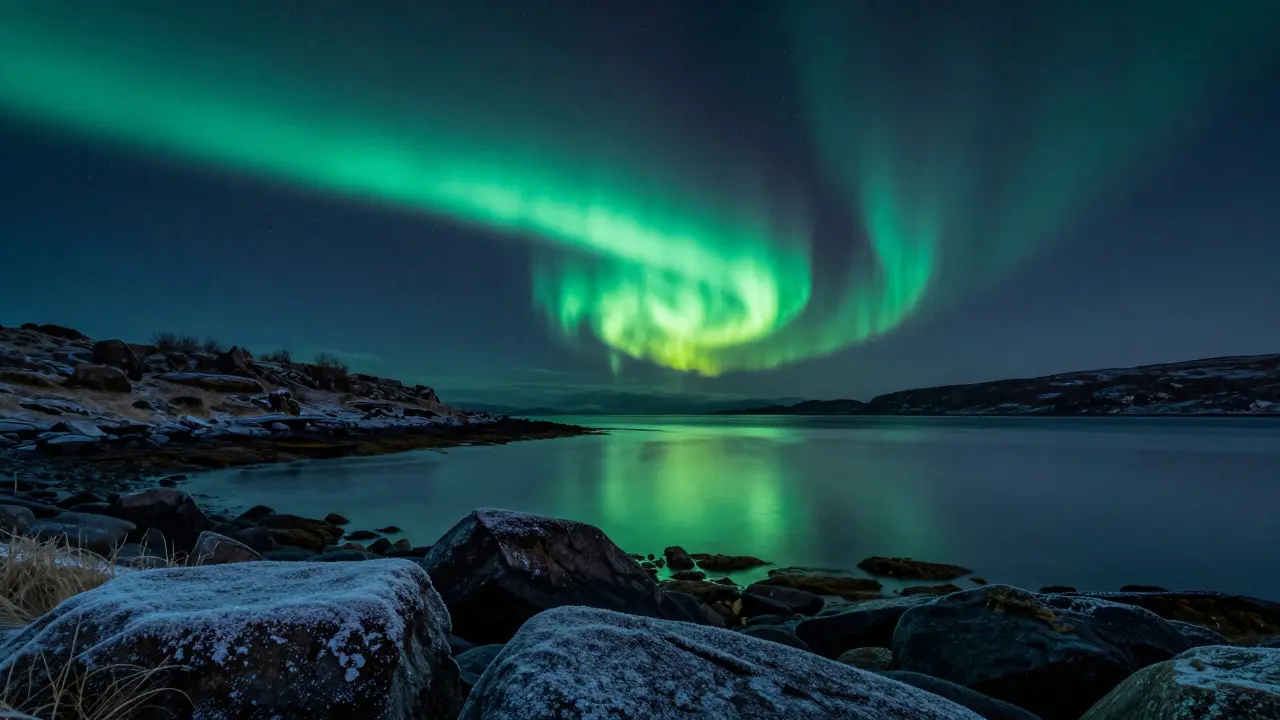
Quick Guide to Aurora Hunting
- Peak Window: September to March.
- Best Hours: 8 PM to 2 AM.
- Top Locations: Highlands, Outer Hebrides, Orkney.
- Key Requirement: A clear sky and a high Kp-index.
- Pro Tip: Get as far north and away from streetlights as possible.
When to Chase the Aurora in Scotland
You can't see a light show if the sun is still up. In Scotland, the midnight sun isn't a thing, but our summer evenings are incredibly long. From May to August, the sky stays too bright for the colors to pop, even during a massive solar storm. That's why the window from September to March is your gold mine. During these months, the nights are long enough to provide the necessary darkness.
If I had to pick a specific sweet spot, I'd point you toward the autumn and spring equinoxes. Around September and March, the Earth's magnetic field aligns in a way that often makes the atmosphere more receptive to solar particles. This is a documented pattern; many seasoned aurora hunters notice a spike in activity during these transitional months. However, winter (December to February) offers the most hours of darkness, giving you a wider window to catch a glimpse before the clouds inevitably roll in.
The Science of the Hunt: Understanding the Kp-Index
You'll see people talking about the Kp-index is a measure of geomagnetic activity on a scale from 0 to 9, indicating the likelihood of seeing aurorae at specific latitudes. For most of the world, a Kp 5 (a geomagnetic storm) is the magic number. But because Scotland sits further south than Norway, we need the activity to be stronger to "push" the lights down to our latitude.
Generally, if the Kp-index hits 4 or 5, you have a decent shot in the Highlands. If it hits 6 or 7, you might even see them from the Central Belt or the Lowlands. Keep an eye on Space Weather forecasts. These apps use real-time data from satellites to tell you if a solar flare has hit the atmosphere. Just remember: a high Kp-index is useless if you're standing under a thick blanket of Scottish rain clouds.
Where to Go: Scotland's Darkest Spots
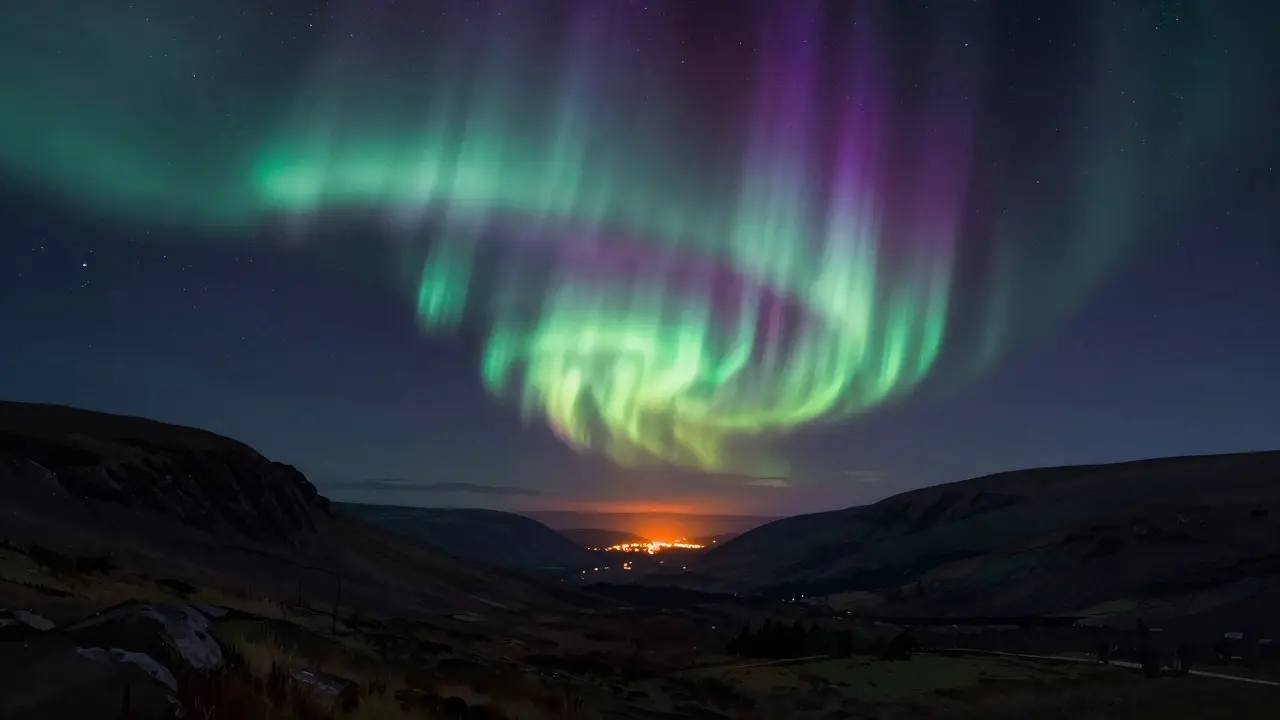
Light pollution is the enemy. If you're in the middle of Glasgow or Edinburgh, the orange glow of the city will wash out everything but the most violent solar storms. To see the Northern Lights Scotland experience in all its glory, you need to head to areas with low artificial light.
The North Coast 500 is a fantastic route for this. Specifically, the rugged coastlines of Sutherland and Caithness offer wide-open horizons. Because you're looking north across the ocean, there's nothing to block your view of the horizon where the lights usually start.
Don't overlook the islands. The Outer Hebrides and Orkney are some of the best spots in the UK. In Orkney, you're practically in the Arctic backyard. The lack of trees and urban sprawl means your field of vision is massive, making it much easier to spot the first faint green glow.
| Region | Darkness Level | Accessibility | Best Feature |
|---|---|---|---|
| North Highlands | Extreme | Moderate | Vast horizons |
| Orkney Islands | High | Low (Ferry needed) | Highest latitude |
| Outer Hebrides | Extreme | Low | Zero light pollution |
| Cairngorms | Medium-High | High | Mountainous vistas |
Practical Gear and Tips for the Night
Hunting for the aurora isn't a stroll in the park; it's a test of endurance. Scottish winters are damp and biting. If you stand still for two hours waiting for a flare, you'll freeze through your jeans in twenty minutes. Layering is your only hope. Wear a thermal base layer, a fleece mid-layer, and a windproof, waterproof outer shell. Don't forget wool socks-cotton is a death sentence for your toes in the Highlands.
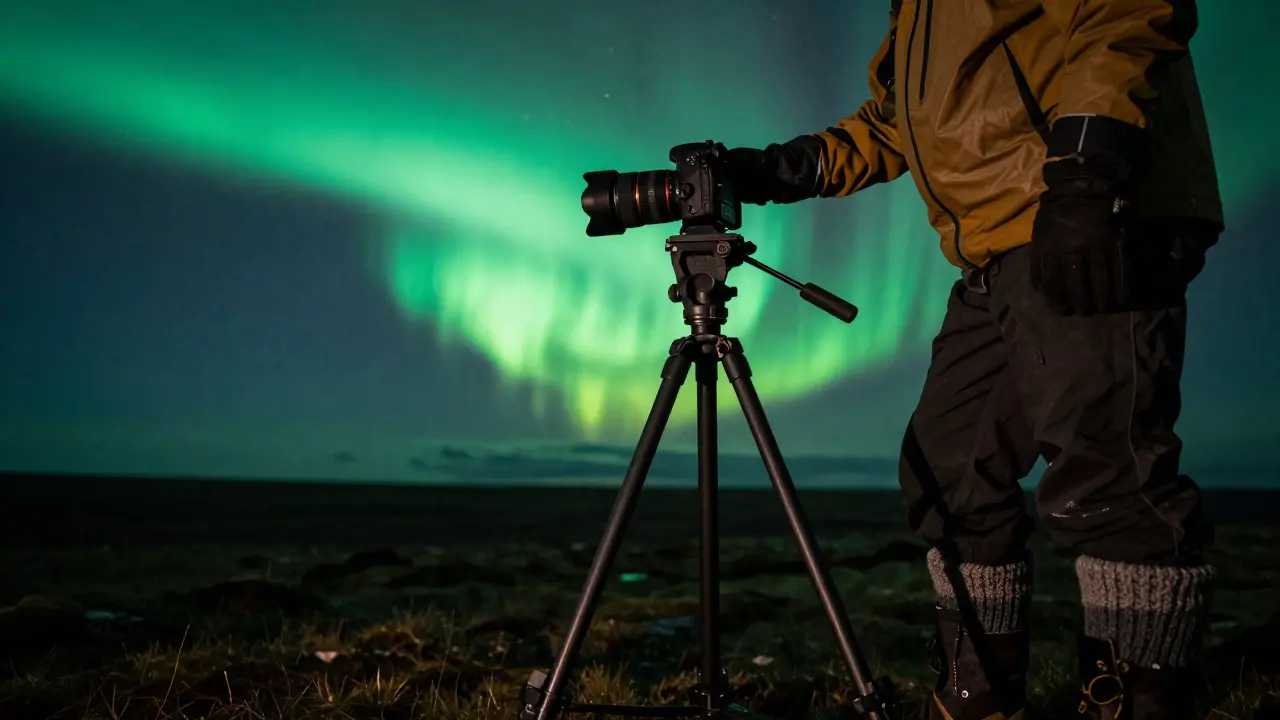
Regarding photography, your smartphone might struggle unless it has a dedicated "Night Mode." For the best results, use a DSLR or mirrorless camera with a wide-angle lens. Set your aperture to the lowest number (e.g., f/2.8) and your ISO between 1600 and 3200. A tripod is mandatory; any shake in the camera will turn your beautiful aurora into a blurry green smudge.
Common Pitfalls to Avoid
The biggest mistake people make is trusting a general weather forecast. A forecast might say "Clear skies in Inverness," but as you drive twenty miles north, you hit a localized cloud bank that blocks everything. Always check a high-resolution cloud cover map.
Another trap is the "Green Glow" confusion. Sometimes, people see a faint green tint on the horizon and think they've found it, only to realize it's actually light pollution from a distant town reflecting off the clouds. To verify the aurora, look for movement. The Northern Lights shimmer and dance; they aren't static. If it doesn't move, it's probably not the aurora.
The Connection Between Solar Cycles and Your Trip
If you're planning for 2025 or 2026, you're in luck. The Solar Cycle is a roughly 11-year period of solar activity. We are currently near the Solar Maximum, which is the peak of the cycle. This means the sun is more active, throwing more coronal mass ejections our way. In simple terms: the lights are appearing more frequently and more intensely in Scotland right now than they have in a decade. This makes it the perfect time to book a trip to the north.
Can I see the Northern Lights from Edinburgh or Glasgow?
It is possible, but rare. You would need a very high Kp-index (6 or above) and perfectly clear skies. Even then, the city lights will drown out most of the colors. Your best bet in the central belt is to drive 40 minutes away from the city center to a dark field or a coastal spot like the Firth of Forth.
What is the best app for tracking the Aurora?
Most hunters use "My Aurora Forecast" or "Aurora Alerts." These apps provide real-time Kp-index updates and send push notifications when the probability of visibility in your current location increases.
Do I need a telescope to see them?
No, absolutely not. The Northern Lights are a wide-sky phenomenon. A telescope actually limits your field of vision too much. Your naked eye is the best tool for spotting the aurora.
Are the lights always green?
Green is the most common color because of how oxygen at lower altitudes reacts. However, if the solar storm is powerful enough, you can see pink, purple, or even red. These rarer colors are usually visible during extreme geomagnetic events.
Is it safe to drive to remote Highlands at night?
Generally yes, but be cautious. Many Highland roads are single-track with passing places. Be mindful of deer crossing the road, especially in autumn and winter, as they are very active at night and can cause serious accidents.
Next Steps for Your Trip
If you're ready to go, start by picking a base. I recommend staying in a small B&B in Ullapool or Thurso. This puts you in the heart of the dark zones without having to drive three hours every single night. Once you've booked your stay, download a cloud-cover app and a solar activity tracker.
If you're a complete beginner and feel intimidated by the remote locations, consider joining a guided aurora tour. These guides know the "secret" spots that are shielded from the wind and light, saving you hours of wandering in the dark. No matter how you do it, just remember to pack more warm clothes than you think you need. The lights are beautiful, but the Scottish wind is unforgiving.
Comments (14)
-
kelvin kind April 13, 2026
Solid advice. Highlands are the way to go.

-
Zelda Breach April 14, 2026
Imagine thinking a "dedicated Night Mode" on a smartphone is a viable substitute for actual equipment. The sheer audacity of suggesting that anyone with a shred of technical competence would rely on a mobile sensor to capture a geomagnetic storm is laughable. Also, the phrasing in the guide is dreadfully clumsy, but I suppose we can't expect precision from everyone these days.

-
Alan Crierie April 15, 2026
I totally agree that the right gear makes a huge difference! 📸 Maybe a few friendly reminders about local wildlife safety would be a nice touch for those visiting the north for the first time 🦌✨

-
Gareth Hobbs April 16, 2026
Sutherlands coast is the only real way to see it!!!! anyone who says otherwise is just tryin to push the tourist traps... it's all a scam by the councils to get people on the ferrys anyway!!!! absolute rubbish!!!!

-
Aryan Gupta April 17, 2026
The phrasing "the Northern Lights is a natural light display" is a glaring subject-verb agreement error. It should be "are". It's honestly exhausting how people ignore basic grammar in the digital age. Besides, isn't it convenient how the "Solar Maximum" coincides perfectly with the push for new satellite arrays? I'm not saying it's a cover for global surveillance, but the timing is far too neat to be natural.

-
Sarah McWhirter April 17, 2026
Omg the colors are basically just the universe's way of telling us that the veil is thinning! 🌌 But let's be real, if the government actually wanted us to see the "real" lights, they wouldn't be installing those 5G towers every ten miles in the Highlands. Just a thought! Stay woke, everyone! 😉

-
Fredda Freyer April 19, 2026
The intersection of celestial movement and human perception is such a profound experience. When we stand in that freezing cold, we aren't just looking at plasma; we're witnessing the invisible shield of our planet interacting with the raw power of a star. For those struggling with the photography aspect, I've found that focusing manually on infinity is the only way to ensure the stars don't blur. It's a meditative process that forces you to slow down and truly exist in the moment. The Outer Hebrides provide a silence that is almost tactile, which amplifies the visual experience. We often forget that the earth is a living, breathing entity within a chaotic solar system. It's a humbling reminder of our insignificance in the grand cosmic scale. Just remember that the best camera is the one that doesn't distract you from the actual sight. Sometimes, putting the lens away allows the mind to capture a memory that no pixel ever could. The contrast between the biting wind and the ethereal glow creates a sensory dichotomy that is simply unforgettable. I highly recommend bringing a thermos of hot ginger tea to keep the core temperature up. It's a small comfort that makes the wait for a Kp-5 event much more bearable. Nature doesn't work on our schedule, and that's the beauty of the hunt.

-
Kelley Nelson April 20, 2026
One finds it rather quaint that such a basic phenomenon requires a "guide" for the masses. Truly, the lack of innate astronomical knowledge in the general population is quite staggering. It is simply a matter of basic physics, though I suppose some require a list of B&Bs to feel capable of venturing into the countryside.

-
Ananya Sharma April 21, 2026
While the author presents this as a leisure activity, they completely fail to address the ethical implications of driving hundreds of miles of fossil-fuel-emitting vehicles just to see a light show that can be viewed via a high-definition webcam from one's own living room, which honestly feels like a peak example of modern consumerist vanity where the "experience" is valued more than the actual ecological impact of the journey itself.

-
Fred Edwords April 22, 2026
This is a wonderful resource!!! I appreciate the detailed breakdown of the Kp-index, as it provides much-needed clarity for the amateur observer!!!

-
Peter Reynolds April 23, 2026
thanks for the tips sounds like a cool trip

-
Nicholas Zeitler April 24, 2026
You can totally do this!!! Just keep pushing through the cold and you'll see the most amazing thing of your life!!! Get those layers on!!!!

-
Ian Cassidy April 25, 2026
Basically just a high-latitude plasma event. Just hit the dark zones and hope the cloud cover doesn't glitch.

-
Zach Beggs April 25, 2026
I think this is a great way to plan a trip, thanks for the info!
