
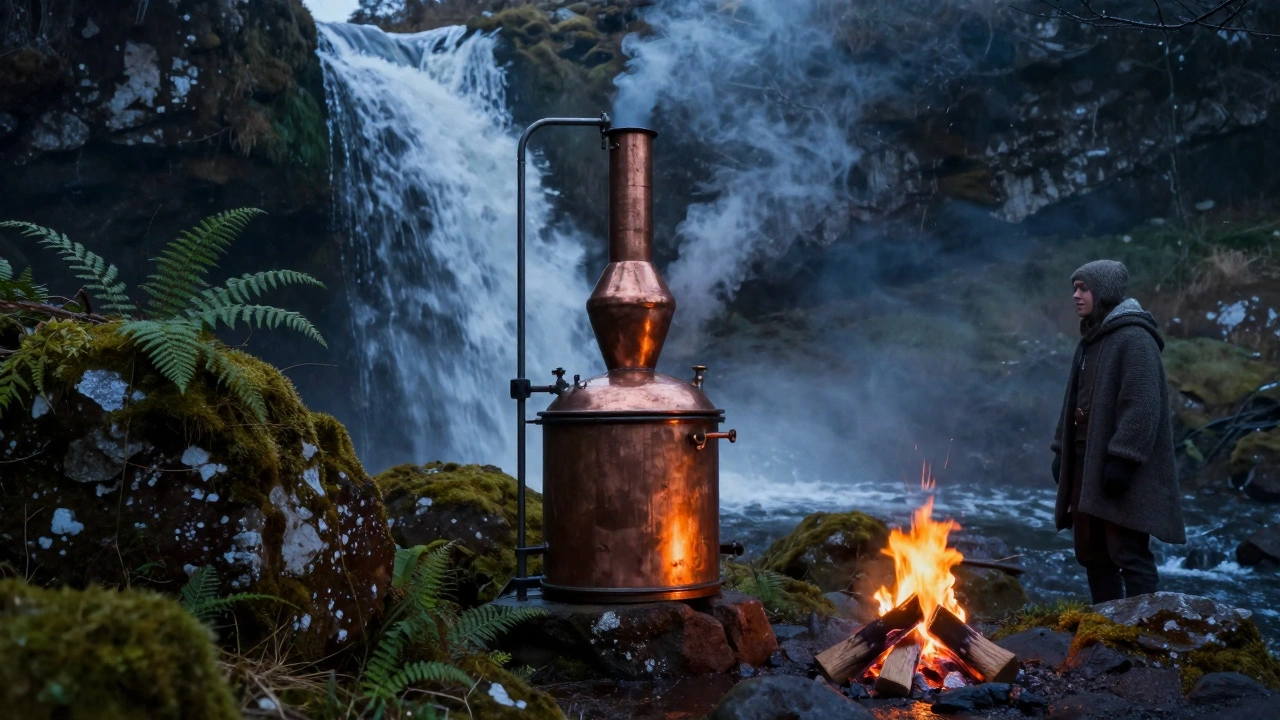
Scotland’s whisky isn’t just drink-it’s a story carved into hillsides, hidden in glens, and passed down in whispered secrets. Long before the sleek glass bottles lined up in duty-free shops, whisky was made in the dark, by people who knew the law wouldn’t protect them. The truth behind every dram is older than the castles dotting the Highlands, and it’s full of rebellion, hunger, and stubborn pride.
The Birth of Whisky in Scotland
Whisky didn’t start in a distillery with a fancy sign. It began in monasteries around the 15th century, where monks distilled aqua vitae-water of life-from barley. The earliest written record? A 1494 entry in the Exchequer Rolls, noting a friar named John Cor was given enough barley to make about 500 bottles. That’s not a hobby. That’s a business.
For centuries, whisky was made in small batches, mostly for medicine or local celebration. It wasn’t until the 17th century that the government saw it as a revenue stream-and decided to tax it. That’s when everything changed.
The Tax That Made Whisky Illegal
In 1644, Scotland’s Parliament slapped a tax on whisky production. It wasn’t meant to stop drinking-it was meant to fund wars. But the tax was absurdly high, and it hit the poorest hardest. Farmers who distilled a few gallons to get through winter suddenly owed more than their crops were worth. So they did what people do when the law doesn’t match reality: they went underground.
By the 1700s, illicit stills outnumbered legal ones by ten to one. You’d find them tucked behind waterfalls, in caves, or under barn floors. The best ones were mobile-built on wooden sleds so they could be moved quickly when the excise men came. These men, called ‘gaugers,’ were feared. They carried guns, wore uniforms, and had the power to smash stills and jail anyone caught distilling without a license.
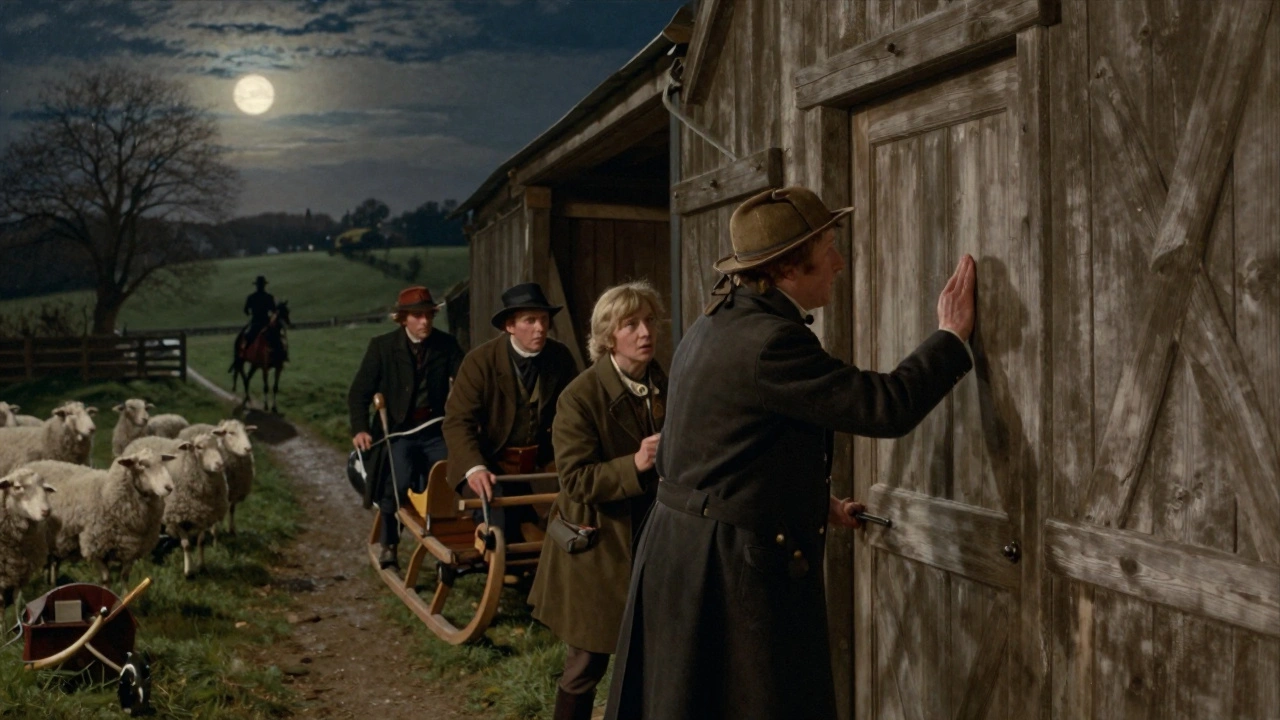
But the people fought back. Communities protected their distillers. A single knock on the door at night meant the gaugers were coming. The whole village would scatter, hide the still, and pretend they were just tending sheep. In places like Islay and Speyside, families passed down still designs like heirlooms. Some of those same shapes are still used today.
How the Government Finally Gave Up
For over 150 years, the government tried to crush the illicit trade. They sent soldiers. They offered rewards for informants. They even tried to make legal whisky cheaper by lowering taxes. None of it worked. The people weren’t just making drink-they were defending their way of life.
The turning point came in 1823. The Excise Act didn’t ban smuggling-it legalized it. The government lowered the license fee to just £10 and allowed distillers to produce whisky legally, as long as they paid a small tax per gallon. Suddenly, it made more sense to go legal. Why risk prison when you could open a shop and sell to the whole country?
That’s when the modern distillery era began. Places like Glenlivet, Glenfiddich, and Macallan started as small legal operations. But even then, many distillers still kept a hidden still in the woods-just in case. Some families did it for generations. My great-grandfather in Fife swore he’d seen one still in the woods near Dundee that was still being used in the 1950s.
Traditions That Survived the Ban
Even after whisky went legal, the old ways stuck. The rituals didn’t vanish-they just got polished.
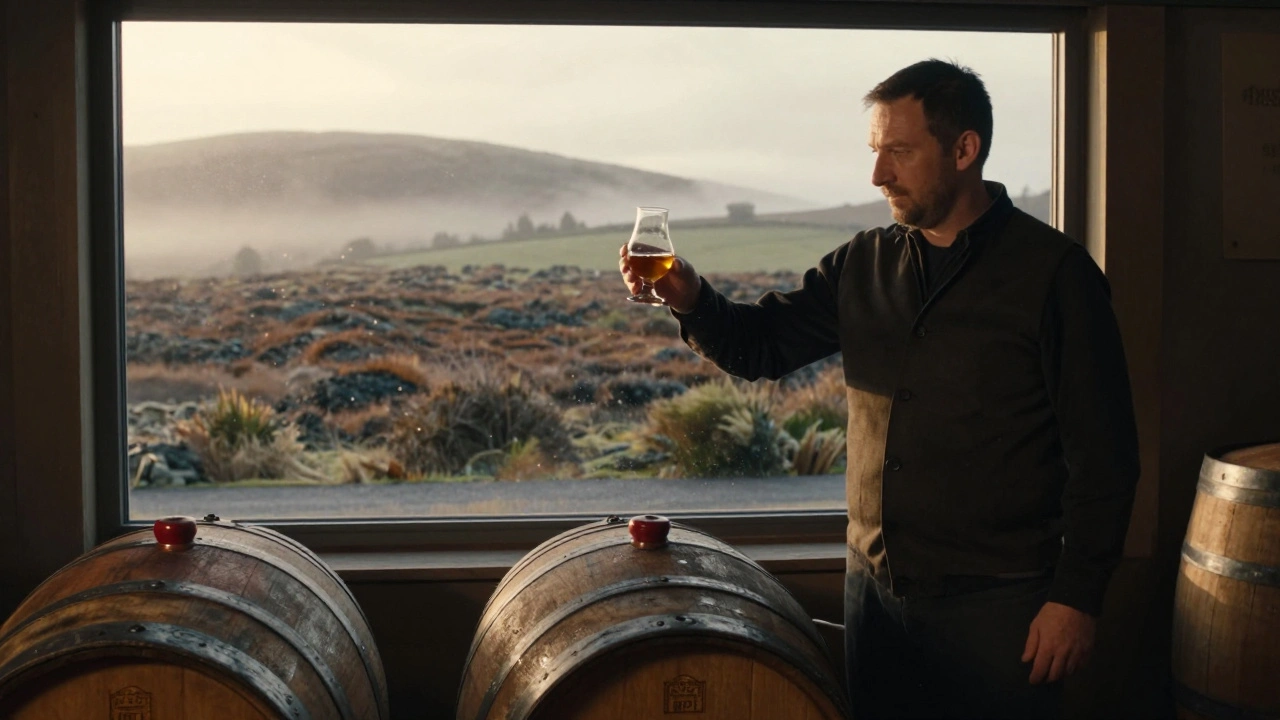
For example, the practice of ‘cask selection’-where a master distiller tastes each barrel before blending-comes from the days when every drop mattered. Back then, you didn’t have 10,000 barrels to choose from. You had maybe five. You learned to trust your nose, your tongue, your gut. That’s why today’s master blenders still do it the same way.
Then there’s the ‘angel’s share.’ That’s the portion of whisky that evaporates as it ages in oak casks. In the old days, people joked that the angels were taking their cut. But really, it was just the damp Scottish air doing its work. The loss was real. A barrel might lose 2% a year. That’s hundreds of bottles over a decade. Still, they never tried to stop it. They accepted it as part of the process.
And what about peat? The smoky flavor in many Scotch whiskies? That came from necessity. Before gas and electricity, peat was the cheapest fuel. Distillers dried their malt over peat fires, and the smoke soaked into the barley. Over time, people didn’t just tolerate the taste-they loved it. Today, that smokiness is a badge of identity. Laphroaig, Ardbeg, Talisker-they all owe their character to a time when they had no other choice.
Whisky and the Land
Whisky didn’t just change hands-it changed landscapes. The best barley grows in the east, near the fertile plains of Speyside. The purest water comes from the mountains of the Highlands. The peat? That’s from the bogs of Islay. Every region’s whisky tastes different because the land tells it how.
Even today, distilleries don’t just sit on land-they’re part of it. They use local barley, local water, local peat. Some still source barley from the same farms their grandfathers did. The same streams power the cooling systems. The same wind shapes the maturation. It’s not marketing. It’s survival. If the land doesn’t give, the whisky doesn’t work.
That’s why you can’t just move a distillery to a city. You can’t replicate Islay’s whisky in Glasgow. The spirit isn’t just in the bottle-it’s in the soil, the air, the rain, and the history of the people who’ve lived there for centuries.
What You’ll Find Today
Now, you can tour distilleries with guided walks, tasting rooms, and gift shops. But if you know where to look, you’ll still find traces of the old world.
At Glenfiddich, the stills are shaped like the ones from the 1800s. At Springbank, they still hand-turn their malt. At Benromach, they use direct-fired stills-the same way they did before gas burners existed. These aren’t gimmicks. They’re acts of memory.
And if you talk to the workers, you’ll hear stories. Not the ones in the brochures. The real ones. Like how a distiller in Campbeltown once hid a still under his chicken coop. Or how a woman in the Highlands used to carry a flask of whisky in her shawl to feed her sick husband. Or how, during the war, families traded whisky for butter because money was worthless.
Whisky isn’t just a drink. It’s a record. A stubborn, smoky, salty, sweet record of people who refused to be silenced-even when the law tried to do it.
Why This Matters Now
Today, Scotch whisky is worth over £5 billion a year. It’s exported to 200 countries. But none of that would exist if people hadn’t risked everything to keep making it when it was illegal.
That’s why the best whisky tours don’t just show you the bottling line. They show you the cave where a still was hidden. They let you touch the stone where a gauger once stood. They tell you the names of the people who made it happen-not just the CEOs.
When you taste a dram of single malt, you’re not just tasting barley and water. You’re tasting defiance. You’re tasting patience. You’re tasting a country that refused to let a tax kill its soul.
Why was whisky illegal in Scotland?
Whisky became illegal to produce without a license after the government imposed heavy taxes in the 17th century. Many small distillers, especially farmers in remote areas, couldn’t afford the tax and continued making whisky in secret. The law didn’t match reality, so people broke it-not out of rebellion for rebellion’s sake, but because they needed to survive.
How did people hide illicit stills?
Illicit stills were hidden in caves, under barn floors, behind waterfalls, and even inside hollow trees. Many were built on wooden sleds so they could be moved quickly when excise men approached. Villages had warning systems-a single knock on the door meant danger. Neighbors would help hide equipment or distract the gaugers with sheep or farming chores.
What changed in 1823?
The 1823 Excise Act lowered the license fee to £10 and allowed legal distillers to pay a small tax per gallon. This made it cheaper and safer to operate legally than to risk smuggling. The move didn’t end illicit production overnight, but it shifted the balance. Most distillers chose the law over the shadows, and the modern whisky industry was born.
Why does Scottish whisky taste different from other whiskies?
Scottish whisky’s flavor comes from local ingredients: barley grown in specific regions, water from mountain springs, and peat from local bogs used to dry the malt. The cool, damp climate also affects aging-whisky matures slower, absorbing more character from the oak casks. No other country has the same combination of soil, weather, and centuries of tradition.
Are there still illegal stills in Scotland today?
Legally, no. Modern enforcement is strict, and the tax system is fair enough that most distillers choose to operate legally. But in remote areas, especially on islands like Islay and the Outer Hebrides, there are rumors of occasional small-scale, unlicensed production-usually for personal use or as a nod to heritage. These are rare and not commercial.
If you ever visit Scotland and taste a dram of single malt, pause before you drink. Look at the color-gold, amber, deep brown. Smell the peat, the fruit, the oak. Then taste it. That’s not just whisky. That’s centuries of quiet resistance, whispered in every sip.
Comments (11)
-
Jeremy Chick December 9, 2025
Man, I just drank a dram of Laphroaig while reading this and I swear I could taste the ghosts of those old smugglers. This isn’t just history-it’s a damn rebellion in a glass. The fact that people risked everything for this stuff? That’s the kind of grit we lost when we started buying whiskey in plastic bottles at gas stations.

-
Christina Kooiman December 9, 2025
Actually, the word 'aqua vitae' is Latin, not Scots Gaelic, and it was used across Europe-not just in Scotland. Also, 'about 500 bottles' is a gross misinterpretation; the 1494 record refers to eight bolls of barley, which would yield roughly 1,500 liters, not 500 bottles. You're romanticizing the data. This is important.

-
michael T December 11, 2025
LOL at the grammar nazis but also… this is why I love whisky. It’s the drink of people who said ‘fuck your tax’ and made magic anyway. I once met a guy in Islay who had a still hidden under his outhouse-he said his granddad used to smuggle it in a coffin during funerals. I didn’t believe him… until he poured me a glass that tasted like burning peat and regret. Best damn drink of my life. Also, angels? Nah. It’s just the Scottish weather stealing your booze. And I’m okay with that.

-
allison berroteran December 11, 2025
I love how this piece connects the land to the spirit-not just metaphorically, but physically. The way the water flows, the wind carries the peat smoke, the barley remembers the soil… it’s like the whisky is a living archive. I’ve never been to Scotland, but reading this made me feel like I’ve walked those glens. Maybe that’s the real magic-not the alcohol, but the memory held in every drop. I’m going to buy a bottle tonight and drink it slowly, like a prayer.

-
Stephanie Serblowski December 13, 2025
YAS QUEEN 🙌 This is the kind of history that doesn’t get told in textbooks. People didn’t break laws because they were criminals-they broke them because the system was broken. And now we pay $200 for a bottle that’s basically a tribute to resistance. Also, ‘angel’s share’ is just nature’s way of saying ‘you ain’t getting it all, baby’ 😘 Keep the tradition alive, not just the brand.

-
E Jones December 14, 2025
Wait… did you know the 1823 Excise Act was secretly funded by British intelligence to control Highland clans? The government didn’t want to legalize whisky-they wanted to co-opt it. Those ‘legal’ distilleries? They were all run by informants. And the ‘hidden stills’ in the 1950s? That wasn’t tradition-it was cover for smuggling weapons during the Cold War. The peat smoke? It’s not just flavor-it’s coded signals. You think the angels are taking the whisky? Nah. The CIA’s taking notes. And the bottles you buy? They’re tracking your DNA now. I’ve seen the receipts.

-
Michael Jones December 14, 2025
Whisky is the only thing that doesn’t need a reason to exist. It just does. Like mountains. Like love. Like silence after a storm. People didn’t make it to defy tax laws-they made it because they needed to feel alive. And now we drink it like a ritual because we’ve forgotten how to feel anything else. Maybe that’s the real tragedy. Not the tax. Not the stills. But that we’ve turned defiance into a marketing slogan.

-
Renea Maxima December 15, 2025
But what if the entire narrative is a myth? What if the illicit stills were mostly just urban legends invented by distillers to sell more expensive bottles? What if the ‘peat flavor’ was just bad fire management? What if the ‘tradition’ is just nostalgia packaged in glass? I’m not saying it’s not good… I’m just saying maybe we’re all drinking a fairy tale and calling it heritage.

-
selma souza December 16, 2025
There are multiple grammatical and factual errors in this piece. ‘Aqua vitae’ is not ‘water of life’ in Scots-it’s Latin. The Exchequer Rolls entry does not specify ‘500 bottles’-that is a modern assumption based on volume estimates. Additionally, the term ‘gaugers’ is misused; they were excise officers, not ‘men with guns’ in the way portrayed. This is irresponsible historical storytelling.

-
Gabby Love December 17, 2025
Just a quick note: the stills built on sleds? They’re called ‘stillies’ in some Highland dialects. And the ‘knock on the door’ warning? That was called the ‘gauger’s knock’-and if you heard it, you didn’t run. You lit a fire, poured tea, and pretended you’d been baking bread all day. The best distillers were also the best actors. That’s the real craft.

-
Barbara & Greg December 19, 2025
It is deeply concerning that this article glorifies criminal activity under the guise of cultural heritage. Tax evasion is not rebellion-it is a violation of social contract. While the romanticization of illicit distillation may be emotionally compelling, it undermines the rule of law and sets a dangerous precedent for future generations. One cannot honor tradition by honoring illegality.
