

Scotland’s castles, crofts, and ancient stone circles aren’t just postcard views-they’re living pieces of a story that’s still being written. Every crumbling wall at Dunnotar Castle, every whispered Gaelic phrase in a Hebridean village, every repaired cobblestone in Edinburgh’s Old Town is a thread in a tapestry that could unravel if no one steps in. Preserving Scottish heritage isn’t about museum glass cases or tourist brochures. It’s about people-volunteers, funders, and conservation experts-working together to keep the past from disappearing into silence.
Why Scottish Heritage Is Under Pressure
Scotland has over 8,000 listed buildings, 6,000 scheduled monuments, and more than 100,000 archaeological sites. But many of these aren’t protected by fences or guards. They’re exposed to weather, neglect, and slow decay. A 2024 report from Historic Environment Scotland found that 37% of rural historic structures show signs of serious deterioration. Rain seeps into 18th-century croft houses in the Highlands. Salt air eats away at coastal forts. Grass grows over forgotten burial grounds because no one’s walked the path in decades.
It’s not just physical damage. Cultural knowledge is fading. Fewer people speak Gaelic. Younger generations don’t learn traditional crafts like thatching or stone masonry. Without active preservation, these skills vanish-not with a bang, but with a whisper.
How Conservation Works in Practice
Conservation isn’t about making old buildings look new. It’s about respecting what’s there. A skilled conservator will match original mortar with lime-based mixes, not modern cement. They’ll repair a 15th-century roof using hand-split oak shingles, not synthetic tiles. They’ll document every crack, every missing tile, every faded inscription before touching a single stone.
Take the restoration of the 14th-century St. Magnus Cathedral in Kirkwall, Orkney. Workers didn’t replace broken stained glass-they cleaned it, stabilized the lead cames, and carefully reinstalled each fragment. They used archival photos to recreate missing details. The result? A building that still breathes its original history, not a replica.
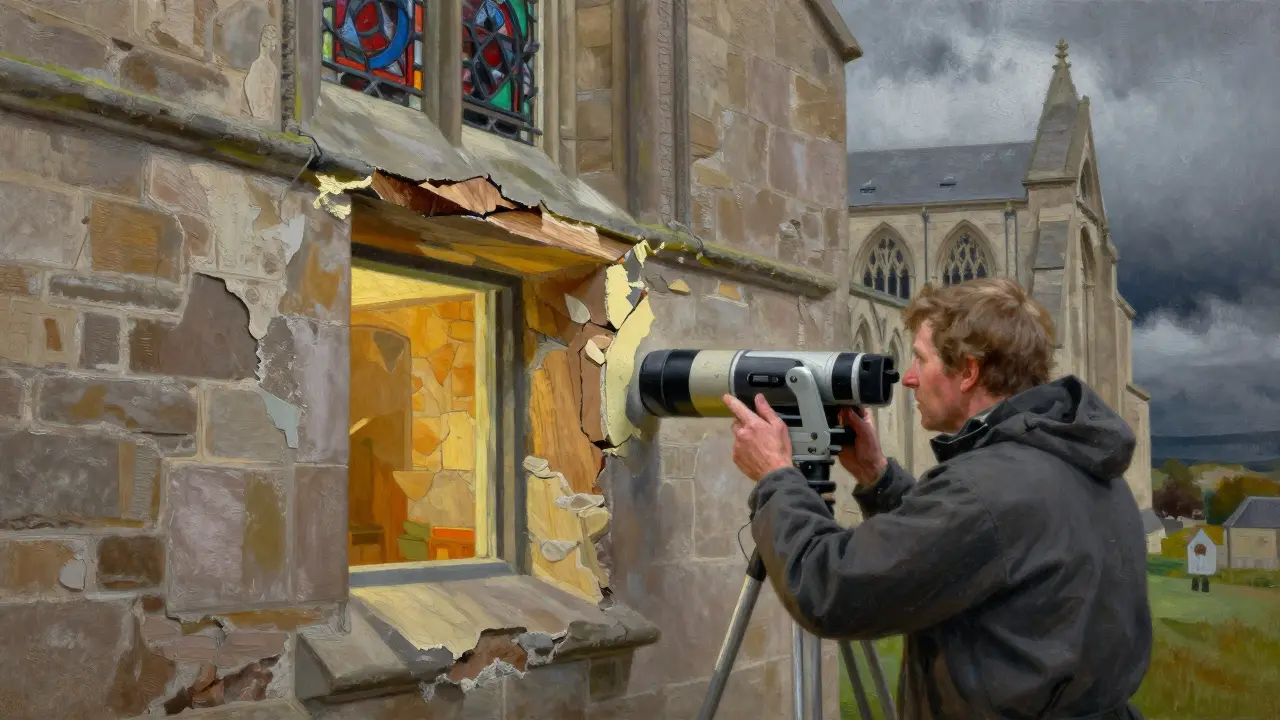
Conservation teams now use drone surveys and 3D laser scanning to map erosion patterns before they become structural threats. These tools don’t replace hands-on work-they make it smarter. A scan might show that a wall is leaning 2.3 degrees, not 1.8, meaning it needs reinforcement before winter rains come.
Where the Money Comes From-and Where It Falls Short
Preservation costs money. Lots of it. Restoring a single croft house can run £50,000-£120,000. A full castle restoration? Half a million or more. Funding comes from three main sources: government grants, private donations, and European heritage programs.
The Scottish Government’s Historic Environment Scotland budget was £92 million in 2025. That sounds like a lot-until you divide it by 8,000 listed buildings. That’s roughly £11,500 per site. Most need far more.
Charities like the National Trust for Scotland and the Scottish Civic Trust rely on memberships and public donations. In 2024, they raised £18 million total. That covered about 12% of the repair backlog. The rest? Crowdfunding. Communities have raised £2.7 million in the last three years through local campaigns-like the £110,000 raised in Shetland to fix the 1700s Brough of Birsay pier, or the £45,000 from villagers in Argyll to save their 18th-century schoolhouse.
But grants are competitive. Applications take months. And many small sites-like a forgotten chapel in the Borders or a ruined mill in Dumfries-get overlooked because they don’t have big marketing teams or social media followings.
Volunteering: The Real Engine of Preservation
Here’s the truth: no amount of government funding will save Scotland’s heritage without volunteers. They’re the ones clearing ivy from ruined abbeys. They’re the ones recording oral histories from elders who remember how the old kilns worked. They’re the ones learning to lay stone the way their great-grandparents did.
Organizations like the Scottish Archaeological Society run weekend digs where anyone can join-no experience needed. In 2024, over 3,200 volunteers helped excavate 47 sites across the country. One volunteer, a retired teacher from Glasgow, spent three years mapping every carved stone at the Clava Cairns near Inverness. Her work led to a new understanding of Bronze Age burial rituals.
Volunteer programs aren’t just about labor. They’re about connection. A teenager from Edinburgh who helps rebuild a drystone wall in the Trossachs doesn’t just learn a skill. They learn why their great-grandmother’s family left the land-and why someone had to come back to fix it.
There are formal programs too: the Heritage Volunteers Scotland scheme trains people in conservation techniques. The National Trust offers residential placements where volunteers live on-site for weeks, learning traditional building methods from master craftsmen.
What You Can Do-Even If You’re Not in Scotland
You don’t need to move to the Highlands to help. Here’s how you can make a real difference:
- Donate to small local trusts. Instead of giving to big names, look for community groups like the Isle of Mull Heritage Trust or the Lochaber Historic Buildings Group. They use every pound directly.
- Volunteer remotely. Transcribe old parish records, digitize photos, or help translate Gaelic documents. Many archives need help with online databases.
- Visit responsibly. Pay entry fees. Buy local crafts. Don’t climb on ruins. Leave no trace. Tourism revenue funds 30% of many site repairs.
- Speak up. If a development threatens a historic site, write to your MP or sign petitions. In 2023, public pressure stopped a housing project from covering a 12th-century burial mound near Stirling.
Success Stories: When People Made the Difference
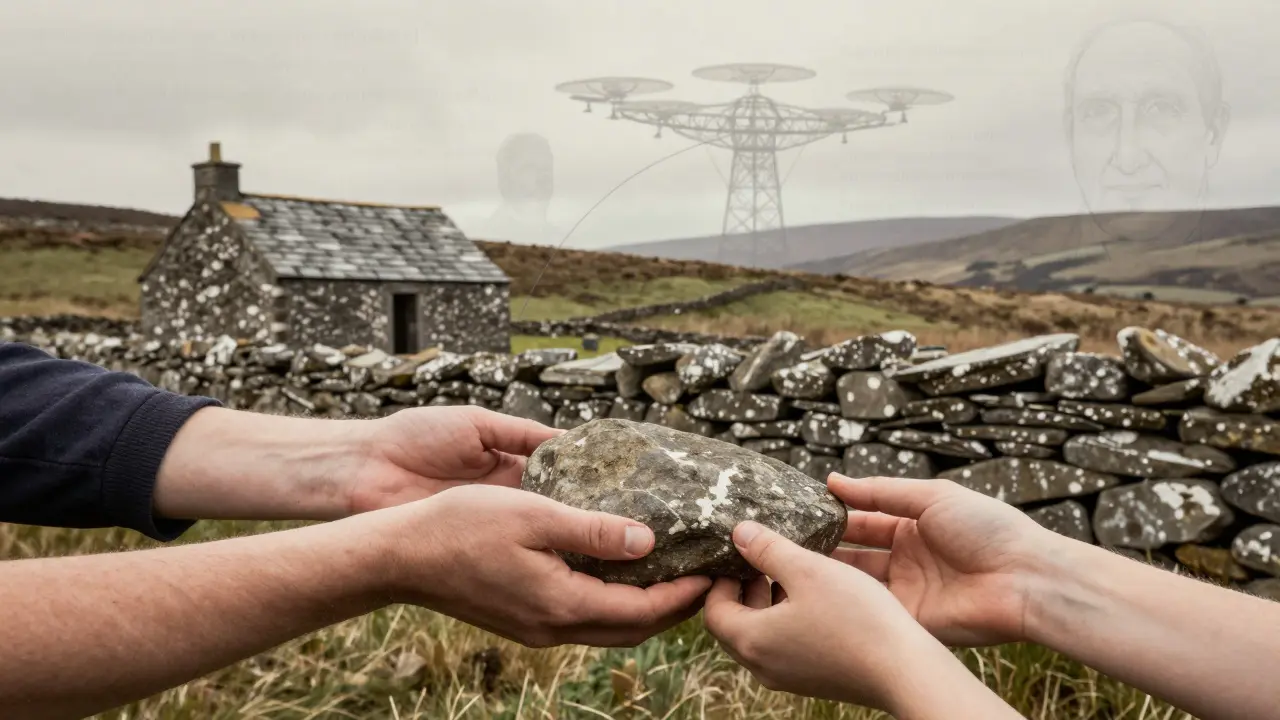
One of the most powerful examples is the restoration of the 17th-century Clava Cairns in Inverness-shire. For decades, the site was overgrown and ignored. In 2018, a local historian started a Facebook group called “Save Our Cairns.” Within a year, they had 1,200 members. Volunteers cleared 400 tons of brush. A local stonemason taught 15 teenagers how to re-lay the original kerb stones. The Scottish Government matched their £80,000 raised with a £150,000 grant.
Today, the site has walking paths, interpretive signs in Gaelic and English, and a yearly festival with traditional music. It’s now one of the most visited heritage sites in the Highlands.
Another case: the Ballachulish Ferry House, a 1790s building near Glencoe. It was rotting, with no roof. A retired carpenter from Perthshire heard about it on a podcast. He drove up, offered his skills, and stayed for six months. He brought in volunteers from across Scotland. They rebuilt the roof using reclaimed timber. Now it’s a community hub-hosting storytelling nights and craft workshops.
These aren’t miracles. They’re the result of ordinary people deciding that history matters enough to act.
What’s Next? The Future of Scottish Heritage
The next decade will be critical. Climate change is speeding up decay. Warmer, wetter winters mean faster rot. Rising sea levels threaten coastal sites like the Ness of Brodgar. More funding is needed. More volunteers are needed. More awareness is needed.
But there’s hope. Young people are leading the charge. TikTok accounts like @ScotHeritageDiaries show behind-the-scenes restoration work. Schools in the Highlands now include heritage projects in their curriculum. Universities offer degrees in conservation science. Even AI is helping-machine learning models now predict which sites are most at risk based on weather data and soil conditions.
Preserving Scottish heritage isn’t about freezing the past in amber. It’s about keeping it alive-so it can be touched, learned from, and passed on. The stones don’t care who fixes them. But the people who come after us will care that someone did.
Can I volunteer for heritage conservation in Scotland if I’m not from the UK?
Yes. Many volunteer programs welcome international participants. Organizations like the National Trust for Scotland and the Scottish Archaeological Society regularly host volunteers from abroad. You’ll need a valid visa for stays longer than six months, but short-term projects (a week or two) are often open to tourists. Some programs even offer accommodation in exchange for work. Check their websites for current opportunities.
How do I know if a heritage site is worth supporting?
Look for sites listed by Historic Environment Scotland (HES) or the National Trust for Scotland. These are officially recognized and have documented needs. You can also check local community groups-often, the most at-risk sites are small, overlooked places like a ruined chapel, a forgotten well, or an old schoolhouse. If a local group is raising funds for it, they’ve done the research. Your support will make a real difference.
Are there tax benefits for donating to heritage projects in Scotland?
Yes. If you’re a UK taxpayer, you can use Gift Aid when donating to registered charities like Historic Environment Scotland or the National Trust for Scotland. This adds 25% to your donation at no extra cost to you. For larger donations, you may also qualify for inheritance tax relief if you leave a heritage property or funds to a qualifying trust in your will. Always check with the charity or a financial advisor for specifics.
What’s the biggest threat to Scottish heritage today?
The biggest threat isn’t vandalism or tourism-it’s neglect. Many sites are simply forgotten. Without regular maintenance, even strong stone and timber decay rapidly in Scotland’s damp climate. A roof leak left unattended for two years can destroy a whole floor. A wall weakened by ivy can collapse overnight. The lack of funding and volunteers for small, rural sites means these problems go unnoticed until it’s too late.
Can I learn traditional Scottish building skills as a beginner?
Absolutely. Organizations like the Scottish Traditional Building Forum offer weekend workshops in drystone walling, lime plastering, and timber framing. No experience is needed-just a willingness to learn. Many courses are held on actual heritage sites, so you’re not just learning a skill-you’re helping preserve it. Some even offer certificates for completing modules.
If you’ve ever stood in front of a crumbling tower and wondered, “Who’s going to fix this?”-the answer is simple: you are. Start small. Show up. Speak up. Help where you can. Scotland’s heritage isn’t just stone and mortar. It’s the people who choose to care.
Comments (9)
-
Donald Sullivan December 25, 2025
This whole post is just a guilt trip for people who don't live in Scotland. Who cares if a 300-year-old wall crumbles? Nature reclaims everything. Stop romanticizing decay.

-
Tina van Schelt December 26, 2025
Oh my gosh, this made me tear up like I just watched a Pixar short about a lonely stone gnome. 🥹 The way you described the salt air eating away at coastal forts? That’s not just architecture-it’s poetry in ruins. I’m donating to the Brough of Birsay project right after I finish this comment. Someone’s gotta keep the ghosts of the Highlands from getting lonely.

-
Ronak Khandelwal December 27, 2025
History isn’t just stones and mortar-it’s the heartbeat of belonging. 🌱 When we preserve a croft house, we’re not fixing a roof-we’re whispering back to our ancestors, saying, ‘I see you. I remember you.’ And guess what? You don’t need to be Scottish to feel that. You just need to care. Whether you’re transcribing Gaelic letters from Mumbai or laying stones in the Trossachs, you’re part of the thread. Keep showing up. The past is waiting. ❤️

-
Jeff Napier December 29, 2025They say climate change is the threat but nobody talks about how the EU funded all this stuff until Brexit. Now the UK’s pretending it’s all about ‘community spirit’ but the real money vanished. And don’t get me started on the drone scans-those are just government spy tools disguised as ‘conservation.’ They’re mapping everything to sell it to billionaires later. You think they care about crofts? Nah. They want to turn them into Airbnb castles with WiFi. Wake up.

-
Sibusiso Ernest Masilela December 30, 2025
How quaint. A bunch of middle-class Brits with tweed vests and tea cups pretending they’re saving ‘heritage’ while the real cultural treasures-like the Gaelic language-are being extinguished by state neglect. You don’t ‘restore’ a culture with crowdfunding and Instagram posts. You preserve it by making it *live*. And yet, here we are: volunteers clearing ivy while the Scottish Parliament debates whether to fund a new statue of a dead poet. Pathetic.

-
Daniel Kennedy December 31, 2025
Look, I get the frustration-funding’s tight, sites are crumbling, and it feels overwhelming. But the fact that a retired teacher spent three years mapping carved stones at Clava Cairns? That’s the real magic. It’s not about grand gestures. It’s about showing up, day after day, with a trowel and a heart. And if you’re reading this and thinking ‘I could never do that’-you already did. You read this whole thing. That’s the first step. Start small. Find one site. One person. One stone. Just show up.

-
Taylor Hayes December 31, 2025
I’m from Kansas, never been to Scotland, but I cried reading about the Ballachulish Ferry House. That carpenter didn’t wait for permission-he just showed up. That’s the kind of quiet heroism we need more of. I’ve started volunteering to digitize old church records from my own town’s archives. Turns out, preserving history doesn’t require a plane ticket. Just a laptop, a little patience, and the willingness to listen to what the past is trying to say. Thank you for reminding me that care doesn’t need a passport.

-
Sanjay Mittal January 2, 2026
Interesting breakdown. But you missed one key point: most volunteer programs are still dominated by older, white, Western participants. Where are the young Indian, African, or Latin American volunteers? The tech tools (drones, AI) are great, but if the human network isn’t diverse, the preservation becomes a colonial relic, not a living tradition. Let’s not just save stones-we need to save the *storytellers* too. Maybe partner with universities in Delhi or Lagos for remote transcription projects. Heritage isn’t owned by one country-it’s a human inheritance.

-
Mike Zhong January 4, 2026The real heritage is the silence between the stones. The ones who built them never wrote it down. The ones who try to ‘preserve’ it now are just projecting their own loneliness onto brick and mortar. You think you’re saving history? You’re just trying to make the world feel less empty. The stones don’t care. Neither do I.
