
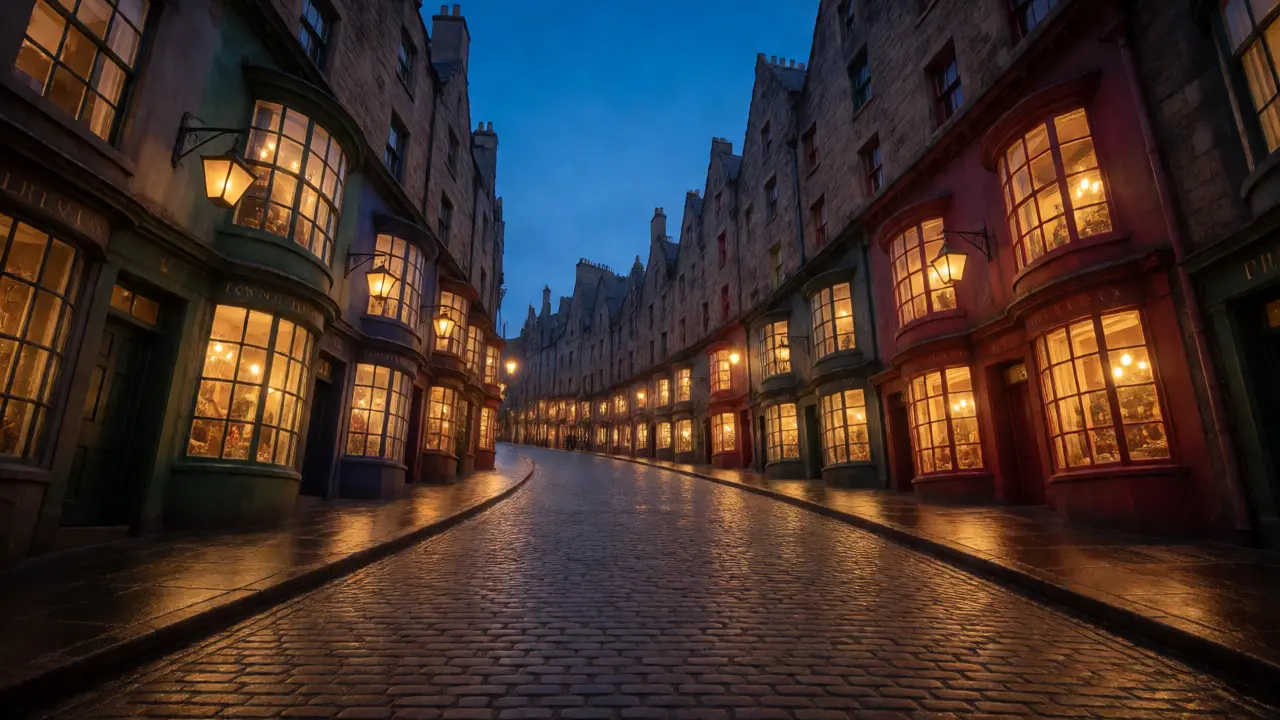
Walk down Victoria Street in Edinburgh, and you might feel a strange sense of déjà vu. The cobbled curve, the colorful shopfronts stacked on top of each other, the sheer verticality-it’s not just pretty; it’s familiar. For millions of fans, this isn’t just a street; it’s Diagon Alley. But did J.K. Rowling actually base Diagon Alley on Victoria Street? The short answer is no, but the longer answer is where the real magic lies.
If you’re planning a trip to Scotland’s capital with your wand (or at least a good pair of walking shoes) in hand, you need to know what’s real, what’s myth, and where to actually find the Harry Potter spirit. This guide cuts through the tourist traps to show you the genuine inspirations behind the books and films, plus the best spots to buy memorabilia that won’t break the bank or look like cheap plastic.
The Elephant House: Where It All Began
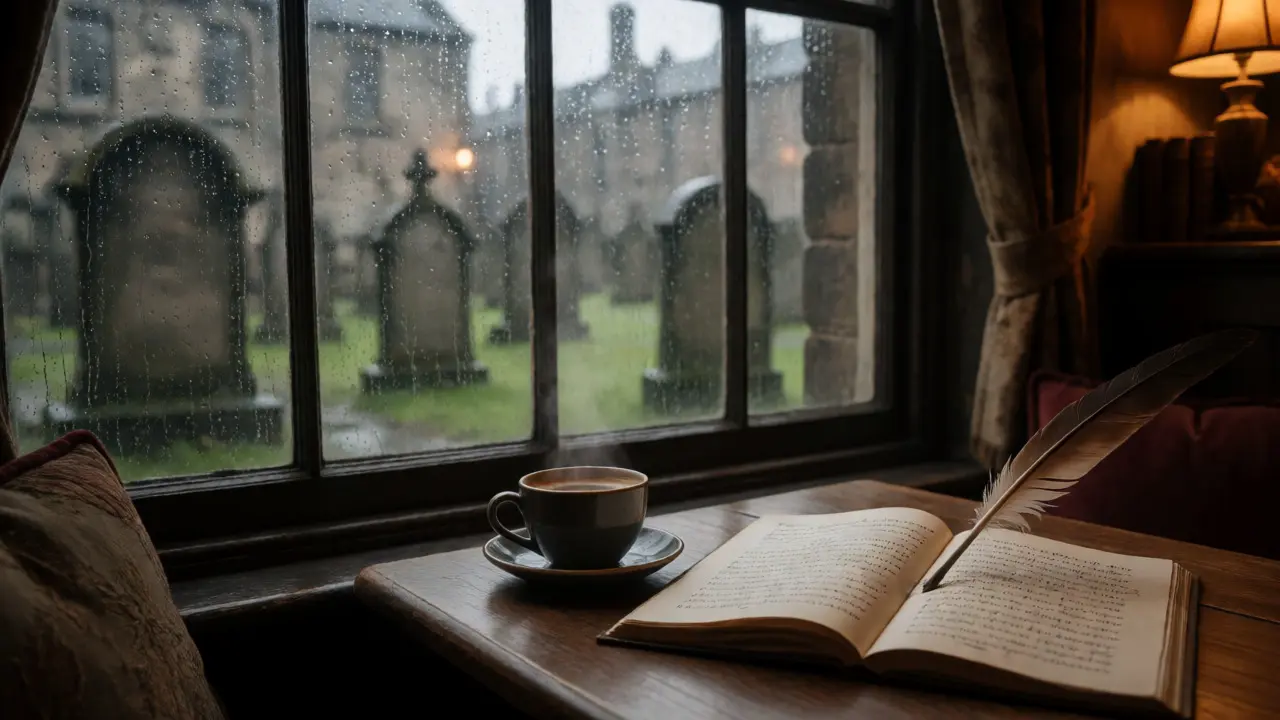
You can’t talk about Harry Potter in Edinburgh without mentioning The Elephant House. Located on George IV Bridge, this café is arguably the most famous pilgrimage site for Potterheads. It’s here, according to popular lore, that J.K. Rowling wrote much of the first book while her daughter napped nearby.
Is it true? Mostly. Rowling has confirmed she worked there, though she also wrote in other cafes and libraries around the city. The view from the window seats looks directly onto Greyfriars Kirkyard, which brings us to our next stop. If you go, don’t expect a quiet reading nook. It’s crowded, loud, and often packed with tourists taking selfies. But the atmosphere? It’s electric. Order a coffee, grab a table if you can, and soak in the history. Just be aware that they’ve implemented booking systems during peak times, so check ahead.
| Location | Connection to HP | Best Time to Visit |
|---|---|---|
| The Elephant House | Writing location for early chapters | Morning (to avoid crowds) |
| Greyfriars Kirkyard | Inspiration for character names (Moody, McGonagall) | Daytime (open until dusk) |
| Victoria Street | Visual inspiration for Diagon Alley | Evening (lights are magical) |
| Nicolson’s Restaurant | Rowling taught English here | Lunch or Dinner |
| Edinburgh Castle | Visual backdrop for Hogwarts scenes | Any time (exterior views) |
Greyfriars Kirkyard: Reading the Tombstones
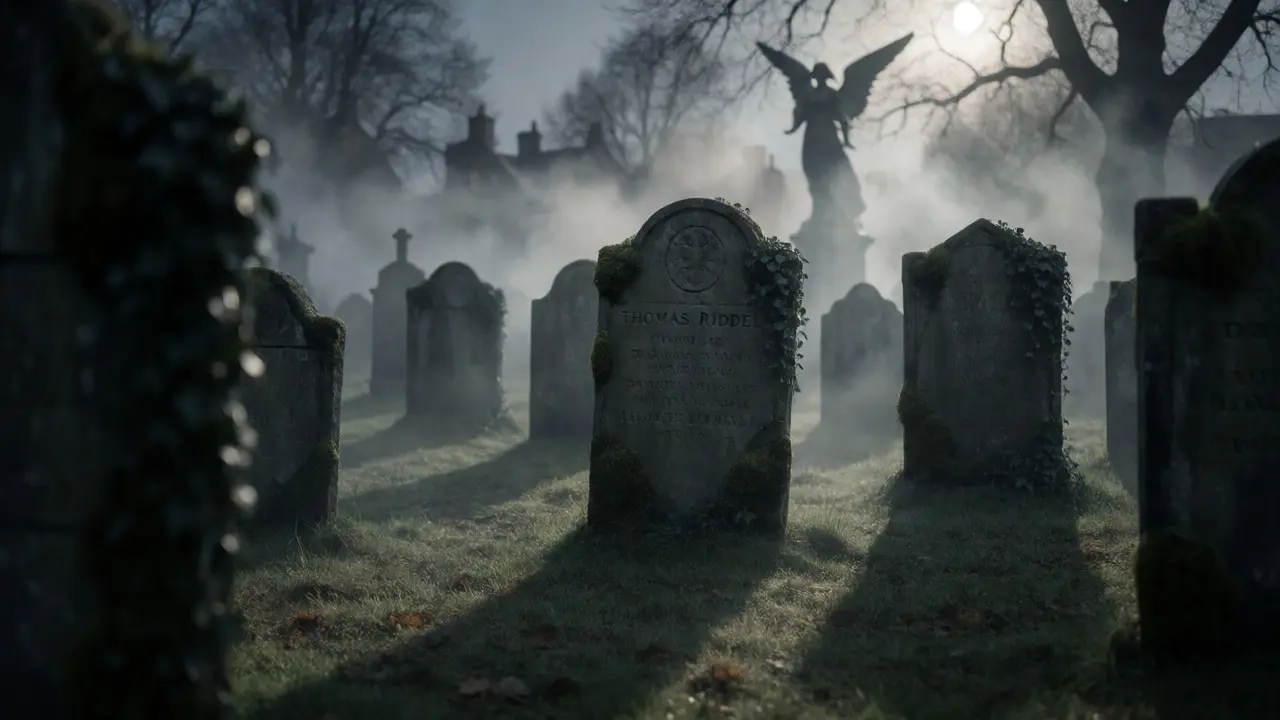
Step outside The Elephant House, cross the road, and you’re in Greyfriars Kirkyard. This cemetery is grimy, atmospheric, and absolutely essential for any Potter fan. Why? Because J.K. Rowling walked these paths and saw names that ended up in her books.
Look for the grave of Thomas Riddell. Yes, that’s Tom Riddle. There’s also a William McGonagall (the poet, not the professor, but close enough), and various others like Moodie and Scrymgeour. The connection isn’t always direct-Rowling has said she didn’t copy names wholesale-but the influence is undeniable. Walking among the headstones gives you a tangible link to the creative process. It’s spooky, yes, but in a very British, historic way. Keep an eye out for the "Black Angel" statue too; it’s chillingly beautiful and fits perfectly into the darker tones of the later books.
Victoria Street and the Diagon Alley Myth
Everyone thinks Victoria Street is Diagon Alley. It’s the poster child for Edinburgh’s Harry Potter tourism. With its arched passageways and uneven pavement, it certainly looks the part. In fact, many people believe Rowling lived above one of the shops here. She didn’t, but she did walk past it regularly.
The truth is more nuanced. The visual style of Diagon Alley was heavily influenced by the architecture of Victorian London and the general aesthetic of old European shopping streets. However, Victoria Street captures the *feeling* of stepping into another world. When you walk up the hill, the buildings seem to lean in, blocking out the sky. It’s disorienting in the best way possible.
Pro tip: Don’t just stay on the main drag. Duck into Mary King’s Close, a hidden underground warren beneath the Royal Mile. It’s a preserved 17th-century street that feels exactly like the back alleys of Diagon Alley. It’s eerie, dark, and full of history. Tours run daily, and they’re genuinely fascinating-not just because of the HP connection, but because of the actual plague-era history.
Beyond the Books: Film Locations vs. Literary Roots
It’s important to distinguish between where the stories were written and where the movies were filmed. Edinburgh provided the soul of the series, but the Scottish Highlands provided the body. While you won’t find Hogwarts Castle in Edinburgh, the city’s Gothic architecture heavily inspired the film designers.
For example, the steps leading up to St Giles’ Cathedral bear a striking resemblance to the entrance of the Ministry of Magic. And if you take a day trip out of the city, you’ll get closer to the cinematic experience. Glenfinnan Viaduct, home to the Jacobite Steam Train (the Hogwarts Express), is about three hours away by car or train. Alnwick Castle in England is where some early Hogwarts exterior shots happened, but Glencoe and Loch Etive provided the wild landscapes seen in Prisoner of Azkaban and Goblet of Fire.
If you only have time for Edinburgh, focus on the literary trail. The film locations require travel. The book locations are all within a 30-minute walk of each other.
Where to Buy Authentic Memorabilia
Tourist shops are everywhere in Edinburgh, but many sell mass-produced junk. If you want something special, skip the generic souvenir stalls on Princes Street. Instead, head to these specific spots:
- The Storytellers: Located near the castle, this shop specializes in fantasy literature and has a curated selection of high-quality replicas, wands, and rare editions.
- Dunnottar Castle Shop: Not in Edinburgh, but if you’re heading north, their online store carries official merchandise sourced from UK suppliers, often at better prices than local tourist traps.
- Waterstones on George IV Bridge: Right across from The Elephant House. They have a dedicated Harry Potter section with exclusive UK editions and stationery that feels authentic.
- Potter Trail Merchandise: Look for small independent sellers in the Grassmarket area. They often sell handmade jewelry inspired by house crests rather than plastic toys.
Avoid buying wands from the big chain stores unless you want a prop replica. For display pieces, look for wood-carved options from specialized prop makers who ship to Edinburgh or have pop-up events.
Practical Tips for Your Potter Pilgrimage
Edinburgh is hilly. You will climb. Wear comfortable shoes. Seriously, cobblestones are unforgiving.
Weather-wise, pack layers. Even in summer, it can rain sideways. A waterproof jacket is non-negotiable. If you’re visiting in winter, the Christmas markets add a festive layer to the Harry Potter vibe, especially around the Scott Monument, which resembles a Gothic spire straight out of a spellbook.
Should you hire a guide? If you’re a superfan, yes. Companies like Potter Trail offer guided walks that delve into the biographical details of Rowling’s life in Edinburgh. They’ll tell you which pub she drank in, which library she used, and debunk myths along the way. If you prefer to go solo, use the map below as a self-guided tour. Start at Waverley Station, walk up the Mound to the National Gallery, then cut down to George IV Bridge for The Elephant House, cross to Greyfriars, and end at Victoria Street for dinner.
One last thing: respect the locals. Edinburgh residents live here. They work here. Try not to block traffic while taking photos of tombstones. Be polite, keep your voice down in the cemetery, and remember that while this is a theme park for some, it’s a living city for others.
Did J.K. Rowling actually live in Edinburgh?
Yes, J.K. Rowling lived in Edinburgh from 1994 to 1995. She arrived with her infant daughter and a suitcase full of manuscript pages. During this time, she worked as a bilingual secretary and later as an English teacher. It was during this period that she finalized the plot for Harry Potter and the Philosopher's Stone.
Is Victoria Street really Diagon Alley?
Not officially. J.K. Rowling has stated that Diagon Alley was not directly based on Victoria Street. However, the architectural style of Victoria Street, with its curved layout and multi-level shops, strongly evokes the description of Diagon Alley. Many fans and filmmakers accept it as the spiritual equivalent, making it a must-visit for the atmosphere alone.
Can you visit Hogwarts Castle in Edinburgh?
No, Hogwarts Castle is not located in Edinburgh. The primary filming location for Hogwarts exteriors is Alnwick Castle in Northumberland, England. However, the interior sets were built at Leavesden Studios in England. Edinburgh served as the inspiration for the magical world's setting, particularly the urban environment, rather than the school itself.
What is the best time of year to visit Harry Potter sites in Edinburgh?
Autumn (September to November) is ideal. The weather is crisp, the leaves change color, and the Gothic architecture of Edinburgh looks particularly moody and fitting for the Harry Potter aesthetic. Summer is crowded, and winter can be very cold and dark, though the Christmas markets add charm.
Are there Harry Potter tours available in Edinburgh?
Yes, several companies offer guided Harry Potter tours. These typically cover The Elephant House, Greyfriars Kirkyard, Victoria Street, and other key locations mentioned in the books or associated with J.K. Rowling's life. Tours usually last 2-3 hours and provide detailed historical context and anecdotes not found in standard guidebooks.
Comments (9)
-
Bonnie Watt September 8, 2026
Oh please spare me the romanticized nonsense about "spiritual connections" and "creative processes." This entire guide is just a desperate attempt to justify overpriced coffee in a city that has absolutely no business being this touristy. You talk about Greyfriars Kirkyard like it's some sacred temple of literature, but let's be real: it's a graveyard full of tourists stumbling over headstones because they're too busy looking at their phones to watch where they're walking. The idea that J.K. Rowling sat there and magically pulled names out of thin air is laughable. She was broke, she was writing in cafes because her apartment had no heating or power, not because she was seeking divine inspiration from a tombstone. And don't even get me started on Victoria Street. Everyone thinks it's Diagon Alley, but have you actually been there? It's a steep hill that destroys your knees, lined with shops selling plastic wands for twenty pounds. It’s not magic; it’s capitalism dressed up in tweed. People act like visiting these places makes them part of the story, but really, they’re just feeding into a machine that grinds down local culture until nothing is left but gift shops and selfie sticks. I went last year and felt more pity for the locals trying to commute than awe for the literary heritage. It’s exhausting, it’s expensive, and frankly, if you need a guided tour to tell you which pub she drank in, you probably shouldn’t be reading Harry Potter in the first place.

-
Dave Gibbeson September 8, 2026
Listen up folks! 🌟 We need to focus on the ACTION here! This post gives you the roadmap, now YOU need to execute! Don't just read about Edinburgh-GO THERE! Grab those comfortable shoes you mentioned, Dave, wait, sorry, I mean grab YOUR comfortable shoes! 👟 The energy in that city is palpable if you let it be. Yes, it rains, yes, it's hilly, but that's just resistance training for your soul! 💪 When you stand on Victoria Street, feel the verticality! Feel the history! It’s not just a street; it’s a testament to resilience!
And regarding the memorabilia-stop buying junk! Go to Waterstones on George IV Bridge! That’s where the quality lives! Support local businesses that support the craft! If you want a wand, buy one that feels like it has weight, that has purpose! Don't settle for plastic! You are the protagonist of your own travel story, so treat it with the respect it deserves! Let's make every step count! Every photo! Every cup of coffee! Make it legendary! 🚀

-
Sabrina Newland September 9, 2026
omg i love this!! 🥰 its so interesting how reality blurs with fiction... like do u think rowling knew she was creating a pilgrimage site?? 🤔 or was it accidental?? i feel like sometimes art takes on a life of its own and we project meaning onto it that wasn't there originally... 🧠✨ also greyfriars is super spooky but beautiful 😱🖤 i went once and cried bc the atmosphere was so heavy but peaceful?? idk hard to explain... anyway thanks for sharing this!! 📚☕️

-
Art HND September 10, 2026
The article tries too hard to separate myth from fact when the myth is what sells tickets. Victoria Street isn't Diagon Alley. It never was. But people don't care about truth. They care about validation. They want to believe their holiday photos prove something profound. They don't. It's just a street. A pretty one. But still just concrete and brick. Stop pretending otherwise.

-
Meagan Mueller September 10, 2026
theyre hiding the real reason why edinburgh looks like that its not just victorian architecture its mind control via urban planning notice how the streets curve to disorient you exactly like diagon alley did harry ... its subliminal messaging designed to keep you spending money at the tourist traps ... wake up sheeples

-
Amara Akbar September 11, 2026
I found this guide to be exceptionally well-structured and informative. Thank you for providing such clear distinctions between the filming locations and the literary inspirations. It is quite refreshing to see a resource that respects the intelligence of the reader by debunking common myths without being overly cynical. I particularly appreciated the practical advice regarding footwear and weather preparedness, as many travelers underestimate the physical demands of navigating Edinburgh's topography. Furthermore, the recommendation to visit Mary King's Close is excellent, as it offers a historical depth that transcends the fictional narrative. I would highly recommend this itinerary to anyone planning a trip, ensuring they approach the experience with both enthusiasm and realistic expectations.

-
Elizabeth Brooks September 11, 2026
hey great list!! i live near edinburgh (well ish) and wanted to add that if u go to the storytellers shop ask for the staff picks they usually hide the rare editions behind the counter lol ... also nicolsons restuarant is amazing but book way ahead esp on fridays ... hope this helps someone !! ✨

-
Mark Harvey September 12, 2026
love the vibe here everyone remember to breathe enjoy the moment and dont stress about hitting every single spot ... its ok to miss a cafe or two if ur having fun ... stay positive and safe travels friends ... you got this

-
Brandon Olvera September 12, 2026
British propaganda. Always British propaganda. Why should Americans care about a Scottish woman's coffee shop habits? It's irrelevant. We have our own literature. Our own landmarks. Stop forcing their cultural exports down our throats. Edinburgh is fine, but it's not special just because a movie made it look cool. Move on.
