
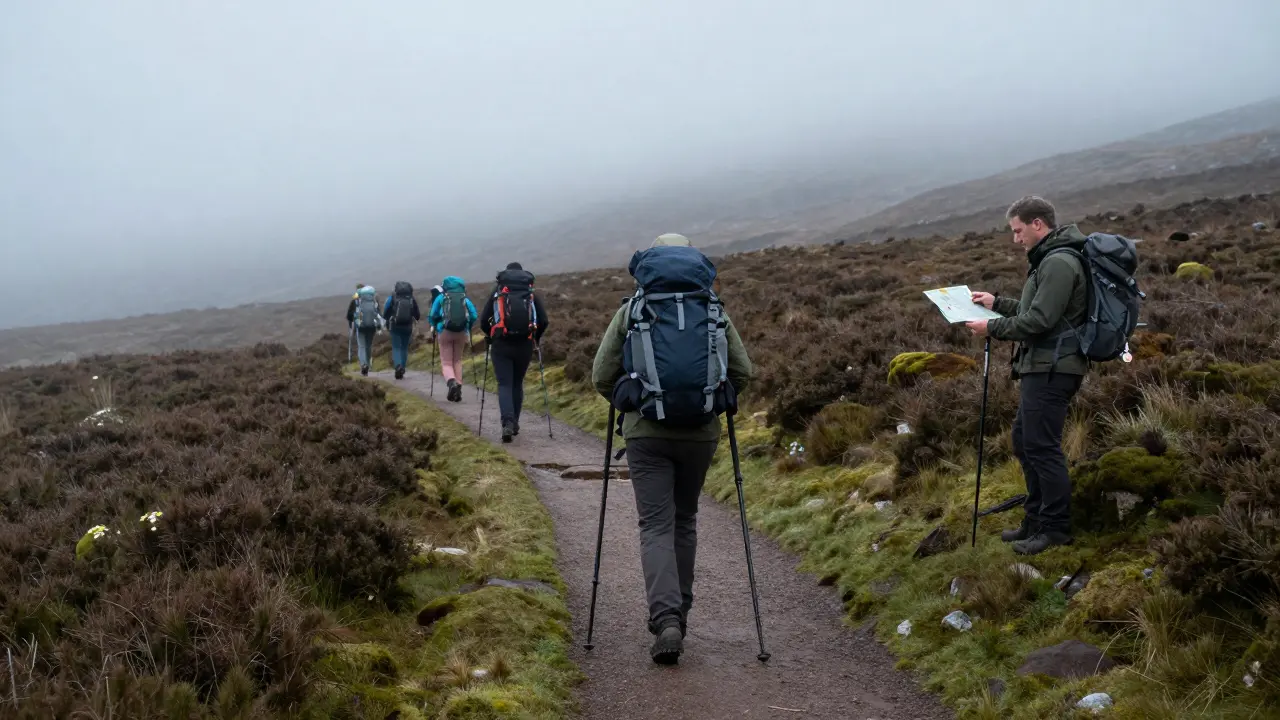
Scotland’s wild landscapes draw millions of hikers every year. From the misty peaks of the Cairngorms to the rugged coastlines of the Hebrides, the country offers some of the most dramatic terrain in Europe. But walking alone in remote areas? That’s where things get risky. That’s why guided hiking tours aren’t just popular-they’re often the smartest choice. Whether you’re a first-time trekker or a seasoned walker looking to explore new routes, choosing the right operator can mean the difference between an unforgettable adventure and a dangerous situation.
Why Choose a Guided Hiking Tour in Scotland?
Scotland isn’t like hiking in the Alps or the Rockies. Weather changes in minutes. Paths vanish under peat moss. Fog rolls in so thick you can’t see your own feet. GPS signals fail. Rivers rise without warning. I’ve seen people get turned around on the West Highland Way because they trusted their phone’s map. One guy walked for six hours in circles before a local shepherd found him. Guided tours fix this. They don’t just show you the way-they know the way.
Operators know the local conditions. They carry emergency beacons. They’ve trained in mountain rescue. They know which bogs are safe at low tide and which ridges turn into ice slides after a night of rain. They also handle logistics: transport to trailheads, gear checks, meals, and even accommodation if you’re doing multi-day hikes. You just show up with good boots and a sense of curiosity.
What to Look for in a Guided Hiking Operator
Not all tour companies are built the same. Some are just guys with a van and a map. Others are fully licensed, insured, and certified. Here’s what actually matters:
- Qualifications: Look for operators certified by Mountaineering Scotland is the national body for mountaineering and climbing in Scotland, setting safety standards and training guides. Their guides should hold at least a Mountain Leader qualification (ML) or a Winter Mountain Leader (WML) if you’re hiking in snow.
- Insurance: Ask for proof of public liability insurance. It’s not optional. If someone gets hurt and the operator isn’t insured, you’re on your own.
- Group size: Stick to groups of eight or fewer. Anything bigger means less attention per person. I’ve been on tours where the guide had to split the group because there were 15 people-big mistake.
- Equipment: Do they provide gear? Or do they expect you to bring your own? Good operators carry first-aid kits, satellite phones, emergency shelters, and spare clothing. If they don’t mention this upfront, assume they don’t have it.
- Reviews with details: Skip the five-star reviews that just say "amazing!" Look for ones that mention weather, route changes, or how the guide handled a problem. Real feedback talks about challenges, not just views.
Top Routes for Guided Hikes in Scotland
Not every trail suits every skill level. Here are three popular routes where guided tours make the biggest difference:
- The West Highland Way: This 96-mile trail from Milngavie to Fort William is Scotland’s most famous long-distance hike. But it’s not just a walk in the park. Sections near Rannoch Moor are notorious for sudden storms. Guides here know the safest detours and where to find shelter. Most tours cover 3-5 days.
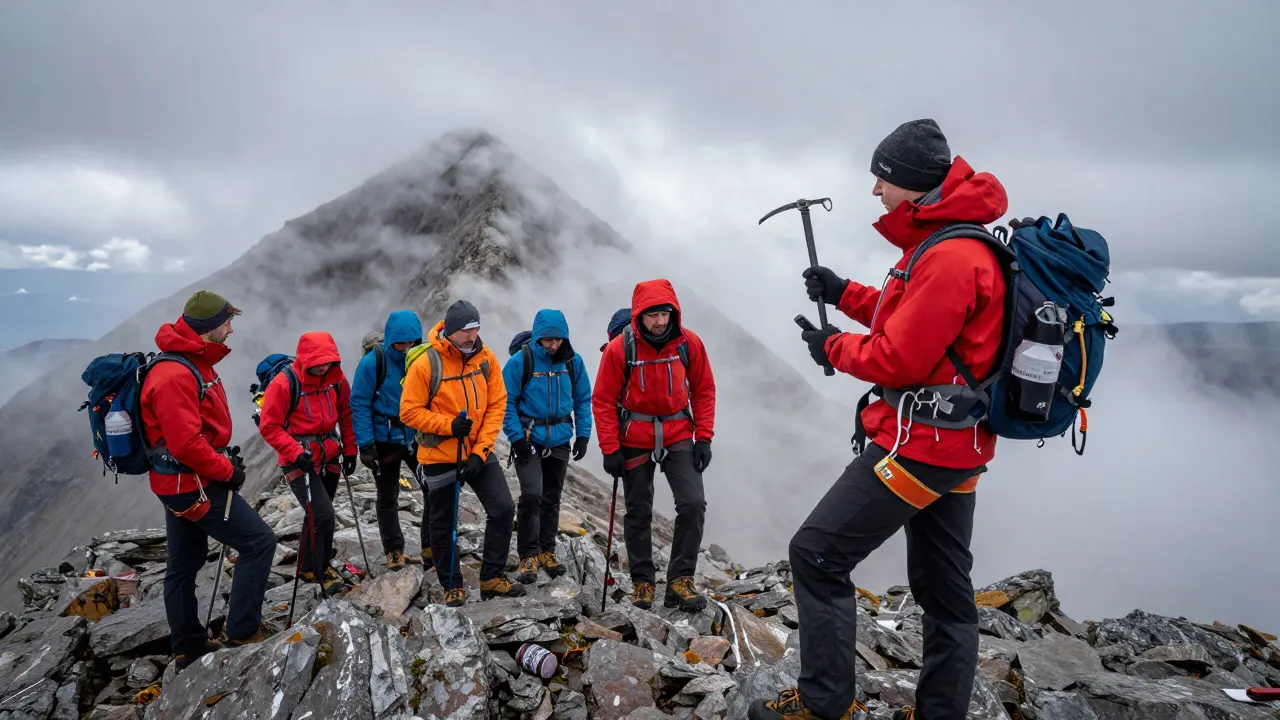
- Ben Nevis via the Mountain Path: Ben Nevis is the UK’s highest peak. Climbing it alone? Risky. Even in summer, the summit can be freezing with wind speeds over 50 mph. Operators who guide this route carry ice axes and crampons, and they know the exact time windows when the weather clears.
- The Cuillin Ridge on Skye: This is advanced terrain-exposed ridges, loose rock, and steep drops. You need ropes, helmets, and real climbing experience. Only a handful of operators are qualified to lead this. If a company says they do "easy" Cuillin hikes, walk away. This isn’t a photo op-it’s serious mountaineering.
Essential Safety Rules for Hiking in Scotland
No guide can eliminate all risk. But you can stack the odds in your favor. Here’s what actually works:
- Check the forecast daily: Use MeteoFrance a trusted weather service for mountain conditions in Scotland, providing detailed forecasts for elevation zones or Mountain Forecast a specialized weather service for UK hillwalking, offering 3-day forecasts for specific peaks. Don’t rely on apps that just show rain or sun. Look for wind speed at 900m and 1500m elevation.
- Carry the Ten Essentials: Even if your guide does, carry your own. That means: navigation (map and compass), insulation (extra layers), illumination (headlamp), first-aid, fire starter, shelter, nutrition (high-energy snacks), hydration (at least 2 liters), emergency whistle, and a knife. Don’t skip the whistle. It’s louder than yelling.
- Tell someone your plan: Leave your route and expected return time with a friend or hotel. If you don’t check in by midnight, they call for help. This simple step has saved lives.
- Know when to turn back: If the weather turns, the group slows, or you feel off-stop. Don’t push for the summit. I’ve seen too many people ignore warning signs because they "paid for the tour." The best guides will turn around. You should too.
What to Pack (Beyond the Basics)
Scotland’s weather doesn’t care if you’re "prepared." It’ll soak you, chill you, and confuse you. Here’s what most people forget:
- Waterproof pants: Not just rain jackets. You’ll be brushing against wet heather and crossing streams. Regular hiking pants turn into sponges.
- Insulating mid-layer: Merino wool or synthetic fleece. Cotton kills. It holds moisture and steals body heat.
- Extra socks: At least two pairs. Wet socks = blisters. Blisters = slow down. Slow down = longer exposure.
- Hand warmers: Keep them in your pockets. Fingers go numb faster than you think on exposed ridges.
- Headlamp with red light: Red light preserves night vision and doesn’t spook wildlife. Useful if you’re caught out after dark.
How Much Do Guided Hikes Cost?
Prices vary wildly. A single-day hike on a popular trail like Glen Coe might cost £75-£120. Multi-day trips, especially ones with overnight stays, range from £300 to £800 per person. Don’t go for the cheapest option. You’re not just paying for a guide-you’re paying for experience, gear, and safety systems.
Some operators include meals and accommodation. Others charge extra. Always ask what’s included. A £200 tour that doesn’t include food or a sleeping bag might end up costing more than a £400 all-inclusive one.
Red Flags to Avoid
Here’s what to watch out for:
- No website or contact info: If they only have a Facebook page or WhatsApp number, walk away.
- "We’ve been doing this since 2020" with no reviews: New operators aren’t automatically bad, but if they have zero online feedback, ask for references.
- "No experience needed" on serious routes: The Cuillin Ridge or Ben Nevis in winter? Anyone who says you don’t need experience is either lying or reckless.
- They don’t do a pre-trip briefing: Good guides talk to you before you leave. They ask about your fitness, past hikes, and health issues. If they skip this, they don’t care about your safety.
Final Thoughts: Is It Worth It?
Yes. Not because it’s easier-but because it’s smarter. Scotland’s trails are beautiful, yes. But they’re also unforgiving. A guided tour doesn’t take away the adventure. It lets you focus on the view instead of the map. It lets you breathe instead of panic. It turns a risky hike into a story you’ll tell for years.
Don’t just pick the first company you find. Read reviews. Ask questions. Check their certifications. Talk to the guide before booking. If they hesitate, or sound vague, find someone else. Your next hike shouldn’t be a gamble. It should be a reward.
Are guided hiking tours in Scotland safe for beginners?
Yes, if you choose the right tour. Many operators offer beginner-friendly routes like the Devil’s Staircase or parts of the West Highland Way. These trails have clear paths, minimal exposure, and guides who adjust pace for fitness levels. Always mention your experience level when booking-don’t assume they’ll guess.
Can I book a guided hike last minute?
Sometimes, but don’t count on it. Popular tours fill up weeks ahead, especially in summer. Operators also need time to check weather forecasts and plan logistics. If you’re flexible, try booking 2-3 weeks in advance. Last-minute cancellations do happen, but they’re rare.
Do I need to be physically fit for guided hikes?
You don’t need to be an athlete, but you should be able to walk 6-8 miles over uneven ground with a backpack. Most tours rate their difficulty. Choose "easy" or "moderate" if you’re unsure. If you’ve never hiked before, start with a half-day tour. Your body will thank you.
What happens if the weather is bad on the day of the hike?
Good operators will reschedule or offer a different route. Rain isn’t usually a reason to cancel-it’s part of hiking in Scotland. But if there’s high wind, lightning, or snow, they’ll change plans. Reputable companies have backup routes and safety protocols. If they say "we go no matter what," that’s a red flag.
Can I bring my dog on a guided hiking tour?
Most operators don’t allow dogs on group tours. It’s not about rules-it’s about safety. Dogs can run off, trigger livestock stress, or get stuck on narrow paths. Some private operators do offer dog-friendly hikes, but you’ll need to ask ahead. Don’t assume it’s allowed.
Comments (12)
-
Jess Ciro February 10, 2026Scotland's 'guided tours' are just government-funded tourism traps. They're all owned by the same offshore LLCs. I've seen the paperwork. They don't even have proper rescue licenses. GPS fails? That's because they jam signals to keep you dependent on their 'experts'. Wake up.

-
amber hopman February 11, 2026I love how this article breaks down the real risks without fearmongering. I went on a West Highland Way tour last year and the guide knew every bog, every wind pattern. We got caught in a storm and he had us in a shelter in 8 minutes. That's the difference between a hike and a survival story.

-
Jim Sonntag February 12, 2026I thought I was being adventurous hiking solo in Glencoe. Turns out I was just being dumb. My boots were fine. My brain wasn't. Now I book guides. Not because I'm scared. Because I want to see the peaks, not just survive the walk. Also, the guy who did my tour taught me how to identify ptarmigan. Best. Day. Ever.

-
Deepak Sungra February 12, 2026Lmao you think a guide is gonna save you in the Cuillin? Bro. I've been there. The only thing that saves you is luck and a fast pair of legs. All these companies are just charging 800 quid to walk you up a hill and say 'nice view'. I did it alone. No gear. Just me and my will. You're all too soft.

-
Samar Omar February 13, 2026The very notion of a 'guided' experience in Scotland feels almost... colonial. As if the land itself cannot be encountered without the mediation of a certified white man with a satellite phone and a £1200 backpack. The poetry of the moor is lost when it is packaged with liability waivers and group size caps. One must ask: who is really being preserved here? The hiker? Or the industry?

-
chioma okwara February 14, 2026yo i did ben nevis solo and i just used my phone and it was fine. like why do u need all this gear? its just a hill. also my boots got wet and i just shook em out. no biggie. ur overthinking this.

-
John Fox February 14, 2026The Ten Essentials list is spot on. I always forget the whistle. Then I remember it when I'm lost in fog and yelling into the wind like a lunatic. Best investment I ever made. 5 bucks. Saved my life once. You don't need a guide. You just need to not be an idiot.

-
Tasha Hernandez February 15, 2026I'm sorry but if you're paying hundreds for a hike and your guide doesn't have a thermos of hot tea and a bag of chocolate bars, you're being robbed. I once had a guide who brought scones. SCONES. That's when I knew I was in the right hands. Not the map. Not the beacon. The scones.

-
Anuj Kumar February 16, 2026Certified guides? What a joke. All they do is follow GPS. Real men hike with a compass and a gut feeling. I went up Ben Nevis in February. No gear. No guide. Just me and the wind. They told me I'd die. I came down laughing. You're all scared of a little rain.

-
Kathy Yip February 17, 2026I think about safety differently now. Before, I thought it was about gear. Now I think it's about presence. The guide doesn't carry the map. They help you carry your own awareness. That's why I choose them. Not because I'm weak. Because I want to feel the wind without wondering if I'm lost.

-
Jack Gifford February 18, 2026I'm a grammar nerd so I gotta say: 'Metofrance' is not a thing. It's Met Office. And Mountain Forecast is correct. Minor typo but it made me side-eye the whole piece. Otherwise? Solid advice. Especially the part about wet socks. That's a real killer.

-
Sarah Meadows February 18, 2026This whole article is just woke tourism propaganda. Scotland doesn't need hand-holding. We used to hike without a safety briefing and a carbon footprint. We were tougher. We didn't need a guide to tell us not to walk into a bog. We just didn't. Simple. Now we're coddling millennials with 'Ten Essentials' like they're toddlers. Back in my day, we had grit. Not gear.
