
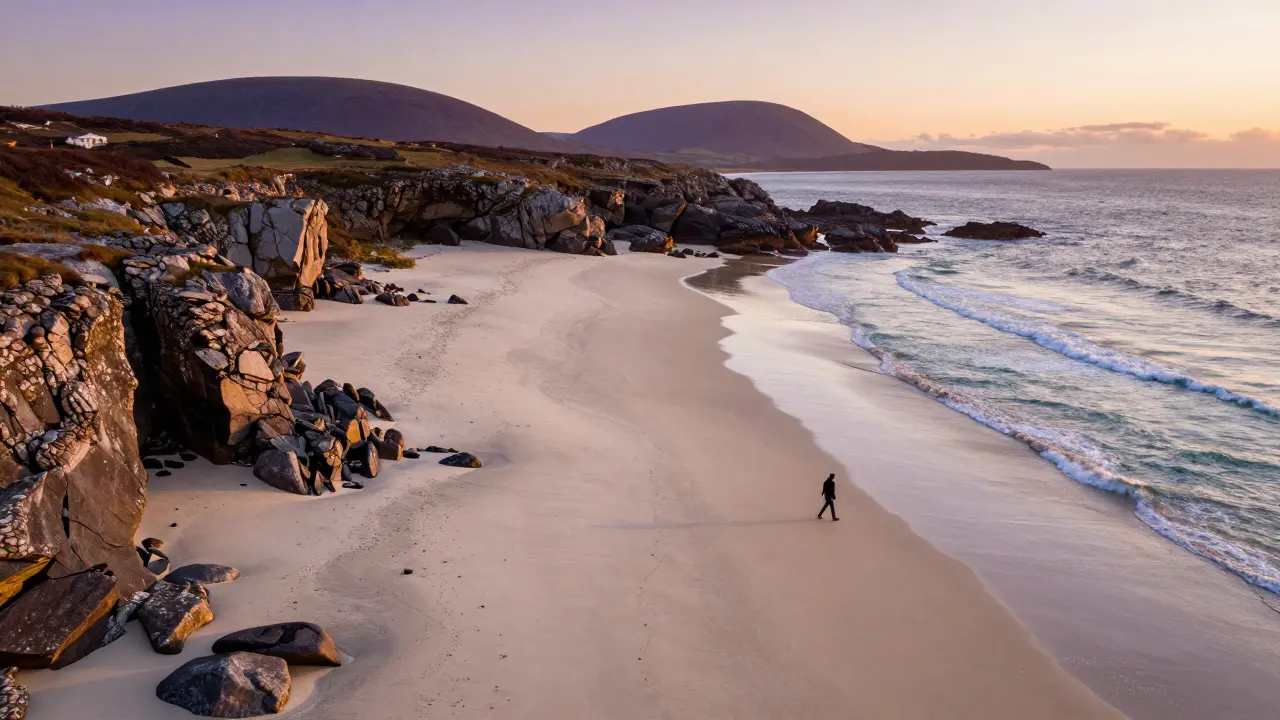
There’s a stretch of sand in northwest Scotland that doesn’t show up on most tourist maps. No cafes, no parking lots, no signs. Just wind, waves, and a curve of white sand that runs for nearly a mile between rocky headlands. This is Big Sand Gairloch-a beach that feels less like a destination and more like a secret kept by the sea.
Where It Is and How to Get There
Big Sand Gairloch sits on the west coast of Scotland, about 12 miles north of the village of Gairloch in Lochaber. It’s part of the Outer Hebrides coastline, but not technically on the islands. You’ll find it along the A832 road, just past the turnoff to Redpoint. The last stretch is a single-track lane with passing places. If you’re driving, you’ll need patience. If you’re walking, you’ll need sturdy boots and a map.
There’s no public transport here. No buses. No taxis. The nearest train station is in Fort William, over 40 miles away. Most visitors arrive by car. The drive itself is part of the experience-rolling hills, peat bogs, and the occasional Highland cow staring at you like you’re the odd one out.
The Beach Itself
Big Sand isn’t just sand. It’s fine, pale, almost glittering when the sun hits just right. At low tide, it opens up into a vast flat expanse-wide enough for a full run, a picnic, or just lying down and staring at the sky. The water is clear enough to see the rocks beneath, but cold. Even in July, most people don’t swim unless they’re brave-or foolish.
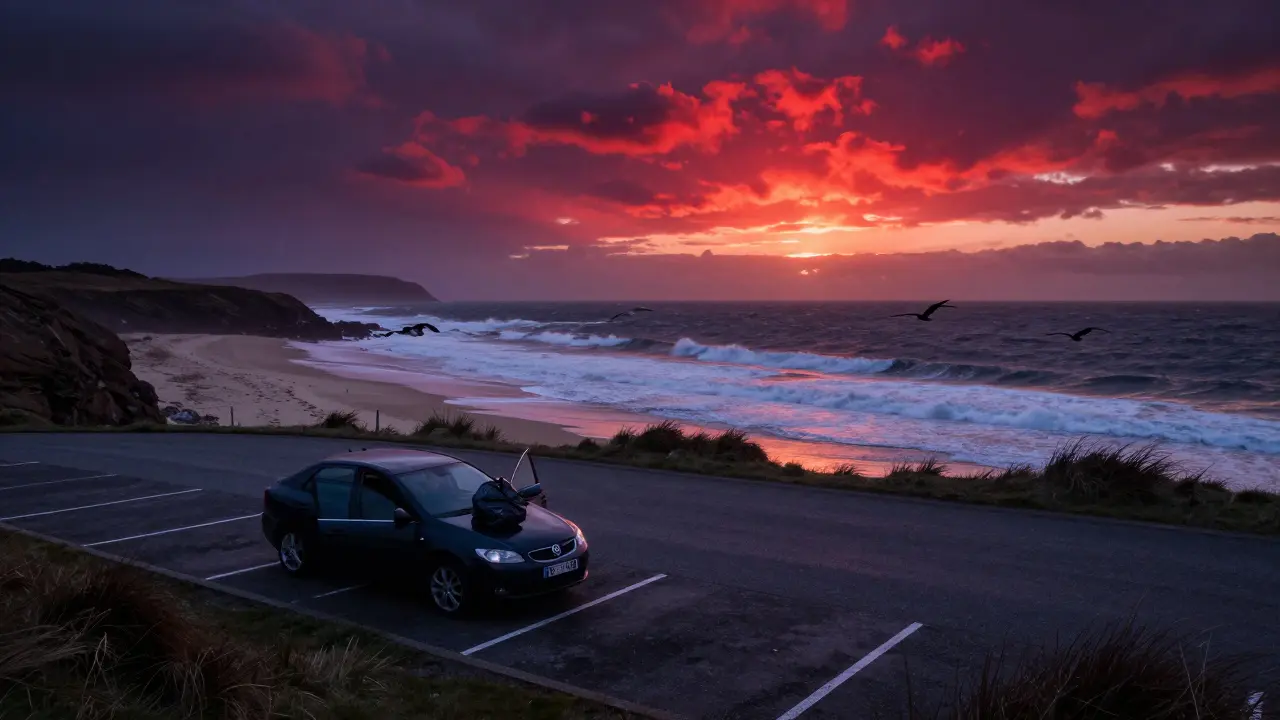
The tide here moves fast. The North Atlantic doesn’t mess around. What looks like dry sand one hour can be underwater the next. Locals always check the tide times. Tourists? They don’t. That’s how you end up with a car stuck in the surf. There’s a small parking area on the hill above the beach, but don’t assume it’s safe. Storms can roll in from the west without warning.
The Surroundings
Behind the beach, the land rises into moorland dotted with ancient stone walls and the faint traces of old crofting settlements. You’ll find sheep grazing where people once farmed. The soil here is thin, rocky, and stubborn. But the views? Unmatched.
To the north, the hills of Torridon rise like broken teeth. To the south, the water opens into Loch Gairloch, a deep inlet that cuts into the mainland. On clear days, you can see the Isle of Skye on the horizon, though it’s over 20 miles away. The light here changes every hour. Morning mist rolls off the water. Afternoon sun turns the cliffs gold. At dusk, the sky burns orange, then purple, then fades into a million stars.
Wildlife and Nature
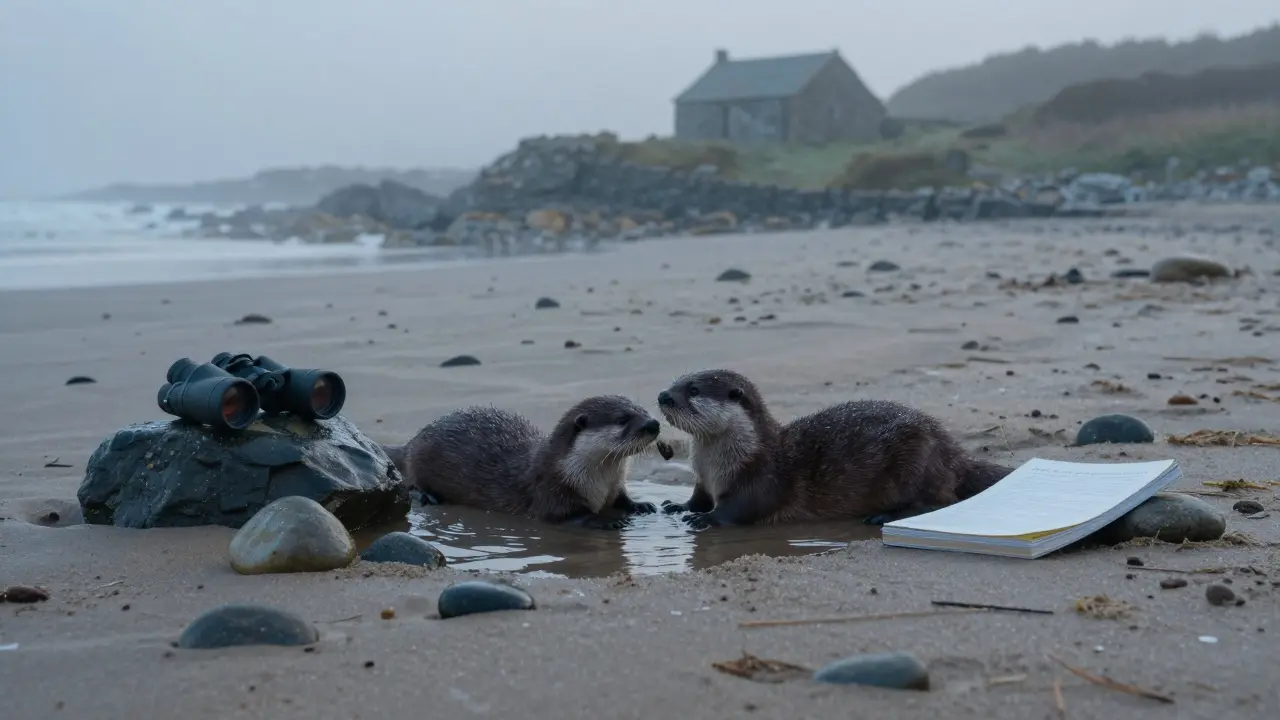
This isn’t just empty land. It’s alive. Otters swim in the rocky pools at low tide. You might spot them if you’re quiet and still. Seals sun themselves on the offshore islets. In spring, the cliffs are full of nesting guillemots and razorbills. Their calls echo like a chorus of wild trumpets.
There are no signs telling you what you’re seeing. No plaques. No brochures. You’ll need to know what to look for. A pair of binoculars helps. So does a good field guide. Or just sit and watch. The longer you stay, the more you notice.
History You Won’t Find in Guidebooks
People have lived near Big Sand for thousands of years. Archaeologists found Neolithic tools in the dunes back in the 1980s. There’s a ruined stone hut near the northern end-likely from the 1700s, when crofters farmed here. They grew potatoes, raised sheep, and fished. When the land got too poor, they left. Some moved to Canada. Others to Glasgow. Their stories are gone, but their footprints remain.
During World War II, the British military used the beach for secret landing drills. No one talks about it much now. But if you walk the dunes at low tide, you’ll sometimes find bits of rusted metal-old shell casings, maybe. The sea keeps them buried, but not forever.
What to Bring
You won’t find shops here. No toilets. No water taps. No rubbish bins. If you come, you take everything out with you. That’s the rule. Locals follow it. Visitors? They don’t always. And that’s why the beach stays wild.
Bring:
- Warm, waterproof layers-even in summer
- Sturdy hiking boots with good grip
- Tide timetable (check before you go)
- Food and water
- A trash bag (yes, even if you think you won’t make any)
- Camera. But don’t forget to put it down sometimes.
When to Visit
Summer (June to August) is the most popular time. Days are long-sunrise before 4 a.m., sunset after 10 p.m. The light lasts forever. But it’s also the busiest. You might see a few other people. Maybe a dozen. Still, it’s quiet compared to other beaches.
Spring and autumn? Even better. The wind is sharp, the colors are richer. You might be the only one there. Winter? Only if you’re serious. Storms roll in. The beach disappears under waves. But on calm days, the silence is unlike anything else. It’s the kind of quiet that makes you feel small-and strangely at peace.
Why It Matters
Big Sand Gairloch isn’t famous. It doesn’t have Instagram hashtags. It doesn’t appear in travel magazines. But that’s why it’s worth going. In a world where every corner is mapped, tagged, and sold, this place still exists on its own terms.
You won’t find a souvenir shop here. No postcards. No ice cream. No selfie sticks. Just the sea, the wind, and the sand. And if you’re lucky, the silence.
That’s the gift of Big Sand. Not beauty. Not scenery. But space. Real, unbroken space. The kind you don’t know you’re missing until you’re standing on it.
Can you swim at Big Sand Gairloch?
Technically, yes-but most people don’t. The water is icy year-round, even in summer, and the currents can be unpredictable. There are no lifeguards. The beach is best for walking, relaxing, or watching the sea-not swimming. If you do get in, go slowly, stay shallow, and never turn your back on the waves.
Is there parking at Big Sand Gairloch?
Yes, but it’s limited. There’s a small, unmarked gravel parking area on the hill above the beach, just off the single-track road. It fits about 10 cars at most. Don’t park on the road or block passing places. Locals know the rules. Tourists often don’t. If it’s full, turn around and come back later. The beach doesn’t close-it just waits.
Are dogs allowed at Big Sand Gairloch?
Yes, dogs are welcome-but they must be under control. The area is used by nesting birds, and sheep graze nearby. Keep your dog on a leash between March and August. Outside of that, they can roam, but only if they come when called. Clean up after them. Always.
What’s the best time of day to visit Big Sand Gairloch?
Early morning or late afternoon. The light is softer, the shadows longer, and the beach is quieter. At sunrise, the sand glows pale gold. At sunset, the sky turns pink and purple over the water. Midday is fine too, but you’ll see more people. And if you want solitude, go in spring or autumn. You might have the whole place to yourself.
Is Big Sand Gairloch accessible for people with mobility issues?
Not really. The path from the parking area down to the beach is steep, uneven, and covered in loose gravel and grass. There’s no ramp, no handrail, and no paved route. The beach itself is soft sand, which can be hard to navigate with a wheelchair or mobility aid. If you’re planning a visit, come prepared. Bring help if you need it. Or consider nearby Gairloch Beach, which has better access.
Comments (8)
-
Amanda Harkins February 20, 2026I went there last October. Didn’t see another soul for three days. The wind didn’t stop, but it didn’t feel hostile-just honest. Like the earth was breathing. I sat on that sand and didn’t think about anything. Not my job, not my breakup, not the algorithm that keeps feeding me ads for vacations I can’t afford. Just the tide. Just the silence. I didn’t bring a camera. I didn’t need to.

-
Jeanie Watson February 21, 2026eh i mean it’s pretty, but like… is it worth the drive? i’ve seen worse beaches in california that have ice cream trucks nearby.

-
Tom Mikota February 22, 2026You say 'no signs'-but the post itself has *five* subheadings, a bulleted list, and three FAQs. That’s not a secret. That’s a travel blog with a PhD. And you’re telling me there’s 'no parking'? There’s a gravel lot that fits ten cars. That’s not remote. That’s a parking lot with a side of existential dread. Also, 'the sea keeps them buried, but not forever'-that’s not poetic. That’s a metaphor you stole from a 2012 National Geographic article.

-
Mark Tipton February 23, 2026Let’s be clear: Big Sand Gairloch isn’t a natural phenomenon. It’s a carefully curated illusion of wilderness, maintained by deliberate neglect and the absence of infrastructure. The British military didn’t just use it for drills-they likely used it as a testing ground for psychological conditioning. Why? Because isolation induces vulnerability. And vulnerability? That’s the gateway to control. The fact that you’re encouraged to 'bring a trash bag' is a red flag. It’s not about cleanliness. It’s about behavioral compliance. They want you to feel responsible so you don’t ask questions. And the 'no lifeguards' note? Classic. They’re not protecting you from the sea. They’re protecting the narrative. This place isn’t wild. It’s a stage. And we’re all actors in a government-funded eco-theater.

-
Adithya M February 24, 2026I’ve been to 12 beaches in Scotland. This one? Top three. The tide warning is real. My cousin parked too close once. Lost a tire. Had to call a local farmer with a tractor. He didn’t charge. Just said, 'Next time, check the tide chart.' That’s the thing-people here don’t yell. They just… wait. And eventually, you learn.

-
Jessica McGirt February 26, 2026I appreciate how meticulously this was written. The details about the Neolithic tools, the WWII shell casings, the nesting birds-all of it feels intentional, not performative. The absence of commercialization isn’t romanticized; it’s stated as fact. That’s rare. I’ve read too many travel pieces that turn solitude into a product. This? It’s a quiet invitation. And I’m going this September.

-
Donald Sullivan February 28, 2026You people are ridiculous. It’s a beach. With sand. And wind. And maybe a seal or two. You’re treating it like it’s the Holy Grail. I’ve been there. Took my dog. Ate a sandwich. Took two photos. Left. Done. Stop turning nature into a therapy session. The sea doesn’t care if you ‘found yourself.’ It just does its thing. So do you.

-
Tina van Schelt February 28, 2026The way the light hits that sand at dusk? It’s not just color. It’s a mood. A sigh. Like the whole coastline just exhaled. I’ve been to places with golden hour, sure-but here, the light doesn’t just glow. It *lingers*. Like it’s reluctant to leave. And the silence? Not empty. Not dead. It hums. Low. Deep. Like the earth is whispering a lullaby to the waves. I didn’t bring a notebook. I didn’t need to. My bones remembered it.
