
Local Produce Scotland: Fresh Food, Farmers Markets, and Regional Flavors
When you think of local produce Scotland, fresh, seasonal food grown or made within the country, often sold directly by farmers or small producers. Also known as Scottish farm-to-table, it’s not just about taste—it’s about keeping money in local communities and protecting the land that feeds us. This isn’t some trendy buzzword. It’s how people in Fife, Argyll, and the Borders have eaten for generations. Think plump Aberdeen Angus beef, smoky Arbroath smokies, honey from the Trossachs, and apples from Perthshire orchards that still use the same trees their grandparents did.
Scottish farmers markets, weekly gatherings where local growers sell directly to customers, often in town centers or village squares. Also known as farmers' stalls, they’re where you’ll find eggs still warm from the coop, hand-churned butter, and freshly dug potatoes with soil still clinging to them. These markets aren’t just places to shop—they’re social hubs. In Anstruther, you’ll chat with the fisherman who netted your haddock that morning. In St Andrews, the jam maker remembers your name and knows you like the blackberry version. And in Fife, you can buy oatcakes baked the same way they were in 1892.
Fife food suppliers, small businesses in Fife that grow, catch, or craft food for local sale, often with deep roots in the region. Also known as Fife food producers, they’re the quiet heroes behind your breakfast. From the oyster beds off the Fifeshire coast to the dairy farms near Cupar, they don’t ship across the world—they feed their neighbors. That’s why when you taste a Fife strawberry in July, it doesn’t just taste sweet—it tastes like sunshine on the East Neuk. And when you buy a wheel of Lanark Blue cheese, you’re not just getting cheese—you’re supporting a family that’s been making it for three generations.
Seasonal eating isn’t a choice here—it’s a rhythm. In spring, you’ll find wild garlic in the woods near Kinross. Summer brings raspberries so juicy they stain your fingers. Autumn means game and mushrooms, and winter? That’s when the cured meats and pickled vegetables come out, made to last through the long nights. You won’t find this kind of variety in a supermarket aisle. It takes knowing who grows it, when it’s ready, and where to find it.
This is also about sustainability—not the kind you see on billboards, but the real kind. It’s the farmer who rotates his fields so the soil doesn’t die. The fisherman who sets nets only during spawning season. The baker who uses barley from the next valley over. These aren’t marketing tactics. They’re survival skills passed down. And they’re why Scotland’s food still has soul.
Below, you’ll find real stories from people who live this way. Whether it’s a hidden farm shop in Fife, a seasonal recipe using wild sea kale, or how to spot truly local cheese when you see it—you’ll see what matters. No fluff. No greenwashing. Just food that’s grown, caught, or made right here, with care.
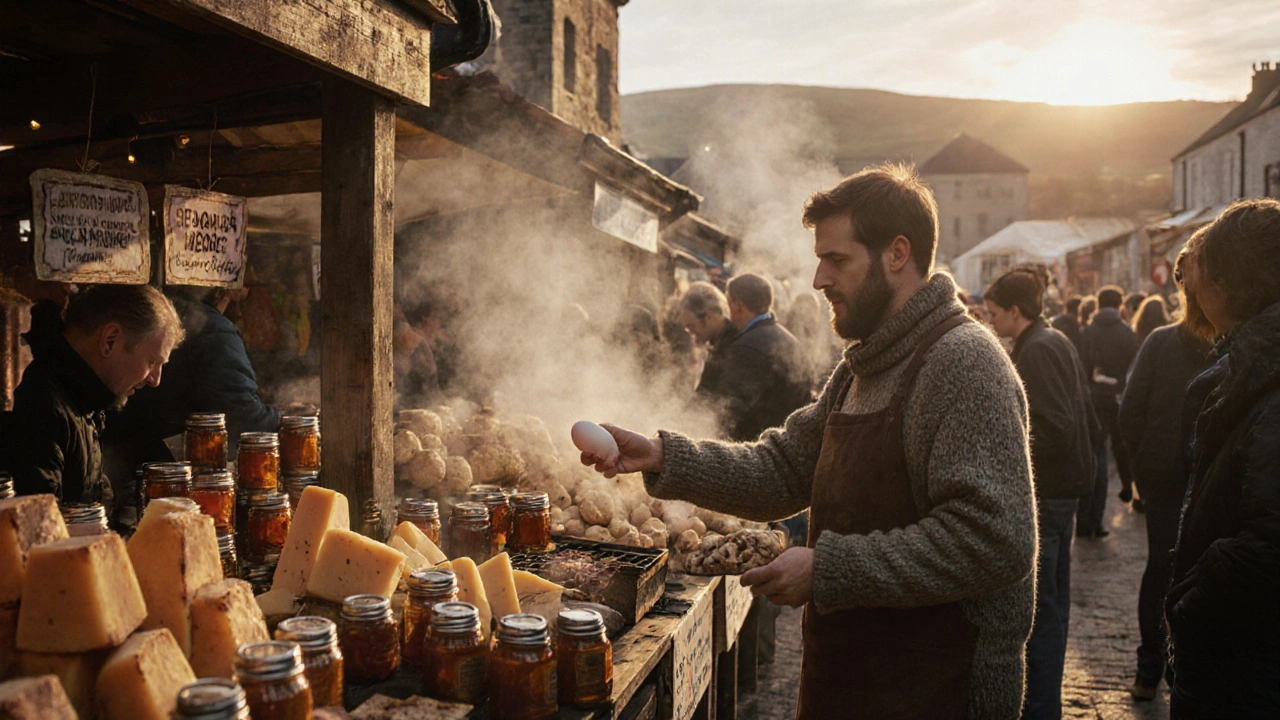
Scottish Farmers’ Markets: Best Locations, Vendors, and Regional Highlights
Caleb Drummond Nov 29 9Discover the best Scottish farmers’ markets by region, from Highland honey to Orkney beer cheese. Meet local vendors, taste fresh produce, and learn where to find authentic Scottish food.
More Detail