
Why Glasgow Is One of Europe’s Best Street Art Cities
You don’t need a museum ticket to experience world-class art in Glasgow. The city’s walls, alleyways, and abandoned buildings are open-air galleries filled with bold murals, gritty graffiti, and surreal murals that tell stories no textbook can. Unlike cities where street art is confined to certain districts, Glasgow’s murals bleed into everyday life - painted on tenement walls, tucked behind train stations, or stretching across entire factory facades. This isn’t just decoration. It’s history, protest, humor, and identity all rolled into one.
Back in the 1980s, Glasgow was struggling. Factories closed, unemployment soared, and the city’s image was stuck in decline. Then came the mural movement. Local artists, community groups, and even the city council started using paint to reclaim public space. What began as a way to cover up graffiti turned into a global phenomenon. Today, Glasgow has over 200 large-scale murals, many of them recognized internationally. The city even has its own Glasgow Street Art Trail, officially mapped and maintained by the Glasgow City Council.
The Must-See Murals: 5 Highlights You Can’t Miss
Not all murals are created equal. Some are famous for their size. Others for their story. Here are five that define Glasgow’s street art scene:
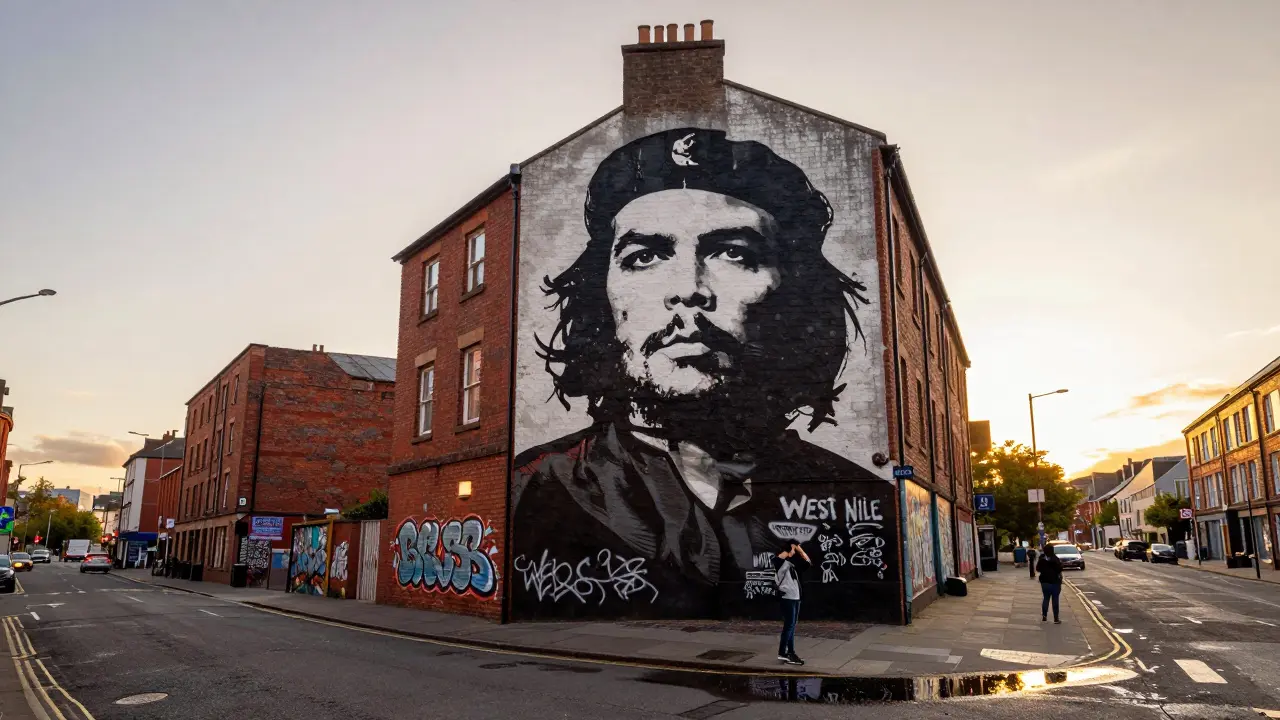
- The Che Guevara Mural - On the side of a building on the corner of West Nile Street and Renfield Street. Painted in 1998 by artist Jimmy C, this 12-meter-tall portrait of the revolutionary is one of the most photographed murals in Scotland. It’s not just art - it’s a political statement that still sparks debate.
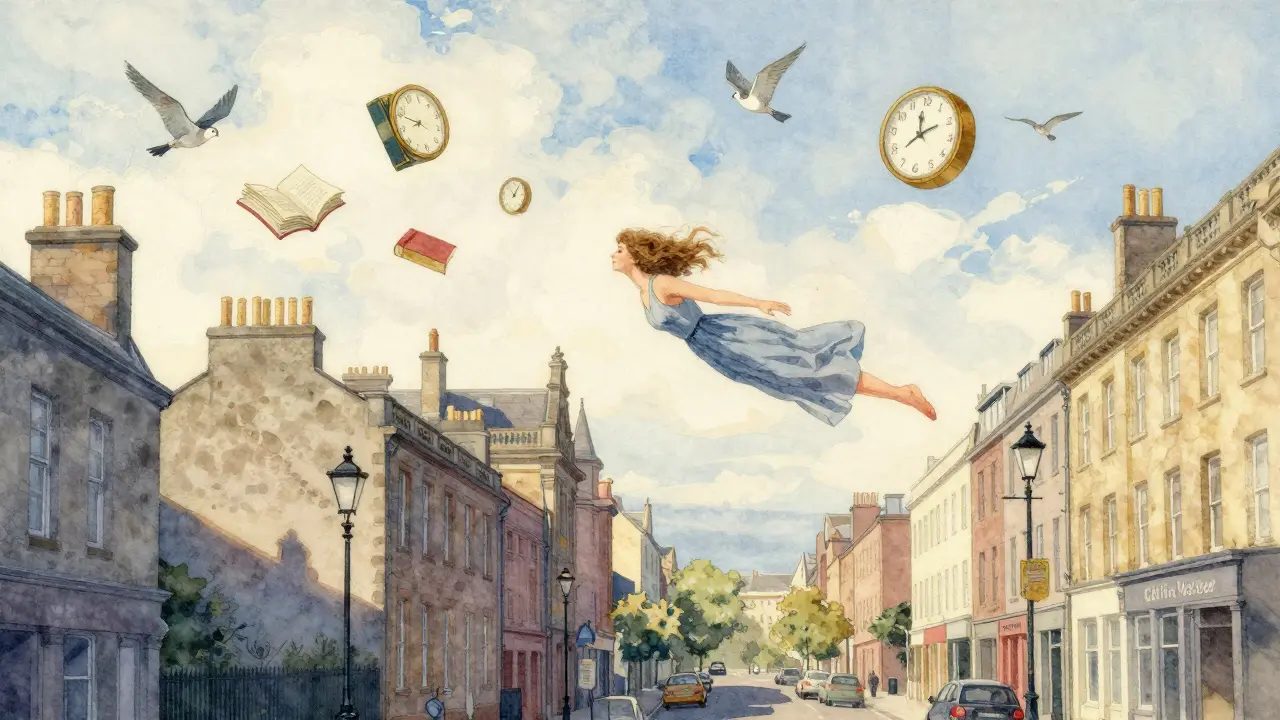
- The Glasgow Mural (Buchanan Street) - Located just off the main shopping drag, this massive mural by artist Colin McLeod depicts a surreal scene of a woman floating above the city, surrounded by birds, clocks, and floating books. It’s quiet, dreamlike, and surprisingly emotional for something so large.
- The Ibrox Mural - Hidden behind the Ibrox Stadium, this mural by artist David Devine shows a young boy holding a football, with the words “A City of Dreams” beneath. It was painted in 2015 to honor local youth and the city’s football culture. The colors are still vibrant, and fans often leave scarves at its base.
- The Doulton’s Mural - On the side of the old Doulton pottery factory on Broughton Street. This 1990s piece by artist John Byrne shows a giant ceramic vase bursting with flowers, fish, and faces. It’s a nod to Glasgow’s industrial past and its transformation into a creative hub.
- The Women of the Clyde - On the side of a building near the River Clyde on Tradeston. This 2021 mural by artist Niamh McCann honors the women who worked in shipyards during WWII. Each face is painted with real photographs of local women, making it deeply personal and historically powerful.
Best Walking Routes for a Self-Guided Street Art Tour
You can’t drive your way through Glasgow’s street art. It’s meant to be walked, paused at, and studied. Here are two routes - one short, one long - that cover the best of the city’s murals without backtracking too much.
Short Route: The City Centre Loop (2 hours)
Start at George Square - the heart of the city. Walk south down West Nile Street to see the Che Guevara mural. Then head east along Renfield Street to the Buchanan Street mural. From there, cut through Argyle Street and head north to Trongate, where you’ll find a cluster of smaller murals on alley walls. End at St. Enoch Square, where the Glasgow Mural Project plaque marks the official start of the trail. This route covers 5 major murals and takes about 2 hours, including photo stops.
Long Route: The West End to the Clyde (4 hours)
Start at Kelvingrove Park and walk down Great Western Road. Just past the university, you’ll hit the Doulton’s Mural. Continue down Broughton Street and cross into Tradeston to find The Women of the Clyde. From there, follow the river path east to the Ibrox Mural. Loop back through Gorbals - where street art is still evolving - and end at Glasgow Green. This route takes you through neighborhoods that changed because of art. You’ll see murals that are 30 years old next to ones painted last month.
How to Navigate: The Official Map and Free Apps
The city doesn’t just throw murals up randomly. There’s a map - and it’s free. The Glasgow Street Art Map is available at tourist centers, libraries, and online. It’s updated every year, and the 2025 version includes QR codes you can scan to hear short audio stories from the artists themselves.
For a more interactive experience, download the free app Glasgow Mural Finder. It uses your phone’s GPS to show you the nearest murals, with photos, artist names, and dates. It even has a “hidden gems” filter for murals that aren’t on the official map - like the tiny cat mural on a drainpipe near the University of Glasgow, or the floating bicycle painted on a bridge support in Maryhill.
When to Go: Best Time for Photos and Fewer Crowds
Street art looks different depending on the light. Early morning - between 7 and 9 a.m. - is ideal. The sun hits the murals at the right angle, shadows are sharp, and there’s almost no one around. You’ll get clean photos without tourists in the frame.
Weekdays are quieter than weekends. Sundays are busy with local families and art students sketching. Avoid midday in summer - the heat makes walking hard, and the murals can glare under direct sun. Late autumn and early spring are perfect. The colors pop against the gray skies, and the light is soft.
What to Bring: Practical Tips for the Tour
- Comfortable shoes - You’ll walk 5-8 kilometers. Cobblestones, uneven sidewalks, and steep alleys are common.
- A portable charger - The app drains battery fast, especially if you’re using GPS the whole time.
- A small notebook - Many murals have hidden details. Write down the artist’s name or the date. You might want to look them up later.
- A water bottle - Tap water in Glasgow is safe and free. Fill up at public fountains along the route.
- A camera with manual settings - Automatic modes often overexpose murals. Shoot in aperture priority (f/5.6) and adjust exposure compensation down by 1 stop for rich, true colors.
Respect the Art: Rules You Should Know
Glasgow’s street art isn’t just pretty. It’s protected. Some murals are legally recognized as cultural heritage. That means:
- Don’t touch the walls. Oil from your skin can damage the paint over time.
- No spray paint tags. Even if you think you’re adding to the art, you’re breaking the law.
- Don’t climb on scaffolding or fences to get a better shot. Many murals are on private property.
- Don’t leave trash. Some of the best murals are in neglected areas. Help keep them clean.
The city’s attitude is simple: admire, don’t alter. The art belongs to everyone - and it’s still being added to.
What’s New in 2026: The Latest Murals
The street art scene never stops. In late 2025, three new murals appeared:
- A 15-meter mural on the side of the old Central Station, painted by a collective of young artists from Govan. It shows a child holding a smartphone that glows with images of Glasgow’s past - steamships, factories, and protest marches.
- A glowing mural on the side of a community center in Possilpark. It uses UV-reactive paint that lights up after dark. Only visible at night.
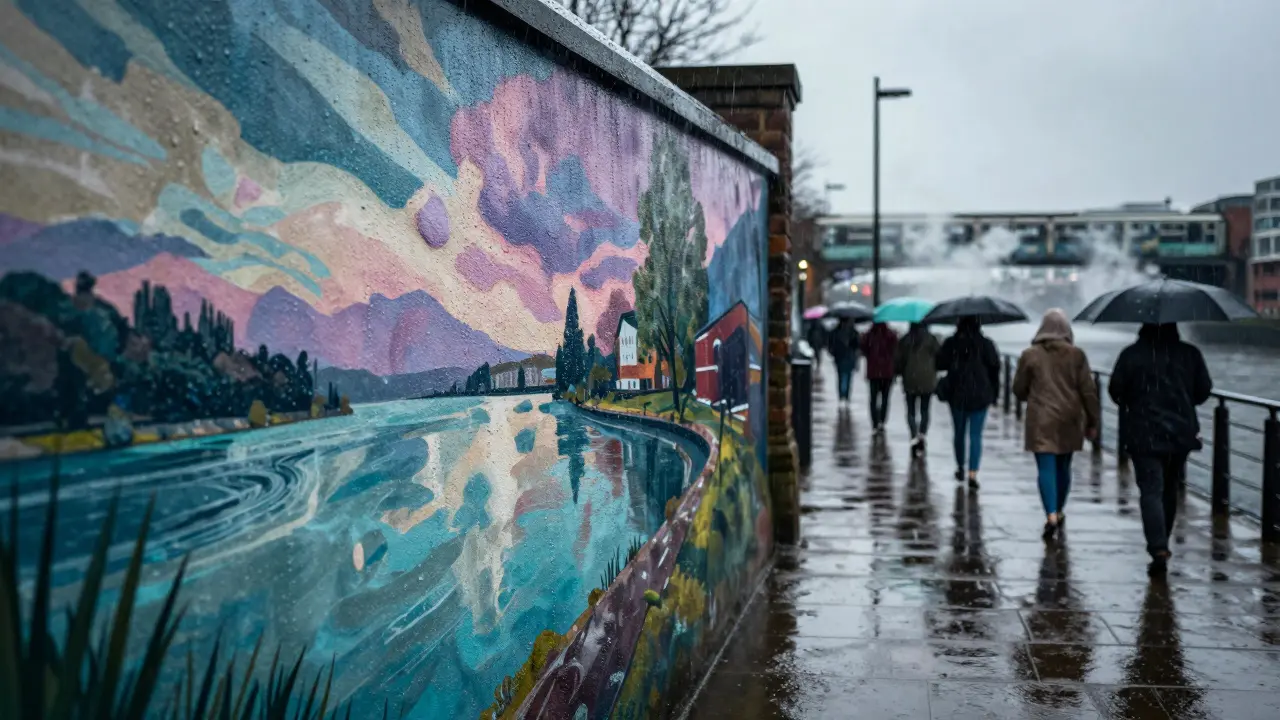
- A mural on the Clyde Walkway that changes with the weather. Rain makes the colors deepen; sun fades them. It’s meant to reflect how the city’s identity shifts with time.
These aren’t just decorations. They’re conversations. And they’re still happening.
Where to Go After the Tour
After walking for hours, you’ll want a coffee. Head to Stillhouse Coffee on Sauchiehall Street - they have a mural of a Scottish terrier on their back wall, and it’s the only place in the city where you can get a flat white and a biscuit while sitting under original street art.
Or stop by The Lighthouse - Scotland’s Centre for Design and Architecture. Their rooftop gallery has rotating street art exhibits, and the view over the city is unmatched.
Can I take photos of Glasgow street art?
Yes, absolutely. Photography is encouraged. Most murals are in public spaces, and the city actively promotes sharing images online. Just don’t use them for commercial purposes without permission - some artists retain copyright. For personal use, tag the location and credit the artist if you know their name.
Are there guided tours available?
Yes, several local companies run guided street art tours. The most popular is Glasgow Street Art Walk, led by former mural artists. They offer 2-hour tours daily, with options for evening light photography or history-focused walks. Tickets cost £12, and they include a printed map. But many locals say the best tours are the ones you plan yourself.
Is street art in Glasgow safe to explore?
Most areas are perfectly safe, especially during daylight. Stick to the main routes - West End, Tradeston, and the City Centre. Avoid isolated alleys after dark, especially in parts of Possilpark or Easterhouse, where lighting is poor. The city has a low crime rate, but like any urban area, use common sense. Bring a phone, stay aware, and trust your gut.
Do I need to pay to see the murals?
No. All the murals are outdoors and free to view. There’s no entry fee, no ticket, no queue. The only cost is your time and walking shoes. Some tours charge, but the art itself is public. That’s part of what makes Glasgow’s scene so special - it’s not for sale.
What’s the best way to find hidden murals?
Talk to locals. Baristas, shopkeepers, and bus drivers often know about murals that aren’t on any map. The Glasgow Mural Finder app has a “hidden gems” mode, but the real secrets come from word of mouth. Ask someone, “Where’s the weirdest mural you’ve seen?” You’ll be surprised by the answers.
Comments (9)
-
Agni Saucedo Medel March 19, 2026This is absolutely beautiful 🌆🎨 I never thought street art could be this emotional. The Women of the Clyde mural gave me chills. I’m saving this for my next trip to Scotland. Thanks for the map too! 🙏

-
ANAND BHUSHAN March 20, 2026Glasgow’s murals are real. I went last year and didn’t even know half of them were there. Just walking around felt like reading a book you didn’t know you needed.

-
Indi s March 20, 2026I love how the art isn’t just for tourists. It’s part of the city’s heartbeat. The Ibrox mural with the scarves still there? That’s everything.

-
Rohit Sen March 20, 2026It’s cute they call it a 'trail.' Like it’s a theme park. Meanwhile, in Berlin, murals are still alive, raw, and uncurated. This feels... curated.

-
Diwakar Pandey March 22, 2026I appreciate how detailed this is. The tip about aperture priority f/5.6 and exposure compensation? That’s gold. I’ve ruined so many mural shots with auto mode. Also, the fact that they mention tap water is safe - small thing, but it shows care for visitors.

-
Geet Ramchandani March 23, 2026Okay but let’s be real - this whole 'Glasgow is an open-air gallery' narrative is just PR spin. Half these murals are paid commissions from the council to whitewash decay. The real street art? The graffiti under the bridges? That’s where the truth is. This? It’s art as gentrification. And don’t get me started on the 'UV-reactive mural' - that’s not art, that’s a gimmick for TikTok.

-
Pooja Kalra March 24, 2026There’s something quietly tragic about painting hope on walls built on industrial ruin. The murals are beautiful, yes - but they’re also monuments to what was lost. The woman with the floating books? She’s not dreaming. She’s remembering. And the city? It’s just letting her.

-
Sumit SM March 25, 2026I love how the city didn’t just preserve art - it turned it into a living archive. The mural that changes with weather? That’s not decoration. That’s philosophy. Rain deepens color - like grief deepens meaning. Sun fades - like memory fades. It’s not a painting. It’s a metaphor. And it’s perfect.

-
Jen Deschambeault March 26, 2026This made me want to pack my bags and go today. The detail on the Doulton’s Mural alone? Iconic. And the tip about early morning light? Chef’s kiss. You’ve turned a simple guide into an experience. Thank you.
