
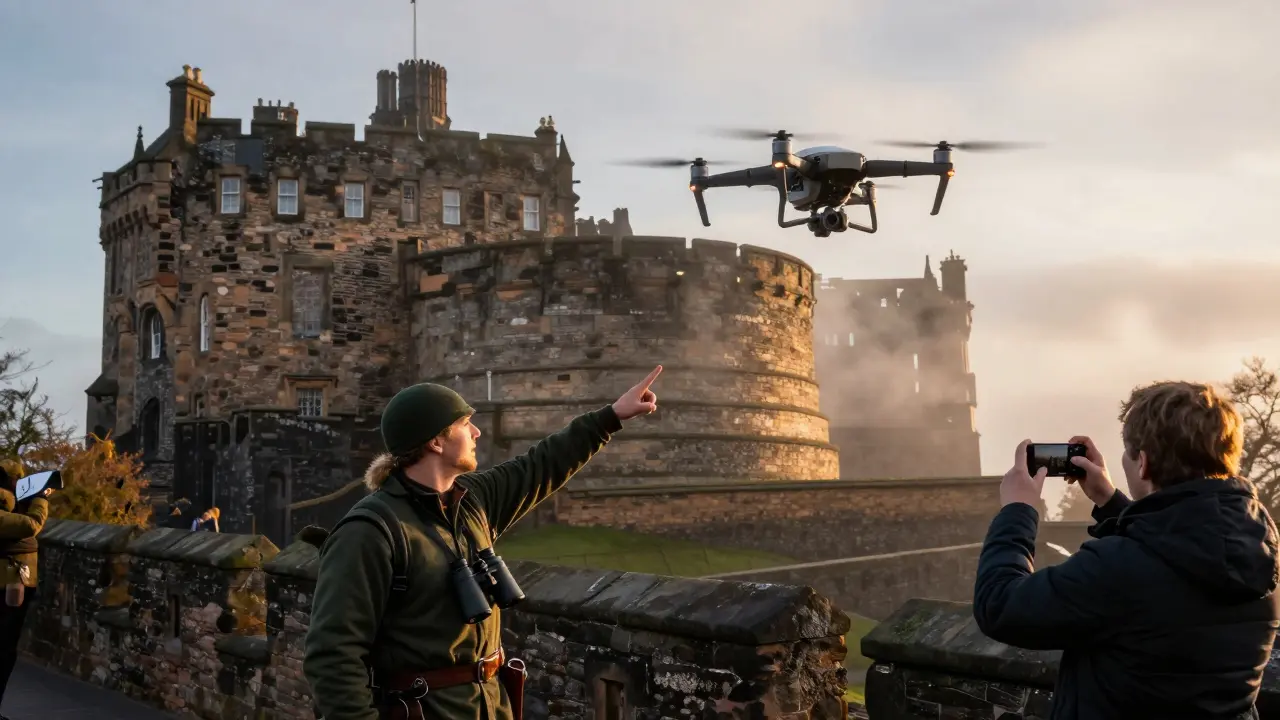
Flying a drone over a Scottish castle sounds like the perfect shot-mist rolling off ancient walls, eagles circling above battlements, the whole thing lit by golden afternoon light. But if you’ve ever tried to launch your drone near Edinburgh Castle or Stirling Castle, you know it’s not as simple as pressing go. Scotland’s historic sites are protected, crowded, and strictly regulated. And if you ignore the rules, you could face fines, confiscation, or even criminal charges.
Why Drone Rules Exist at Scottish Castles
Scotland has over 1,000 castles. Many are managed by Historic Environment Scotland (HES), a government body responsible for preserving these sites. These aren’t just tourist spots-they’re protected monuments, some dating back to the 12th century. Drones don’t just capture footage. They can disturb wildlife, scare visitors, damage structures with vibrations, and invade privacy.
In 2023, HES reported over 80 incidents of unauthorized drone flights at historic sites. One drone crashed into the roof of Urquhart Castle, cracking a 500-year-old stone. Another flew too close to nesting peregrine falcons at Dunnottar Castle, causing the birds to abandon their eggs. These aren’t rare accidents. They’re predictable outcomes when rules are ignored.
Who Controls Drone Use at Scottish Castles?
The rules come from three layers: national law, site-specific policies, and local authority guidelines.
- UK Civil Aviation Authority (CAA) sets the baseline: drones under 250g must stay under 120m (400ft), keep 50m from people and buildings, and never fly over crowds.
- Historic Environment Scotland (HES) bans all drone flights on sites they manage-unless you get written permission.
- Local councils can add restrictions, especially near conservation areas or protected wildlife zones.
There’s no gray area: if a castle is owned or managed by HES, you need their approval before even turning on your drone. That includes Edinburgh Castle, Stirling Castle, Eilean Donan, Dunnottar, and over 300 others.
How to Get Permission to Fly a Drone at a Scottish Castle
Getting permission isn’t impossible-it’s just not automatic. Here’s how it works:
- Identify the site manager. Visit historicenvironment.scot and check who runs the castle. If it says "Managed by HES," you’re in the right place.
- Submit a formal request. Use the online Drones at Historic Sites form. You’ll need: your name, contact info, drone model, flight plan (time, location, altitude), purpose (commercial, educational, personal), and risk assessment.
- Wait 14-21 days. HES reviews each request. They don’t rush. Applications submitted during peak season (April-October) take longer.
- Get written confirmation. Verbal approval doesn’t count. You must have an email or letter from HES. Print it. Carry it with you.
Commercial operators (filmmakers, photographers) pay a £150 fee. Hobbyists don’t pay-but they still need approval. And no, having a CAA drone license doesn’t override HES rules. They’re separate systems.
What Happens If You Fly Without Permission?
People think they won’t get caught. They’re wrong.
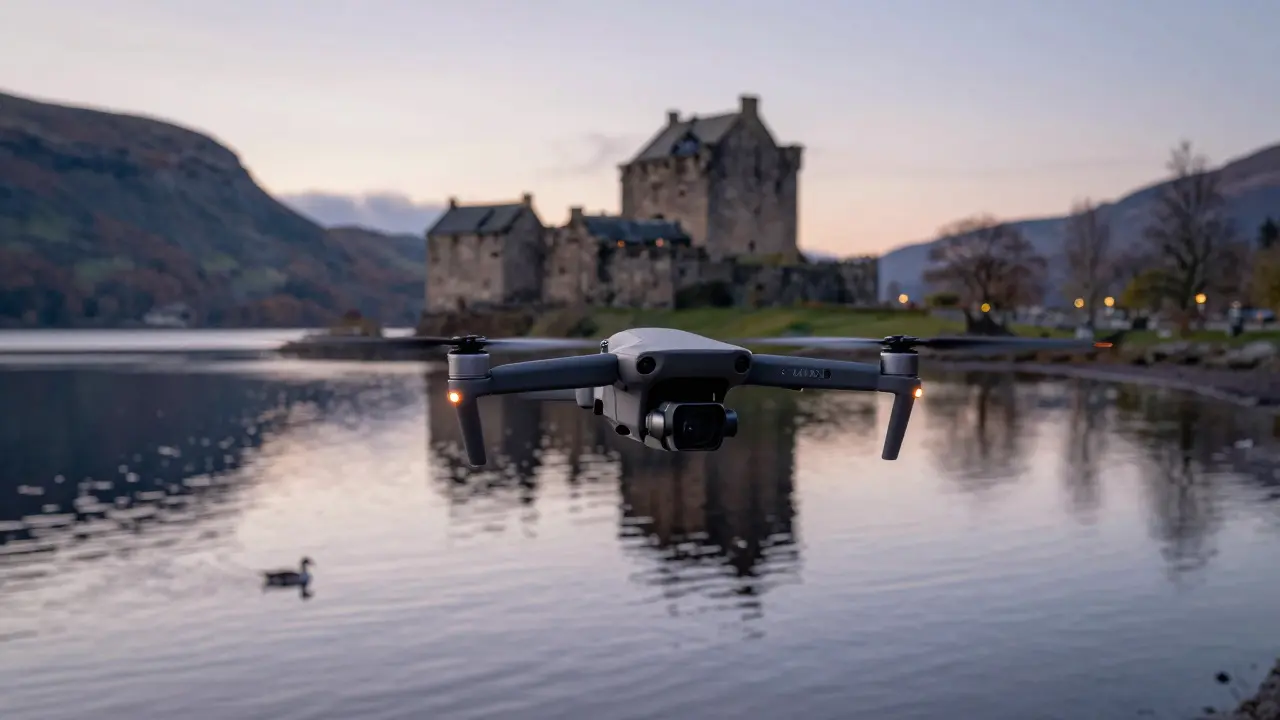
In 2024, a tourist flew a DJI Mini 3 Pro over Doune Castle. A ranger spotted it, called police, and the drone was confiscated. The person was fined £1,200 under the Air Navigation Order 2016. They also received a warning from HES: future violations could lead to a criminal record.
Security at major castles is tight. Many use drone detection systems. Rangers carry binoculars and radios. Visitors film you. Social media posts with geotags make it easy to trace you.
Penalties include:
- Up to £2,500 fine for flying too close to people or buildings
- Up to £1,000 fine for flying over a protected site without permission
- Confiscation of your drone
- Prosecution under the Protection of Military Remains Act if near war memorials
It’s not worth the risk.
Where You CAN Fly a Drone Near Scottish Castles
You don’t need to give up on great shots. Many castles sit in open landscapes. Here’s where you can legally fly:
- Public footpaths outside castle grounds-if you’re 100m+ away and not looking directly at the castle.
- Lochs and coastal areas near castles, like Loch Ness near Urquhart or the Firth of Forth near Inchcolm.
- Private land with owner permission-if you’re on a farm or estate that borders a castle.
- Designated drone zones like the Dundee waterfront or the Fife Coastal Path (check local council maps).
Pro tip: Use the Drone Assist app from the CAA. It shows no-fly zones in real time. If the castle shows up as red, don’t fly. Even if it looks empty.
Best Practices for Safe and Respectful Drone Flying
If you’re approved to fly-or flying near, not over, a castle-follow these rules:
- Always fly below 120m (400ft)
- Keep 50m from people, animals, and structures
- Never fly over crowds or during guided tours
- Check weather-wind over 20mph can wreck your shot and your drone
- Turn off obstacle avoidance if flying near stone walls-it can cause erratic behavior
- Land immediately if someone asks you to
- Don’t record people without consent
Respect the site. Don’t land on grass if it’s a protected archaeological zone. Don’t hover over graves or ruins. These aren’t just photo backdrops-they’re sacred spaces.
What About Drone Tours and Commercial Operators?
Some companies offer drone tours of Scottish castles. You might see ads for "epic castle flyovers" on YouTube or Instagram. Here’s the truth: if they’re not showing you their HES permit, they’re breaking the law.
Legitimate operators like Highland Aerial or Scottish SkyLens display their permits on their websites. They fly only during off-hours, use trained pilots, and submit detailed flight plans. They also carry public liability insurance-something most tourists don’t.
Don’t hire a drone operator unless they can show you written approval from HES. Otherwise, you’re putting yourself at legal risk.
What’s Changing in 2025?
This year, HES rolled out a new drone monitoring system using AI-powered cameras at 12 major castles. The system detects drone signatures, tracks flight paths, and alerts rangers in real time. It’s already led to a 60% drop in unauthorized flights.
Also, new rules require all drones over 250g to have digital ID tags (like a license plate). You’ll need to register with the CAA and display the ID on your drone. This makes tracing illegal flyers much easier.
If you’re planning a trip in 2025, assume every castle is monitored. Assume every flight is logged. Assume you’ll be caught if you break the rules.
Alternatives to Flying Over Castles
You don’t need to be airborne to get stunning castle shots.
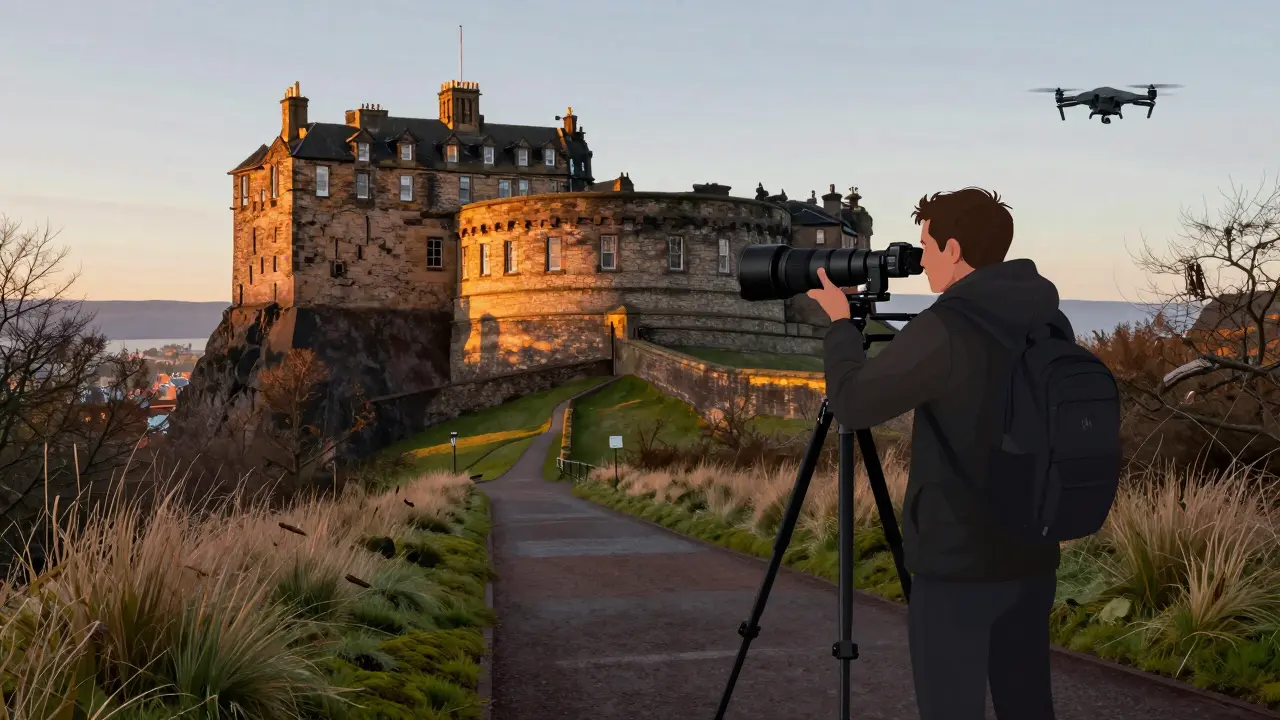
- Use a telephoto lens from a distance-100mm or 200mm can pull in the whole castle from a public viewpoint.
- Visit at sunrise or sunset when light hits the walls perfectly.
- Use a tripod and long exposure to capture mist rolling through arches.
- Try a 360° camera on the ground-it’s legal, quiet, and still looks amazing.
- Book a guided drone tour with a licensed operator-they’ve already done the paperwork.
Some of the most iconic castle photos ever taken were made without a single drone. The magic isn’t in the height-it’s in the timing, the light, and the respect you show the place.
Can I fly my drone over Edinburgh Castle?
No. Edinburgh Castle is managed by Historic Environment Scotland, and all drone flights are banned unless you have written permission. Even then, approvals are extremely rare and only granted for official documentaries or research. Never attempt to fly over it without approval.
Do I need a license to fly a drone in Scotland?
If your drone weighs over 250g, you must register with the UK Civil Aviation Authority (CAA) and pass the online theory test. You also need to display your flyer ID on the drone. But even with a license, you still need HES permission to fly near or over historic castles.
Are there any castles in Scotland where drones are allowed without permission?
No. All castles managed by Historic Environment Scotland require permission. Some privately owned castles may allow drones with the owner’s consent, but you must confirm directly with the owner. Never assume it’s okay.
Can I fly a drone from a boat near a castle?
If you’re on public water and at least 100m from the castle walls, it’s usually allowed-but only if you’re not flying over the site itself. Flying over castle grounds from a boat still counts as violating HES rules. Always check the CAA Drone Assist app for no-fly zones.
What if I’m filming a wedding and want drone footage of a castle?
You’ll need to apply for a commercial permit through Historic Environment Scotland at least 3 weeks in advance. Most wedding requests are denied unless the castle is privately owned and you have written consent from the owner. Many couples opt for ground-level cinematic shots instead-they’re just as beautiful and completely legal.
Comments (16)
-
NIKHIL TRIPATHI December 24, 2025
I flew my Mini 3 Pro near Urquhart last summer from the loch side-150m out, no overflight, just the castle in the distance. No one said a thing. The app said green, I followed the rules, and got the shot of a lifetime. Respect goes both ways.
Don’t assume every drone is a menace. Most of us just want to capture beauty without breaking anything.

-
Shivani Vaidya December 24, 2025
The preservation of heritage must come before personal entertainment. Drones are not toys. They are tools-and like any tool, they require responsibility. Historic Environment Scotland’s stance is not restrictive, it is necessary.
Let us not mistake silence for permission.

-
Rubina Jadhav December 26, 2025
Just don’t fly near castles. It’s not worth it. People get mad. Drones crash. Bad stuff happens.

-
sumraa hussain December 28, 2025
Bro. I saw a guy get chased by a ranger with binoculars at Stirling like he was in a spy movie. The drone went flying into a bush. The guy was crying. I was laughing. Then I realized-this is real. We’re not in a video game.
That moment changed my whole drone life. Now I use a 200mm lens and chill. The magic’s still there. Just… quieter.
Also, the falcons? Yeah. They’re not fans.
Respect the stones. They’ve been here longer than your drone’s firmware.

-
Raji viji December 29, 2025
Oh wow, another sanctimonious article from the drone police. Let me guess-you also think people shouldn’t take selfies near the pyramids? Or photograph the Eiffel Tower at night? Get a grip.
It’s a castle. Not a sacred temple. You think a drone vibrating 50 meters away is gonna crack a 500-year-old stone? That’s like blaming wind for a cracked window.
And don’t even get me started on the £150 fee. You’re basically charging for the right to see your own country. Pathetic.
Next they’ll ban binoculars because they might ‘disturb’ the ghosts.

-
Rajashree Iyer December 31, 2025
What is a castle, really? A monument to power. A relic of blood and stone. And now, a battleground for the soul of modernity.
Do we preserve history by freezing it in silence? Or do we let it breathe-with the hum of propellers, the whisper of digital lenses capturing the same light that once glinted off medieval swords?
Perhaps the real violation isn’t the drone… but our fear of being seen, of being remembered, in a way that isn’t curated by time.

-
Parth Haz January 1, 2026
This is a well-researched and balanced guide. For anyone planning to fly near Scottish castles, this is essential reading.
Following the rules isn’t about restriction-it’s about stewardship. We owe it to future generations to protect these places.
Also, the Drone Assist app is a game-changer. Use it. It’s free.

-
Vishal Bharadwaj January 2, 2026
Wait so you can't fly over castles but you can fly over a 100m away? So technically you can fly over the moat? Or the parking lot? Or the gift shop? What's the exact boundary? Is it a 50m radius? 100m? Does it curve with the hill? Nobody ever says. HES just says 'no' and you're supposed to guess.
Also I'm pretty sure that 'cracked stone' was already cracked. And the falcons? They're birds. They fly away. They don't care. This is all just bureaucratic theater.

-
anoushka singh January 2, 2026
Wait so if I’m on a boat and I fly the drone over the castle… is that illegal? Like, technically, I didn’t land on the land, right? So… it’s fine? Or is the airspace over the castle owned by HES now? Are we in a sci-fi movie? Someone please explain this to me before I get fined.
Also, can I take photos with my phone? What if I zoom in? Is that worse than a drone? I’m confused.

-
Jitendra Singh January 2, 2026
I’ve been to 12 Scottish castles. Never flown a drone. But I’ve seen the footage. The ones that get approved? They’re stunning. Quiet. Thoughtful. Not flashy.
It’s not about banning drones. It’s about making sure they’re used with care.
And honestly? The ground shots are just as powerful. Sometimes more.

-
Madhuri Pujari January 3, 2026
Oh my god. Another ‘respect the stones’ lecture. You people are ridiculous. It’s 2025. We have AI cameras, digital ID tags, and drones that can detect birds. Why are we still treating people like children? You think the castle is going to collapse because someone flew a Mini 3 Pro for 3 minutes? That’s not preservation-that’s control.
And don’t even get me started on the ‘commercial fee.’ You’re literally monetizing patriotism. I’d rather pay a bribe than that £150. At least then I’d know I was breaking the law, not being extorted.

-
Sandeepan Gupta January 3, 2026
Just a quick grammar note: in the section about penalties, you wrote ‘Up to £2,500 fine for flying too close to people or buildings’-it should be ‘a fine of up to £2,500’ for correct structure.
Also, if you’re using ‘DJI Mini 3 Pro,’ make sure to capitalize ‘Pro’ every time. Consistency matters.
Otherwise, this is an excellent, clear guide. Thank you for taking the time to lay this out. So many people don’t know the difference between CAA and HES rules. This clears it up perfectly.

-
Tarun nahata January 4, 2026
Listen. I don’t care what the rules say. I flew over Eilean Donan at sunrise. The mist? The water? The castle rising like a dragon’s spine? I got the shot that made my whole feed explode. 200k views. People cried. I cried.
Yeah, I got a warning. Yeah, I had to delete the post. But guess what? I’m going back next month. And I’ll fly again.
Because some things are worth the risk. Some beauty? It’s not meant to be contained.
Let me be the idiot who got caught. Let someone else be the one who never tried.

-
Aryan Jain January 5, 2026
They’re lying. All of it. The ‘cracked stone’? That was a government cover-up. The drone didn’t do it. The real damage was done by underground military drones testing sonar pulses since the 90s. The falcons? They didn’t abandon their eggs-they were evacuated by MI6 because the castle is a secret surveillance hub.
And the AI cameras? They’re not for drones. They’re scanning for time travelers. That’s why they won’t let you fly. They’re afraid you’ll see the future.
Also, the CAA? They’re owned by the same people who made the moon landing fake. Don’t trust any of it.

-
Nalini Venugopal January 6, 2026
Just wanted to say thank you for this. I’m a beginner drone pilot and I was terrified I’d accidentally break the law. This made everything so clear. Also, the ‘Drone Assist’ app tip? Lifesaver.
And the part about using a telephoto lens? I tried it last weekend at Stirling-got the perfect shot from the visitor center. No one even noticed I had a drone in my bag.
You’re doing great work. Keep it up.

-
NIKHIL TRIPATHI January 7, 2026
Just saw someone reply saying they flew over Eilean Donan and got 200k views. Dude. That’s not bravery. That’s ignorance. You think HES doesn’t have facial recognition on their social media crawlers? You’re tagged. You’re tracked. You’re fined.
And now you’ve made it harder for the rest of us who actually follow the rules.
That shot? It’s not worth your future.