
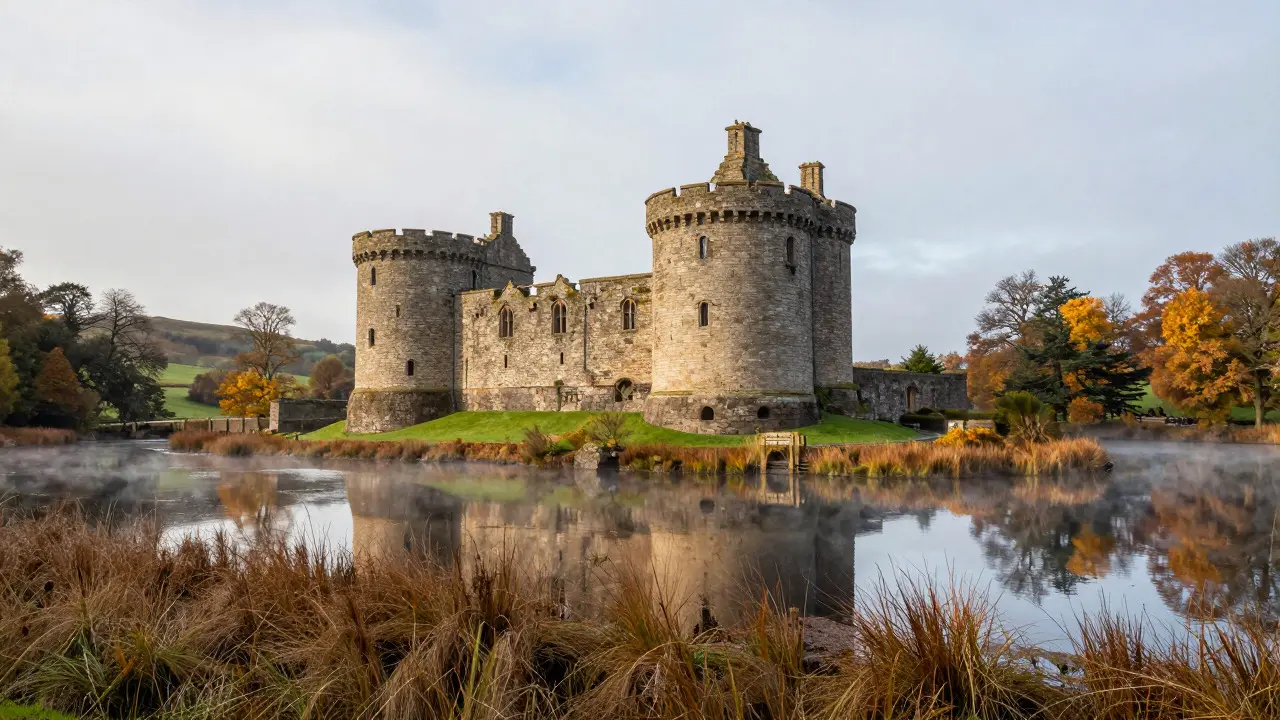
Most people expect a castle to sit on a high rock, looking down on the world with arrogant stone walls. Caerlaverock Castle breaks that rule completely. Instead of climbing up, you go down. This medieval fortress sits at the bottom of a deep moat, surrounded by water, in the middle of a sprawling wetland landscape. It is one of Scotland’s most unique structures, shaped like a triangle rather than a square or circle, and it feels more like an island fortress than a hilltop keep.
If you are planning a trip to Dumfries and Galloway, this place demands your attention. It isn’t just about staring at old stones. The site combines military history with a thriving nature reserve managed by the Royal Society for the Protection of Birds (RSPB). You get two distinct experiences in one ticket: a walk through centuries of border conflict and a stroll through habitats where wild birds nest safely away from predators. Here is everything you need to know to make the most of your visit.
The Unusual Design of a Water Castle
When you first see Caerlaverock Castle, a triangular moated castle in Dumfries and Galloway, Scotland, the shape hits you immediately. It is not round like many Norman keeps, nor is it rectangular like later baronial homes. It is a perfect triangle. This design was intentional. Built in the late 13th century, the castle was designed to maximize defensive firepower while minimizing blind spots. Each corner has a tower, allowing archers to cover the approaches from multiple angles without gaps in their line of fire.
The castle is built on an artificial island within a massive man-made lake. The moat is not a decorative trickle; it is a serious barrier. At its widest point, the water surrounds the landmass completely. In medieval times, this meant attackers had to cross open water under arrow fire before they could even touch the walls. Today, the moat remains full, fed by natural springs and rainwater, keeping the castle isolated as it was nearly 700 years ago.
| Feature | Detail |
|---|---|
| Shape | Triangular with three corner towers |
| Construction Date | Late 13th century (c. 1280s) |
| Defensive Type | Moated lowland castle |
| Current State | Ruins maintained by Historic Environment Scotland |
| Location | Dumfries and Galloway, near Lockerbie |
A History of Border Wars and Betrayal
You cannot understand Caerlaverock without understanding the Anglo-Scottish border. For centuries, this region was a battleground. The castle changed hands frequently between English and Scottish forces during the Wars of Independence. Robert the Bruce himself laid siege to Caerlaverock in 1308, but he found the defenses too strong and eventually abandoned the attempt after months of frustration. That failure speaks volumes about the effectiveness of the triangular design.
The castle also has a darker side. In the 14th century, it became associated with witchcraft accusations. Janet Wishart, a local woman, was accused of bewitching the castle’s owner, John de Maxwell. She was burned at the stake outside the gates in 1390. While modern historians debate the validity of these claims, the story adds a layer of folklore that still lingers around the site today. Walking the ramparts, you can almost feel the weight of those historical tensions.
Over time, the castle fell into disrepair. By the 16th century, it was no longer a viable residence. The Maxwell family moved to more comfortable homes, leaving Caerlaverock to decay. However, unlike many ruins that crumbled entirely, the structure remained largely intact due to its solid construction and lack of demolition for building materials. Now, it stands as a testament to medieval engineering.
Nature Reserve: More Than Just Stones
While the castle is the headline act, the surrounding landscape is the supporting star. The entire area is part of the RSPB Loch Ryan reserve, which includes extensive wetlands, reed beds, and grasslands. This habitat supports over 150 species of birds, including rare visitors like bitterns, marsh harriers, and herons. If you visit in spring or early summer, you might hear the distinctive booming call of the bittern echoing across the water-a sound that hasn’t been heard regularly in Scotland for decades until recently.
The RSPB manages the land carefully to maintain this balance. Trails wind through the reeds, offering viewing platforms where you can spot wildlife without disturbing them. The combination of historic architecture and living ecology makes this one of the most diverse visitor sites in southern Scotland. You don’t just learn about the past; you experience the present ecosystem that thrives alongside it.
- Bitterns: Rare wading birds known for their mysterious calls.
- Marsh Harriers: Raptors that hunt over the wetlands.
- Herons: Commonly seen standing motionless in shallow water.
- Reedbed Communities: Home to warblers and other small songbirds.
Practical Visitor Information
Getting to Caerlaverock is straightforward if you have a car. It is located near Lockerbie, easily accessible from the A76 road. There is a large parking area right next to the entrance, making it convenient for families and groups. Public transport options are limited, so driving is recommended unless you are staying locally.
Opening hours vary by season. Generally, the grounds are open daily from early morning until dusk, but access to certain areas may be restricted during nesting seasons to protect wildlife. Always check the official website before visiting, especially if you plan to bring dogs. Dogs are allowed on leads, but some trails may require them to be kept close to avoid disturbing ground-nesting birds.
Admission fees apply for adults and children, with discounts available for families and members of Historic Environment Scotland or the RSPB. Consider joining either organization if you plan to visit multiple sites in Scotland-it pays for itself quickly.
- Check opening times online before traveling.
- Bring binoculars for birdwatching opportunities.
- Wear sturdy shoes suitable for uneven terrain and muddy paths.
- Allow at least two hours to explore both the castle and the nature trails.
- Consider purchasing annual membership if visiting other Scottish heritage sites.
Best Time to Visit
Spring and autumn offer the best conditions for visiting Caerlaverock. In spring, the landscape comes alive with new growth and breeding birds. Autumn brings dramatic colors to the trees and fewer crowds, giving you a quieter experience. Summer can be busy, particularly on weekends, so arrive early if possible. Winter visits are less common but provide a stark, atmospheric setting that highlights the castle’s rugged beauty against bare branches and grey skies.
Weather plays a big role here. Rain is frequent in Dumfries and Galloway, so waterproof clothing is essential. The trails can become slippery when wet, so take your time and watch your step. On clear days, however, the views across the loch are breathtaking, with mist rising off the water and sunlight reflecting off the ancient stones.
Why Choose Caerlaverock Over Other Castles?
Scotland has hundreds of castles, so why pick Caerlaverock? Because it offers something different. Most castles focus on grandeur or royal connections. Caerlaverock focuses on survival and adaptation. Its unusual shape tells a story of practical defense rather than ostentatious display. Plus, the integration with the nature reserve means you’re not just looking at history-you’re immersed in a living environment that has evolved alongside it.
Compared to Edinburgh Castle or Stirling Castle, Caerlaverock is smaller and less crowded. You won’t fight through tour buses or long queues. Instead, you’ll have space to think, observe, and connect with the landscape. It’s ideal for travelers who prefer quiet reflection over mass tourism.
Is Caerlaverock Castle open year-round?
Yes, the grounds are generally open every day, though specific facilities like cafes or gift shops may have reduced hours in winter. Always verify current status before visiting.
Can I bring my dog to Caerlaverock?
Dogs are welcome on leads throughout most of the site. Some sensitive wildlife areas may restrict access during nesting seasons, so follow posted signs.
How long should I spend at Caerlaverock?
Plan for at least two hours to fully explore the castle ruins and walk the nature trails. Longer stays allow for better birdwatching and photography opportunities.
Are there guided tours available?
Guided tours are occasionally offered, particularly during special events or school holidays. Check the official calendar for scheduled dates.
What makes Caerlaverock different from other Scottish castles?
Its triangular shape, moated location, and integration with a major nature reserve set it apart. Few castles combine such strong defensive architecture with active conservation efforts.